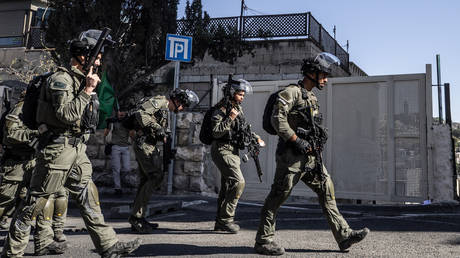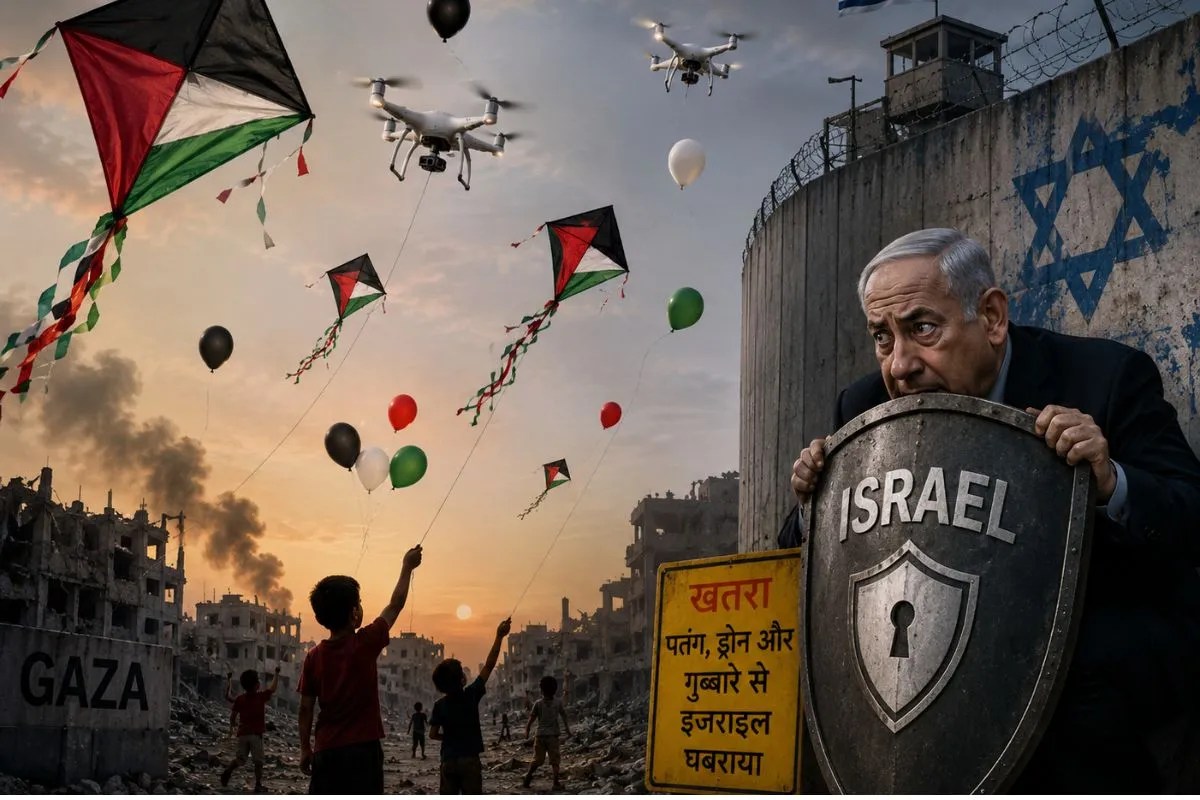
The horizon over the Gaza Strip has long been a canvas of smoke, concrete dust, and surveillance aerostats. Yet, occasionally, a different shape pierces that gray sky: a child’s kite. To an outside observer, a paper toy fluttering on a Mediterranean breeze looks like a harmless symbol of youthful defiance or desperate innocence. To the Israeli military apparatus, however, that same kite can trigger an immediate, heavy-handed operational response, up to and including forced displacement orders for surrounding neighborhoods.
Understanding why a simple piece of string and plastic commands such disproportionate tactical anxiety requires stepping away from headlines and looking closely at how modern asymmetrical warfare redefines everyday objects. The escalation surrounding kite-flying in conflict zones is not about toys. It is about surveillance, psychological friction, and the relentless securitization of the airspace above an enclave under siege. Don't forget to check out our previous article on this related article.
The Evolution of Airborne Protest
A decade ago, aerial tactics in the Gaza Strip underwent a crude but effective evolution. Frustrated by static protests and heavily fortified border fences, demonstrators began attaching incendiary materials, burning rags, and small explosive devices to kites and helium balloons. Driven by prevailing summer winds eastward across the border fence into southern Israel, these airborne devices ignited thousands of acres of agricultural land, nature reserves, and farming communities.
The strategy exploited a fundamental asymmetric advantage. A toy costing less than a dollar could inflict tens of thousands of dollars in ecological and economic damage, forcing the Israeli firefighting services and military to adapt expensive countermeasures. Iron Dome batteries and drone interceptors were never designed to swat down crafts made of bamboo skewers and plastic grocery bags. The tactical frustration generated by this low-tech innovation created a deep institutional sensitivity within the Israel Defense Forces command structure. To read more about the background of this, The Washington Post provides an excellent summary.
When military planners perceive a threat vector, their standard operating procedure involves classification, risk assessment, and total mitigation. Consequently, any gathering involving the launching of kites, tethered objects, or unidentified aerial items near the perimeter fence is frequently reclassified from a civilian pastime to a hostile reconnaissance or incendiary deployment operation.
The Mechanics of Displacement Threats
Warning orders and evacuation demands issued to Palestinian civilians living near border friction points serve a specific administrative and tactical function within modern military doctrine. When commanders suspect that specific neighborhoods are being utilized to stage aerial harassment, artillery strikes, drone surveillance, or incendiary launches, they issue broad evacuation notices.
These directives are framed around operational necessity and civilian safety. In practice, however, they function as instruments of mass displacement that compound an already catastrophic humanitarian crisis. Families living in temporary shelters, makeshift tents, or partially collapsed concrete structures receive warnings telling them to move further inland toward designated humanitarian zones.
The friction arises because these zones are overcrowded, underserviced, and frequently subjected to their own kinetic activity. When a military force demands the clearance of a sector because low-tech airborne objects are being spotted overhead, residents face an impossible choice. Remain and risk immediate artillery or air strikes targeting suspected launch sites, or leave and join the endless migration of the displaced searching for a square meter of empty earth.
The Psychological Dimension of Total Control
In any prolonged conflict, control of the physical environment extends far beyond boots on the ground and tanks on the road. It includes dominance over the vertical dimension. The sky belongs to the side with air superiority. When civilians within an occupied or blockaded enclave attempt to claim a tiny fraction of that vertical space through kites, drones, or makeshift signals, it represents a direct psychological challenge to absolute dominance.
Military analysts often point out that modern counter-insurgency relies heavily on denying the adversary any sense of normalcy or routine joy. A child flying a kite on a rubble-strewn beach or a ruined street asserts humanity and psychological endurance in the face of annihilation. For the military authority enforcing a strict blockade and containment policy, allowing that assertion to stand unchecked can be interpreted as a failure of deterrence.
The reaction is therefore intentionally disproportionate. By treating a kite as a precursor to an attack, the military justifies preemptive kinetic strikes, surveillance sweeps, and forced relocations. This creates a chilling effect across the civilian population. Soon, parents stop their children from crafting toys, fearing that a piece of string drifting toward the east might bring a multi-million-dollar missile down upon their roof.
The Broader Humanitarian Toll
Zooming out from the immediate tactical friction reveals a grim operational reality. The infrastructure supporting civilian life in Gaza has been systematically degraded to the point of functional collapse. Hospitals operate without reliable power, sanitation systems spill into the streets, and millions are compressed into shrinking zones designated as safe havens.
Against this backdrop, the focus on minor tactical disruptions like incendiary kites underscores the extreme securitization of daily survival. Every movement, every shadow, and every object thrown into the air is filtered through a lens of extreme threat perception. The humanitarian cost of this paranoia is paid entirely by non-combatants who have no control over asymmetric tactics yet bear the full weight of collective punishment.
International humanitarian law mandates proportionality and distinction, requiring military forces to weigh the expected military advantage of an action against the civilian harm it causes. When evacuation orders are issued over minor localized friction involving rudimentary objects, legal experts argue that the threshold of proportionality is severely strained. Yet, in an environment where accountability mechanisms are weak or entirely absent, legal debates offer little comfort to families packing their remaining belongings into plastic bags once again.
The sky over Gaza remains contested, not by rival air forces, but by the stark asymmetry between advanced military hardware and the desperate, improvised expressions of a trapped population. As long as every horizon is viewed exclusively through the crosshairs of security, even a child's kite will remain a casualty of war