Russia’s ruling party, United Russia, holds a structural lock on the country’s electoral apparatus that guarantees victory regardless of battlefield setbacks or Ukrainian strikes inside Moscow. While Western headlines routinely frame drone attacks on the Russian capital as political turning points, the reality inside the Kremlin’s managed democracy is far colder. The state has spent two decades insulating its ballot boxes from public anxiety, turning elections into administrative rituals of loyalty rather than genuine tests of popularity.
Consider the mechanics of a typical Russian regional or national vote. Long before a single ballot is cast, the outcome is engineered through candidate filtering, municipal filters, and institutional coercion. Opposition figures who pose even a marginal threat are disqualified on technicalities, jailed, or driven into exile. The remaining contenders belong to the "systemic opposition"—parties like the Communist Party or the Liberal Democratic Party of Russia—that critique minor bureaucratic failures while rubber-stamping the Kremlin’s core foreign and domestic policies. Learn more on a related topic: this related article.
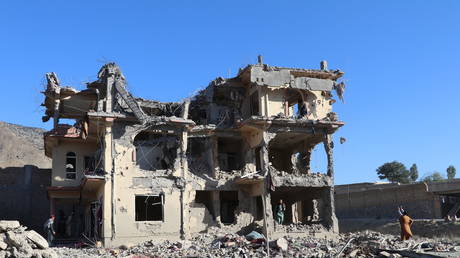
When Ukrainian drones strike high-rise business districts in Moscow or ignite oil depots hundreds of miles behind the front lines, the psychological shock is real. Muscovites, long shielded from the visceral costs of the war in Ukraine, suddenly hear air defense sirens and see shattered glass in the financial district. Yet that shock rarely translates into anti-regime mobilization at the polls. Instead, the Kremlin’s information apparatus absorbs the blow and redirects the public’s fear into a rally-around-the-flag reflex.
The Architecture of Administrative Mobilization
To understand why United Russia wins effortlessly amid mounting domestic vulnerability, you have to look at how votes are actually harvested. In Western democracies, campaigns rely on persuasion. In Russia, the state relies on mobilization of dependent populations. Further analysis by Reuters delves into related views on this issue.
Millions of Russian citizens work directly for the state or state-owned enterprises. Teachers, doctors, municipal clerks, factory workers at defense plants, and military personnel form the backbone of United Russia’s electorate. Ahead of major voting days, supervisors distribute clear instructions on when and how to vote. In many regions, employees are required to photograph their marked ballots or check in via geolocation apps at polling stations to prove participation.
The introduction of Remote Electronic Voting (DEG) has supercharged this system. Officially pitched as a modern convenience, online voting removes independent observers from the equation entirely. Data anomalies from past cycles consistently show that electronic ballots break overwhelmingly for United Russia at rates that defy statistical probability when compared to paper ballots cast in the exact same districts.
Why Moscow’s Vulnerability Fails to Spark Dissent
There is a persistent analytical blind spot among outside observers who assume that bringing the war home to Moscow will automatically erode Vladimir Putin’s grip on power. History suggests the opposite often happens in authoritarian states.
When an external force strikes a capital city, citizens face a binary psychological choice. They can blame their own leadership for starting the conflict, or they can view their government as the only shield standing between them and chaos. State television works around the clock to enforce the second interpretation. Every drone interception over the Moscow region is framed not as a failure of Russian intelligence or air defense, but as proof of Western aggression and the existential necessity of a strong leader.
Furthermore, the economic geography of the war has created powerful domestic constituencies that actively benefit from the conflict. While upper-middle-class professionals in Moscow and St. Petersburg fret over travel restrictions and currency volatility, working-class regions across the Russian heartland have experienced an unprecedented influx of cash.
Defense factories operate in three shifts, paying wages well above the local average. Enlistment bonuses and death benefits for soldiers recruited from impoverished provinces have injected billions of rubles into local economies that suffered decades of post-Soviet stagnation. For a family in Buryatia or Tuva, the war represents sudden financial mobility. These voters do not view United Russia through the lens of shattered windows in Moscow; they view it through the lens of newly paved roads, paid-off mortgages, and state-backed stipends.
The Collapse of the Independent Watchdog Ecosystem
Even if genuine voter anger existed on a massive scale, the mechanisms required to document and channel that anger have been systematically dismantled.
For years, independent election monitoring groups like Golos served as the primary check on ballot-stuffing and protocol falsification. Their networks of trained volunteers documented anomalies, compiled statistical analyses, and gave the public hard evidence when numbers did not add up. Today, those organizations are branded as foreign agents or undesirable entities, their leaders prosecuted, and their observers barred from polling stations through restrictive accreditation rules.
Multi-day voting schedules further erode transparency. Stretching an election across three days makes it virtually impossible for under-resourced independent monitors to watch ballot boxes overnight. Video surveillance feeds from polling stations, once accessible to the public, are now restricted to state-approved commissions. Without independent eyes on the boxes, the final tally becomes whatever the Central Election Commission declares it to be.
What the Counter-Arguments Miss
Some analysts argue that the Kremlin’s obsession with staging flawless electoral victories reveals deep insecurity. If the regime were truly confident in its popularity, why bother disqualifying obscure municipal candidates or manipulating electronic vote tallies?
That argument misunderstands the function of authoritarian elections. The Kremlin does not hold elections to find out who is popular; it holds them to project inevitability. A landslide victory for United Russia sends a unmistakable signal to two distinct audiences: the domestic elite and the street.
To regional governors, oligarchs, and security chiefs, a dominant electoral showing proves that the center of power remains intact and capable of enforcing discipline across eleven time zones. Any elite faction contemplating a break from the Kremlin sees a unified bureaucratic machine that still controls every lever of the state. To ordinary citizens harboring private doubts about the war, the massive official turnout and lopsided margins create a sense of total isolation. Dissent feels futile when the state successfully projects the illusion that ninety percent of your neighbors support the current course.
The Real Metrics of Regime Stability
If ballot boxes no longer measure political health in Russia, observers have to look elsewhere for signs of genuine strain. Electoral margins will remain comfortably high for United Russia as long as the state treasury can fund the social contract and the security services maintain cohesion.
The true stress points lie beneath the surface of the official vote counts:
- Elite friction over resource allocation: As sanctions bite and military spending consumes roughly a third of the federal budget, regional governors and industrial lobbies compete fiercely for shrinking non-defense subsidies.
- Labor shortages in the civilian sector: The combination of military recruitment, defense industry hiring, and the emigration of hundreds of thousands of skilled workers has left critical gaps in healthcare, logistics, and manufacturing.
- Inflationary pressure on basic goods: Rising interest rates implemented by the Central Bank to cool an overheated war economy directly squeeze household purchasing power, testing the limits of public tolerance.
- Localized protest over concrete grievances: While anti-war rallies are swiftly crushed, demonstrations over utility failures, unpaid wages, or environmental hazards still flare up in the regions, forcing local authorities into delicate concessions.
Ukrainian long-range strikes have undeniably shattered the psychological barrier that once separated Moscow from the front lines in Donbas. The war is no longer an abstract television spectacle for the capital’s residents. Yet confusing aerial vulnerability with political collapse ignores how thoroughly the Kremlin has engineered its domestic terrain. Until the financial and coercive pillars supporting that machinery begin to fracture from within, United Russia’s winning streak will continue uninterrupted.