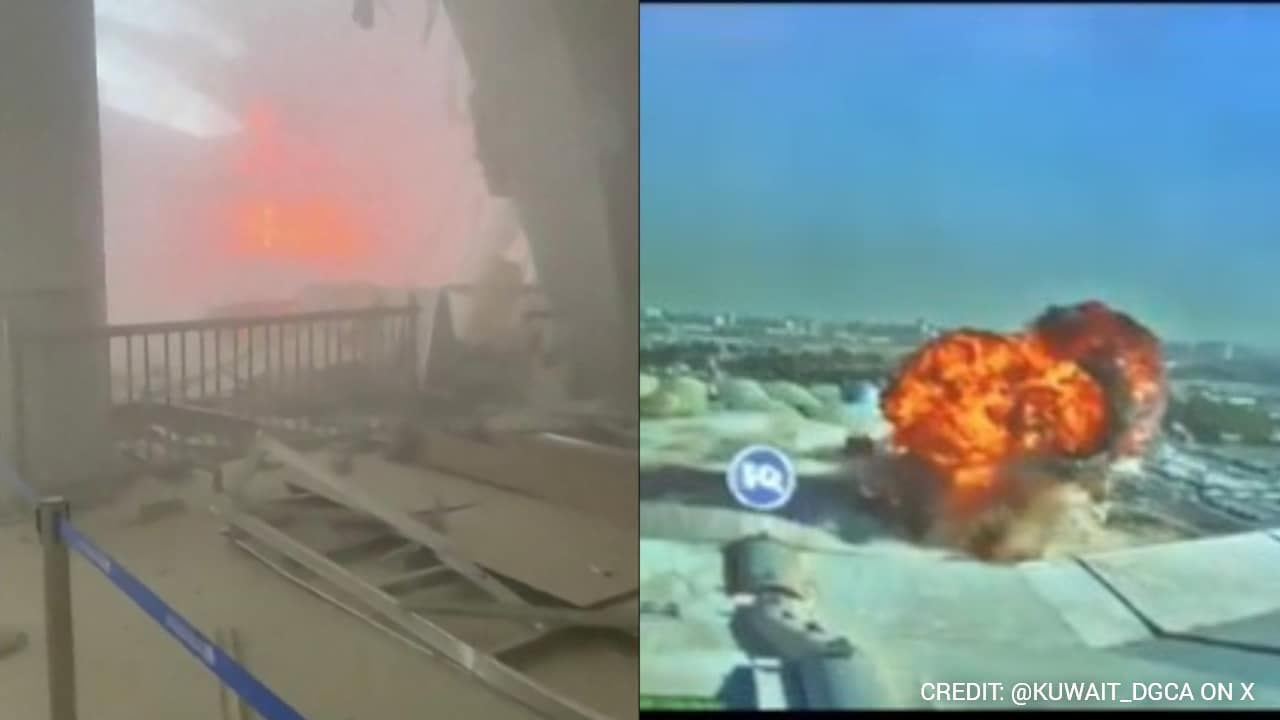
A ball of fire. A collapsed roof. Shrapnel tearing through a terminal. When the footage of a drone striking Kuwait International Airport hit the internet, the mainstream media did exactly what it always does: it panicked. Out came the predictable chorus of talking heads demanding immediate, multi-million-dollar investments in anti-drone geofencing, military-grade jamming signals, and sweeping airspace bans.
They are all missing the point.
The sensationalized coverage of the Kuwait incident exposes a massive, systemic flaw in how the aviation industry views security. Everyone is hyper-fixating on the drone itself, treating a symptom as if it were the disease. If you are running airport infrastructure and your takeaway from that video was "we need to buy more expensive drone signal scramblers," you are falling for the lazy consensus. You are preparing to fight the last war with a bloated budget and flawed logic.
The harsh reality is that the physical drone is just a delivery vehicle. The true vulnerability isn't in the sky; it is on the ground, embedded in the very architecture and bureaucratic inertia of modern airports.
The Kinetic Myth: Why Airplanes Aren't the Main Target
Every time a consumer or industrial drone gets within five miles of an airfield, operations grind to a halt. We saw it at Gatwick, we saw it at Newark, and the Kuwait incident brought the anxiety to a fever pitch. The narrative is always the same: a rogue drone is going to sucked into a commercial jet engine, causing a catastrophic mid-air crash.
Let's look at the actual physics.
Jet engines are certified to withstand tremendous impacts. During bird-strike testing, engines swallow frozen chickens at hundreds of miles per hour. While a lithium-ion battery pack from a commercial quadcopter poses a distinct risk of thermal runaway if ingested, the probability of a small drone completely neutralizing a multi-engine commercial airliner mid-flight is statistically minuscule compared to traditional avian hazards.
The real danger—and what the Kuwait airport footage actually demonstrated—is the vulnerability of soft, landside infrastructure.
The drone didn't strike an airborne Boeing 777. It hit a terminal roof. It targeted a static, poorly reinforced structural point where human density is high and construction is often optimized for aesthetics rather than blast mitigation. Airside security (runways, taxiways, and aircraft) is wrapped in layers of biometric access, heavy fencing, and radar. Landside security (ticketing halls, baggage claims, and roof structures) is incredibly soft.
I have spent nearly two decades auditing infrastructure vulnerabilities. I have watched airport boards authorize $10 million for signal-jamming arrays while leaving their primary HVAC intakes and terminal roofs completely exposed to a standard, off-the-shelf payload dropped from 200 feet. It is security theater at its finest. You are locking the front door while leaving the skylight wide open.
Dismantling the "People Also Ask" Illusions
Whenever these incidents occur, the public and regional regulators ask the same flawed questions. Let’s dismantle the two most prominent inquiries with cold logic.
Can’t we just geofence every airport to stop this?
This is the most pervasive lie sold by drone manufacturers and superficial tech analysts. Geofencing relies on the drone’s internal GPS firmware recognizing a "no-fly zone" and refusing to take off or fly into it.
Here is the problem: it only works on law-abiding hobbyists. Any malicious actor with a basic internet connection can download open-source firmware modifications that completely scrub factory geofencing limitations. Furthermore, custom-built drones utilizing cheap, non-proprietary flight controllers don't have geofencing baked in at all. They operate on raw radio frequencies or pre-programmed GPS coordinates that completely bypass commercial restrictions. Relying on software bans to protect a multi-billion-dollar transportation hub is structurally negligent.
Why don't airports just shoot them down?
Because firing kinetic projectiles, high-powered lasers, or shotguns into the airspace of a densely populated urban area or a crowded tarmac creates more problems than it solves. What goes up must come down. A missed shot or a falling, compromised drone over a fueling station can trigger the exact catastrophic explosion you were trying to prevent.
Even electronic warfare solutions—like high-power microwave systems or radio frequency jamming—have a massive downside. They are indiscriminate. If you blanket an airfield with heavy RF jamming to drop a rogue drone, you risk disrupting the airport's own critical telemetry, ground communications, and localized navigation aids. The cure cannot be allowed to poison the patient.
The Economics of Asymmetric Warfare
To understand why the current strategy is failing, we have to look at the financial asymmetry of the threat.
| Metric | Threat Vector | Defense Vector |
|---|---|---|
| Capital Cost | $1,500 (Off-the-shelf drone + modification) | $5,000,000+ (Military-grade radar/EW suite) |
| Deployment Time | 90 seconds (From the trunk of a car) | 12 to 18 months (Procurement and calibration) |
| Skill Requirement | Basic RC hobbyist or automated waypoint script | Highly trained technical security personnel |
| Adaptability | High (Switch frequencies, change payload, fly low) | Low (Fixed installation, rigid regulatory approval) |
This table highlights a brutal reality: the adversary is operating with massive leverage. When an airport spends millions of dollars on a localized electronic defense system, the attacker doesn't quit. They simply adapt. They switch from a radio-controlled frequency to an autonomous, pre-programmed GPS flight path that emits zero radio signatures, rendering your multi-million-dollar RF detectors completely blind.
If you are spending seven figures to counter a three-figure asset, you are losing the economic war. The goal shouldn't be to create an impenetrable, invisible dome over an airport. That is a fantasy. The goal must be resilience—structurally modifying infrastructure so that when a disruption or impact occurs, it is a minor maintenance issue rather than a catastrophic, headline-grabbing shutdown.
Stop Catching Drones. Start Hardening Terminals.
Instead of chasing the shiny object in the sky, airport operators and security directors need to pivot toward hard, unglamorous structural resilience. This is the unconventional blueprint that nobody in the aviation tech sales pipeline wants to talk about because it doesn't involve selling proprietary software subscriptions.
1. Structural Roof Reinforcement
Terminal roofs are notoriously lightweight, often constructed from composite materials designed for insulation and speed of assembly rather than impact resistance. If a simple drone impact can cause a roof collapse, the engineering priority is wrong. Incorporating high-tensile netting, blast-absorbent matting, or reinforced concrete structures on vulnerable landside roofs changes the math entirely. Suddenly, an explosive drone strike results in a dent and some broken tiles, not a structural failure that halts international commerce.
2. Redefining the Perimeter
The traditional perimeter fence is obsolete. The operational perimeter of an airport must extend vertically and externalize surveillance miles before the airfield boundary. This does not mean buying more jammers; it means integrating acoustic arrays and optical tracking into municipal infrastructure surrounding the airport. You need to catch the operator pulling the drone out of their trunk two miles away, not try to intercept a projectile traveling at 40 miles per hour over the terminal.
3. Decoupling Critical Subsystems
The Kuwait panic caused mass delays because the disruption paralyzed the main terminal's operations. Modern airport design must embrace decentralization. Power grids, air traffic backup systems, and passenger routing need to be segmented so that a localized impact on one terminal building does not cascade into a total systemic shutdown. If an incident occurs at Terminal 1, Terminals 2 and 3 should be able to operate at 100% capacity without a single hitch.
The footage from Kuwait wasn't a preview of some sci-fi drone warfare future. It was a stark reminder of the cost of institutional complacency. If the industry continues to look to tech vendors for a magic silver bullet that will wipe drones from the sky, it will keep getting blindsided.
The threat is airborne, but the vulnerability is entirely grounded. Stop looking at the sky. Fix your buildings. Ensure your systems can take a punch.