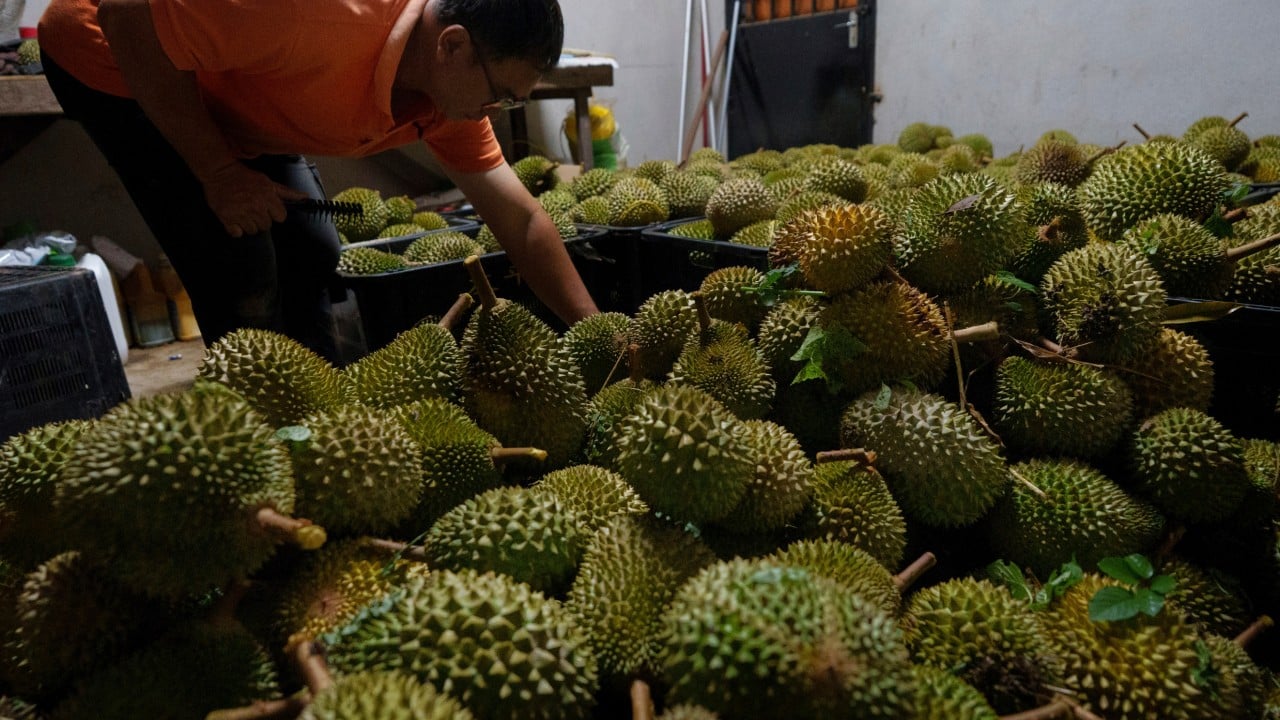
Moving fresh Malaysian durian to China by road sounds simple on paper. Put fruit on a refrigerated truck, drive north, beat air freight costs, and collect premium prices.
In reality, it's a logistical minefield.
Fresh Malaysian durian is notoriously fragile once it drops from the tree. Unlike durians harvested earlier in other countries for long-haul transit, Malaysian growers prize tree-ripened flavor—especially varieties like Musang King (D197)—which gives the fruit a shorter window before quality slips. When Malaysia's Agriculture and Food Security Minister Mohamad Sabu opened talks with Thailand, Laos, Vietnam, and Cambodia to negotiate overland transit routes to China, the headline sounded like an immediate breakthrough. Officials have pointed to transit times of roughly three to four days by land, promising faster delivery than slow ocean routes and lower costs than air cargo.
I've watched Southeast Asian agricultural supply chains trip over border friction for years, and speed on the highway is only half the battle. A truck moving fast between two checkpoints means nothing if it sits idle at a third border waiting for phytosanitary clearance, cold-chain verification, or transit permits.
What Overland Durian Exports Actually Require
When people hear about new land routes to China, they usually picture open highways and smooth sailing. That's rarely how cross-border perishable trade works in mainland Southeast Asia.
To move fresh durian from Malaysia to China over land, shipments have to pass through neighboring countries—most notably Thailand and Laos, or Vietnam—before reaching Chinese entry ports. Every border crossing adds inspection steps, paperwork, temperature logs, and customs checks. Even a twelve-hour delay in a warm staging yard can start softening a delicate fruit.
There's also a diplomatic catch that makes these talks tricky. Thailand, Vietnam, and Cambodia are major durian exporters to China themselves. Negotiating transit corridors with competitors who share the exact same end market requires careful balance. Transit countries want assurances that foreign shipments won't disrupt local border traffic, bypass quarantine rules, or create unfair competition along shared trade arteries.
As reported by Fruitnet and South China Morning Post, Malaysia recorded 18,370 tonnes of durian exports to China in 2025, with fresh fruit alone valued around US$37 million (about RM150.6 million). Those numbers grew dramatically after fresh durian market access was secured in 2024, with export momentum surging into 2026. Yet compared with China's massive overall durian imports—which topped 1 million tonnes in the first half of 2026 alone—Malaysia is still carving out its niche rather than flooding the market.
Why Air Freight and Frozen Logistics Still Matter
Land routes won't replace air cargo or frozen formats overnight. They'll complement them, and each option carries trade-offs that exporters have to weigh carefully.
- Air freight remains the fastest way to get ultra-fresh, high-grade fruit into top-tier Chinese cities with minimal handling time. The catch is cost. High air cargo rates eat into margins and limit shipments mostly to peak-price windows or top-tier buyers.
- Frozen durian—whole fruit, paste, or pulp—remains a workhorse for stability. Freezing reduces spoilage risk, smooths out seasonal spikes, and lets brands build year-round foodservice and retail presence without racing the clock.
- Overland refrigerated trucking sits in the middle. It promises better economics than air for larger volumes and quicker turns than sea freight, provided cold-chain discipline holds from packing house to wholesale market.
Honesty check: if a shipper's packing house lacks strict pre-cooling and consistent temperature monitoring, a three-to-four-day overland trip can still arrive with bruised or overripe fruit. Faster transit magnifies both good handling and sloppy handling.
The Price Paradox Nobody Talks About
Here's the part of the durian boom that catches newcomers off guard. More export volume doesn't automatically mean higher farm-gate prices.
Coverage from The Edge Malaysia and Bangkok Post has highlighted a sharp tension in the regional market: even as exports to China climbed rapidly in 2025 and 2026, oversupply waves and heavy regional competition pushed prices down at times, squeezing growers. China's total durian imports jumped sharply in the first half of 2026 compared with the prior year, creating heavy supply pressure when harvests overlapped across the region.
When supply surges faster than retail absorption—or when lower-priced fruit floods wholesale channels—prices soften. For smallholders and orchard investors who planted trees expecting perpetual windfall prices, that's a sobering reality.
Volume vs. Brand Protection
Malaysia's strongest card in China has never been raw tonnage. Thailand and Vietnam move huge volumes at scale. Malaysia has historically stood out for distinctive cultivars, rich flavor profiles, and premium positioning.
If overland routes make it easier to ship larger quantities quickly, exporters have to resist the temptation to chase volume at the expense of grading and quality control. One batch of subpar fruit sold under a premium Malaysian label hurts everyone behind it. Chinese customs and quarantine authorities also pay close attention to pest control, residue standards, and traceability—meaning protocol slip-ups can slow down or jeopardize access.
Common Mistakes Exporters Make When Scaling Up
From watching agricultural exporters expand into new corridors, a few predictable mistakes keep showing up:
- Treating logistics as a transport problem instead of a cold-chain system. Buying or booking a reefer truck is easy. Maintaining steady temperatures during loading, customs queues, and cross-dock transfers is where spoilage happens.
- Assuming every buyer wants the same grade. Wholesale buyers in secondary cities price fruit very differently from specialty retailers in major hubs. Mixing grades without clear segmentation leads to margin leaks and disputes.
- Ignoring seasonal overlap. When peak harvests hit across Southeast Asia at the same time, buyers gain leverage and prices compress fast. Relying purely on spot sales during peak glut months is risky.
- Underestimating paperwork and compliance. Export approvals, farm registration, packing facility rules, and transit documentation aren't box-ticking exercises. Missing a single requirement can stall a shipment right when shelf life matters most.
Practical Next Steps for Growers, Traders, and Watchers
If you're running an orchard, managing export logistics, or tracking Southeast Asia's agri-trade corridors, focus on execution you can actually control while government-to-government negotiations play out:
- Audit cold-chain handoffs first. Map every point where fruit changes hands or waits between harvest, packing, customs, and distribution, and log temperatures across trial runs before scaling overland volume.
- Lock in off-take and grading standards early. Pair clear quality tiers with defined buyer channels so premium fruit isn't dumped into price-sensitive wholesale markets during supply spikes.
- Keep a balanced mix of formats. Don't bet an entire business on one shipping mode or one product format; combine fresh channels with frozen or processed options to buffer weather and market swings.
- Track bilateral protocols closely. Watch official customs and agriculture announcements for confirmed transit corridors, approved facilities, and clearance rules before committing capital to new overland routes.