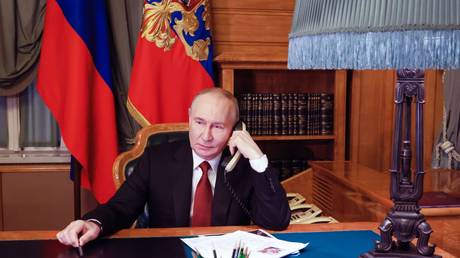
The phone lines between Washington and Moscow just stayed open for a solid hour, and if you think this was just another routine check-in, you haven't been paying attention to the map lately. On Monday, March 9, 2026, Donald Trump initiated a call with Vladimir Putin that basically confirms the two leaders are trying to redraw the geopolitical board while the rest of the world watches from the sidelines.
Kremlin aide Yury Ushakov was the one to spill the beans, describing the talk as "practical, frank, and constructive." When diplomats use those words, it usually means they didn't agree on everything, but they're finally speaking the same language of power. The timing couldn't be more intense. We're currently seeing a massive U.S.-Israeli military operation in Iran, a shifting front line in Ukraine, and an energy market that's acting like a roller coaster on a caffeine high.
The Iran Problem and the New Reality in Tehran
The biggest takeaway from this hour-long session was the focus on the escalating conflict in Iran. Trump told reporters shortly after the call that the war in Iran is "very complete, pretty much." That’s a bold claim, considering the smoke is still clearing over Tehran. He’s essentially saying that the joint operations have dismantled the Iranian navy and air force to the point of irrelevance.
Putin, however, isn't just sitting back. He’s already been on the phone with the new Supreme Leader, Mojtaba Khamenei, pledging "unwavering support" while the country faces what he calls "armed aggression." During the call with Trump, Putin pushed for a "quick political and diplomatic settlement."
Here is what’s really happening behind the scenes:
- Energy Blackmail or Realism? Putin warned that if the fighting continues, the global flow of oil and gas through the Strait of Hormuz will stop. That creates a "new price reality" that nobody's wallet is ready for.
- The Russian Proposal: Putin presented specific ideas for a settlement after his own rounds of talks with Gulf leaders. He’s positioning Russia as the essential mediator, even as Trump claims military victory.
- The "Candidate" Mystery: Trump hinted he has someone in mind to replace the current Iranian leadership but wouldn't say who. It’s classic Trump—keep them guessing while holding the leverage.
Ukraine and the Trilateral Equation
While Iran took up the bulk of the time, the "Ukraine question" hasn't gone anywhere. We’re seeing a significant shift in how these talks are structured. We’ve moved past the era of just "Ukraine and its allies" talking. Now, it’s a trilateral conversation involving Washington, Moscow, and Kyiv.
Ushakov noted that Trump is still pushing for a swift ceasefire and a long-term resolution. But there's a catch. Putin spent part of the call describing the "successful progress" of Russian troops on the line of contact. In plain English, he’s telling Trump that Russia is negotiating from a position of strength on the ground. He’s using those battlefield gains as a "factor" to force Kyiv into a deal.
It’s a brutal calculation. Trump wants the war over to focus on "America First" priorities and the Middle East. Putin wants to lock in his territorial gains before any formal treaty is signed. The fact that they’ve agreed to communicate "on a regular basis" suggests that a deal might be closer than the public rhetoric suggests.
The Venezuela and Oil Connection
You might wonder why Venezuela even came up in a call about Iran and Ukraine. It’s all about the barrels. With Iran’s exports in jeopardy and Russia facing its own set of sanctions, the global oil market is a mess.
- Supply Chains: The leaders discussed Venezuela specifically to address global oil stability.
- Sanctions Easing: There's quiet talk in diplomatic circles about the U.S. easing some Russian oil sanctions to prevent a total price collapse at American gas stations.
- Market Reactions: The mere news of this call caused oil prices to dip briefly. The market trusts a Trump-Putin dialogue to eventually lead to some kind of stability, even if it’s a cynical one.
What This Means for Global Alliances
The "Anchorage Formula" and the upcoming talks in Abu Dhabi are the real tests. If you look at the players involved—Admiral Igor Kostyukov for Russia and Steve Witkoff for the U.S.—it’s clear this is moving toward a security-and-finance hybrid deal.
European leaders are noticeably nervous. They’ve been largely excluded from these direct lines of communication. The "America First" policy means Trump is looking at the bottom line: how much does this cost, and how fast can we stop the bleeding? If that means making a deal with Putin that bypasses Brussels or Paris, he’s shown he’s more than willing to do it.
Honestly, the biggest mistake people make is thinking these calls are just talk. In the world of high-stakes diplomacy, an hour-long "constructive" call between the two most heavily armed nuclear powers during two active wars is an earthquake.
If you want to stay ahead of how this affects your interests, keep a close eye on the Abu Dhabi summit. That’s where the "ideas" Putin shared on Monday will either become a blueprint for peace or just another footnote in a growing global conflict. Watch the Brent Crude prices; they'll tell you the truth about the success of these talks long before a press release does.