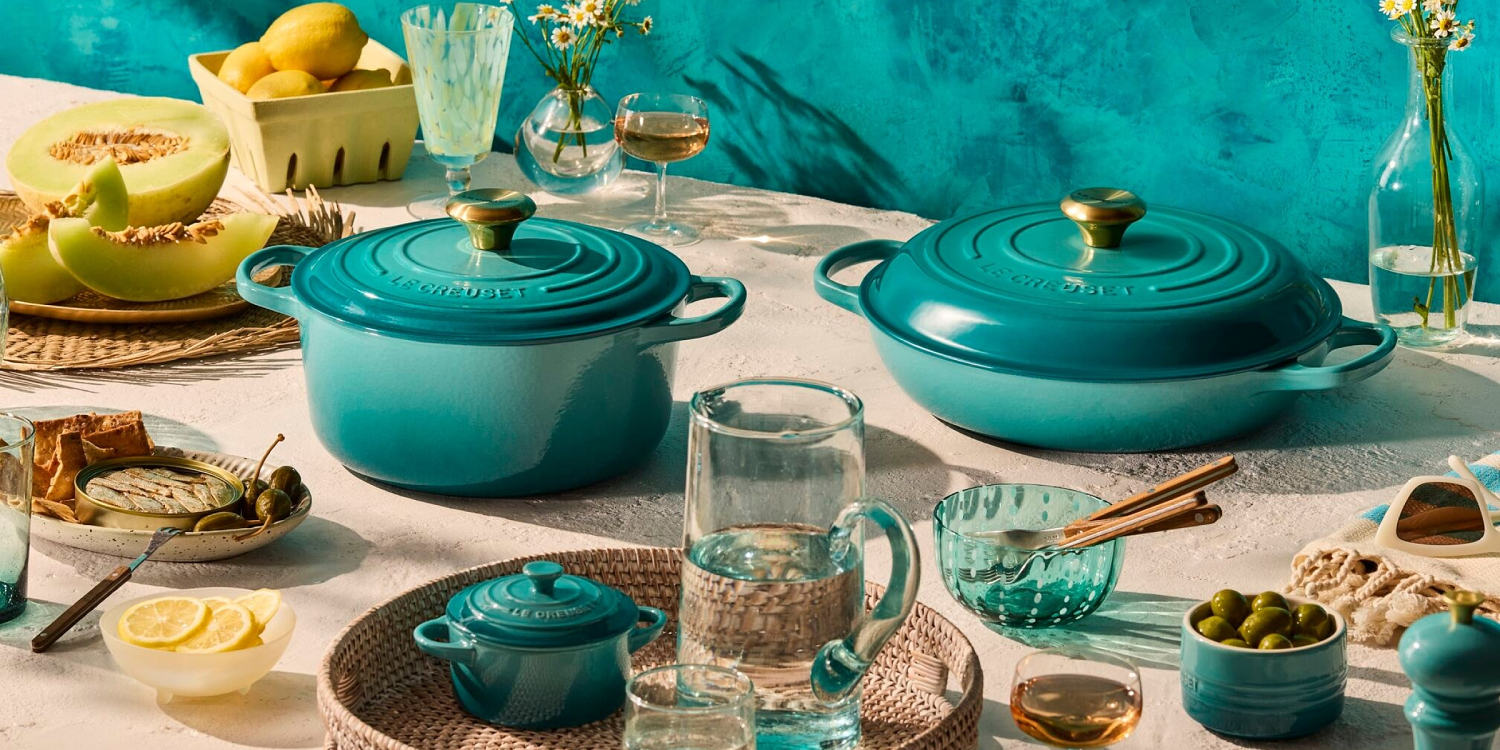
Le Creuset just released Pêche, a shimmering, coral-adjacent hue inspired by the sun-drenched skin of a Mediterranean peach. On the surface, it is a seasonal update for the heritage French brand. Beneath the glossy enamel, however, it represents a masterclass in psychological marketing and the high-stakes world of collectible cookware. By launching this specific shade across its core range—from the iconic 5.5-quart Dutch oven to the petite stoneware cocottes—the company is not just selling a pot. It is selling a lifestyle aesthetic designed to trigger "fear of missing out" in a demographic that treats cast iron like fine art.
The Engineering of Artificial Scarcity
The kitchenware industry used to be about utility. You bought a Dutch oven because it lasted forty years and handled heat distribution better than anything else in the cupboard. Today, that value proposition has shifted toward the "drop" culture usually reserved for limited-edition sneakers or high-end handbags.
Le Creuset operates on a cycle of planned obsolescence—not of the product, which remains virtually indestructible, but of the color palette. When a new shade like Pêche arrives, it signals the impending "retirement" of older colors. This creates a secondary market where discontinued pots in shades like Wasabi or Berry trade for triple their original retail price on eBay and specialized collector forums.
The brand understands that a kitchen is no longer just a place to cook. It is a set for digital content. A Pêche-colored braiser is a visual shorthand for a specific kind of aspirational domesticity: bright, clean, and perpetually summer-ready. For the consumer, the pressure to "complete the set" before the color disappears from the catalog is a powerful motivator that transcends the need for another heavy cooking vessel.
Why the Mediterranean Aesthetic Still Wins
There is a reason the brand keeps returning to the Mediterranean for inspiration. Whether it is the blues of the coast or the oranges of a ripened fruit, these colors tap into a deep-seated desire for escapism. In a world where luxury is increasingly defined by "slow living," a peach-colored pot acts as a totem for a relaxed, European pace of life.
The technical execution of the enamel is where the expertise shows. Creating a stable, vibrant pink-orange gradient in high-heat porcelain enamel is notoriously difficult. The pigment must withstand 1500°F during the firing process without dulling or shifting. Le Creuset’s ability to maintain color consistency across different materials—cast iron, stoneware, and silicone—is why they can command a $400 price tag for a single pot while competitors struggle to move inventory at half that price.
The Hidden Costs of the Rainbow Kitchen
While the aesthetic appeal is undeniable, the move toward "color-focused" cooking has a downside for the average home cook. Collectors often find themselves paralyzed by the "mismatch" problem. If you started your collection in Flame (the original 1925 orange), adding a pastel like Pêche creates a visual clash that many modern "tablescape" enthusiasts find intolerable.
This leads to the "reset" phenomenon. We are seeing a trend where consumers sell off entire collections of one color to finance the purchase of a new, unified palette. It is a cycle of consumption that contradicts the "buy it for life" ethos the brand was built on. The pot will last forever, but your interest in the color might only last three seasons.
The Competitive Landscape of Cast Iron
Le Creuset no longer sits alone at the top of the mountain. They are currently fighting a two-front war. On one side, heritage rival Staub offers a more "masculine," dark-hued aesthetic with a matte black interior that many professional chefs prefer for browning meat. On the other side, direct-to-consumer brands like Great Jones and Milo are undercuting prices by moving production to China and focusing on "millennial" color palettes.
The launch of Pêche is a defensive maneuver. By leaning into their superior glazing technology and their ability to create complex, multi-tonal "gradients" (where the color is darker at the base and lighter at the lid), Le Creuset is reminding the market that they are the original innovators. A $100 Dutch oven from a startup might look good on Instagram, but it rarely possesses the depth of color or the chip-resistance of the French-made original.
Strategy for the Savvy Consumer
If you are looking at the new Pêche collection, the question isn't whether it’s a good pot—it is. The question is whether you are buying it for the enamel or the utility.
- Audit your existing inventory. If your kitchen is dominated by cool tones (blues, greens, grays), a warm peach tone will stand out as an outlier.
- Check the outlet cycle. New colors usually hit the main boutiques first. If you can wait twelve to eighteen months, the "retired" stock of the previous season's "it" color often lands in outlet malls at a 30% discount.
- Prioritize the essentials. The 5.5-quart round Dutch oven is the workhorse. If you are going to invest in a premium color, put it on the piece that will live on your stovetop rather than a specialized dish like a terrine or a bread oven that spends most of its time in a drawer.
The Mediterranean glow of a new collection is seductive. It promises a kitchen that feels like a vacation. But remember that the food tastes the same regardless of the pigment on the outside of the iron. If you truly love the color, buy it now, because in the world of luxury cookware, today’s "must-have" shade is tomorrow’s "vaulted" rarity.
Take a hard look at your current stovetop. If the sight of a mismatched lid genuinely bothers you, stick to the classics like Flame or Cerise. They haven't gone out of style in a century, and they aren't going anywhere.