A cold rain was tapping against the windows of Whitehall when the realization finally settled in. It did not arrive with a dramatic clash of cymbals or a leaked memo splashed across the front pages. It came in the quiet, agonizing math of a spreadsheet.
For years, Britain’s defense strategy has been treated like a house bought on a credit card that everyone knew was maxed out. We watched successive governments stand at podiums, promising world-class capabilities, state-of-the-art frigates, and a military footprint that stretched from the North Atlantic to the Indo-Pacific. But out in the muddy training grounds of Salisbury Plain, and inside the cramped offices of the Ministry of Defence, a different reality was hardening. For an alternative perspective, see: this related article.
The numbers simply do not work.
There is a hollow space where our national security is supposed to sit. Analysts call it a "black hole." It is an abstract term, a bit of economic jargon meant to soften the blow. But a black hole is not an abstract concept to a soldier staring at a vehicle that lacks spare parts, or to a commander realizing that the ammunition stockpiles meant to last months would actually vanish in days. Related analysis on this trend has been shared by Reuters.
The crisis facing Keir Starmer’s government is not just a legacy of bad accounting. It is a fundamental reckoning with a truth we have avoided for a generation: you cannot hold a global position on a local budget.
The Cost of the Unsaid
To understand how deep the water is, consider a hypothetical treasury official we will call David. David has spent fifteen years moving numbers around the ledger. He knows that every time a politician announces a grand new deployment or a shiny procurement contract, a quiet compromise is made somewhere else. The public sees the ribbon-cutting. David sees the deferred maintenance on military housing. He sees the training hours cut short.
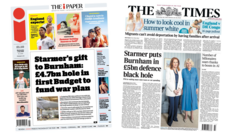
The black hole, currently estimated by some internal audits to sit anywhere between £15 billion and £20 billion over the next decade, is the sum of those silent compromises.
It is a slow-motion car crash driven by inflation, currency fluctuations, and a stubborn refusal to match national ambition with hard cash. When the cost of steel goes up, when the microchips needed for drone systems double in price, the plan does not change. Instead, the government just buys fewer items, or pushes the delivery date five years down the road.
But the world outside Westminster is not waiting for Britain’s accounting cycle to fix itself.
The war in Ukraine stripped away the illusion that modern conflict is purely digital, clean, and distant. It is brutal, industrial, and fast. It chews through equipment at a rate that has terrified Western generals. When the strategic defense review lands on the Prime Minister’s desk, it will not just be a list of recommendations. It will be an indictment of a system that has spent decades preparing for the wars it wanted to fight, rather than the ones it might actually face.
The Gift on the Horizon
While Whitehall wrestles with the mathematics of national survival, a very different kind of drama is playing out in the North of England.
Politics is an ecosystem of debts and leverage. When Keir Starmer secured his landslide victory, he did not just inherit a broken defense budget; he inherited a party structure that demands decentralization. For years, regional mayors have been demanding more power, more cash, and more autonomy from London. Chief among them is Andy Burnham, the Mayor of Greater Manchester, a man who has perfected the art of standing just far enough outside the Westminster bubble to throw rocks at it, while remaining a formidable force within the Labour movement.
To Burnham, the current political landscape is not a crisis. It is an opening.
The government’s shifting stance on regional funding and transport infrastructure is already being whispered about in local government corridors as "Starmer's gift." It is the quiet devolution of control over the levers of growth. By handing regional leaders greater authority over housing, skills training, and local transport networks, Downing Street is trying to buy something precious: time.
If London cannot afford to fix everything from the center, the strategy is to let the regions fix themselves.
The Friction of Reality
But this gift comes with a razor-sharp edge.
Take a walk through a community on the outskirts of Manchester or Liverpool. The conversations there are not about strategic defense reviews or macroeconomics. They are about the bus that never showed up, the damp in the social housing, and the sense that the local economy has been running on fumes for thirty years.
When power is devolved, blame is devolved along with it.
If Andy Burnham receives the autonomy he has spent a decade fighting for, the shield of blaming "Westminster neglect" begins to crack. The accountability shifts. The human stake in this political hand-off is immense. If a regional transport strategy fails to connect a forgotten town to a major employment hub, it is no longer the fault of a faceless bureaucrat in Whitehall. It rests squarely on the shoulders of the local mayor.
The tension between the defense black hole and the regional funding gift reveals the central flaw in how Britain is currently governed. We are attempting to rebuild our domestic foundations while simultaneously trying to patch the roof of our global security house. Both tasks are urgent. Both require billions.
There is only one pot of money.
The Choice We Refuse to Make
We live in an era where the comfort of simple answers is gone. For a long time, the British public was allowed to believe that we could have it all: low taxes, a world-class welfare state, revitalized northern cities, and a military capable of projecting power across oceans.
The spreadsheet has finally said no.
Every pound channeled into filling the defense void to ensure our soldiers have the basic tools of survival is a pound that cannot be used to fund the regional renaissance Burnham wants to build. Conversely, every concession made to local authorities to stimulate growth leaves the national treasury more exposed to the geopolitical storms gathering in Eastern Europe and the Taiwan Strait.
It is a brutal, zero-sum game played with the lives of ordinary citizens.
The real danger is not that we choose one over the other. The danger is that we continue to do what we have done for thirty years: compromise on both, achieve neither, and pretend everything is fine until the next crisis forces our hand.
The rain continues to fall on Westminster, washing away the rhetoric of the election campaign, leaving behind nothing but the stark, unyielding truth of the balance sheet.