A standard diplomatic cable is usually printed on heavy, off-white paper. It smells faintly of toner and official indifference. But when that piece of paper lists your homeland as the latest target of an economic execution warrant, it feels heavy enough to crush a table.
In Muscat, the capital of Oman, the air is usually thick with the scent of frankincense and the quiet hum of the Arabian Sea. For decades, this sultanate has operated as the Middle East’s quietest diplomat. They are the nation that talks to everyone, the Switzerland of the sands, the neutral ground where bitter enemies sit down to tea. Yet, a single threat from Washington can turn that ancient, carefully guarded tranquility into a collective intake of breath.
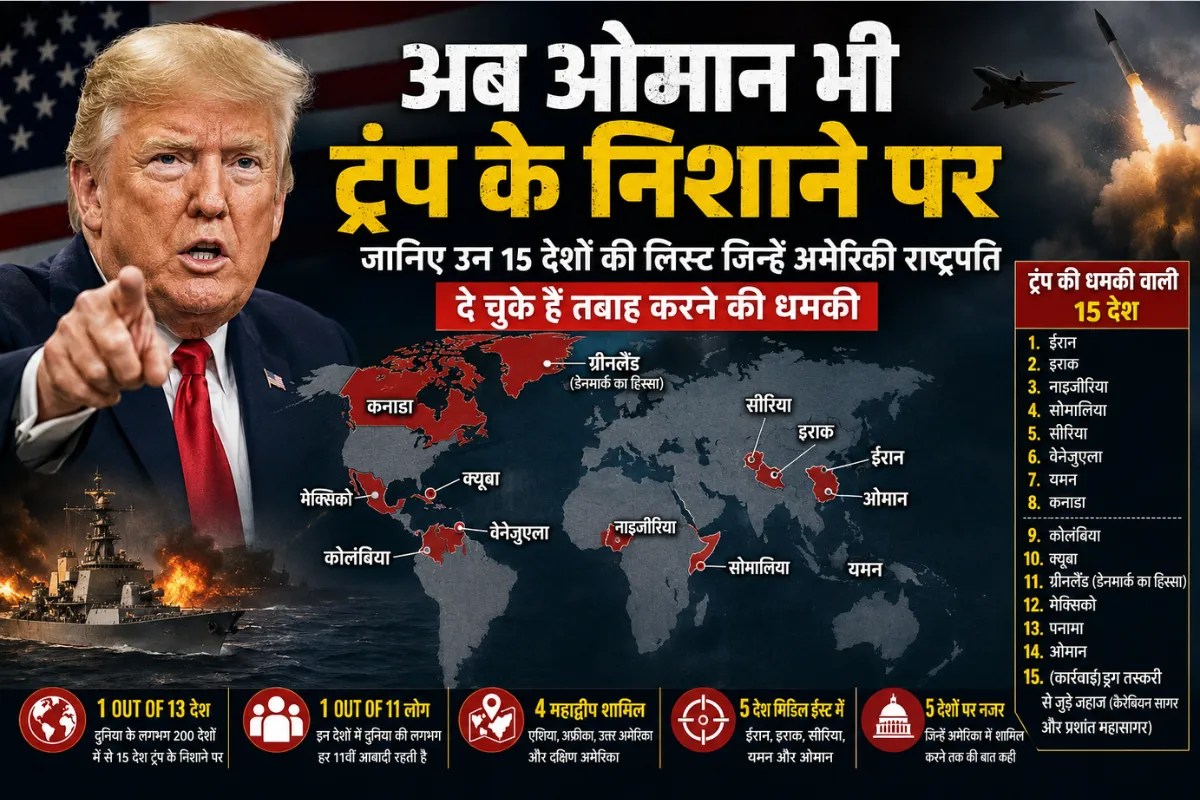
Oman has joined the list. It is a ledger written in anger, broadcasted in late-night social media posts, and delivered with the casual indifference of a man tearing up a restaurant receipt.
When a superpower threatens to obliterate your economy, the numbers on a screen translate into immediate, human panic. A shopkeeper in Muttrah Souq wonders if his imported spices will double in price by next month. A young engineer looks at her newborn son and questions whether the currency will collapse before he learns to walk. Diplomacy, when viewed from the receiving end of a superpower's wrath, is not a game of chess. It is a falling anvil.
The Geography of Fear
To understand how Oman found itself under the shadow of American economic destruction, you have to understand the mathematics of modern intimidation. It rarely starts with troops. It starts with the dollar.
Consider how easily a global supply chain breaks. For a small nation, a sudden 100% tariff or a total financial embargo isn’t a policy shift. It is an economic heart attack. The threat directed at Oman follows a predictable, terrifying script that has been rehearsed across fifteen different flags over the last decade.
The strategy relies on a simple premise: comply, or we will erase your ability to buy and sell.
But Oman’s sin isn't aggression. Its sin is geography and neutrality. Nestled on the tip of the Arabian Peninsula, it guards the Strait of Hormuz. It has spent forty years refusing to take sides in the cold war between Riyadh and Tehran. In the eyes of an administration that demands absolute fealty, however, neutrality looks exactly like treason.
The Fifteen Names on the Blackboard
Oman is merely the latest entry in a well-worn ledger. Before the sultanate’s diplomats were forced to draft late-night contingency plans, fourteen other nations sat in the exact same cold room, waiting to see if the threat was a bluff or a death sentence.
The名单 spans continents, ideologies, and economies.
Take Mexico. The threat there was simple: seal the border or face a 25% tariff that would have instantly dismantled North American manufacturing. For the autoworker in Puebla, that tweet wasn't political theater. It was the sudden, terrifying prospect of an empty dinner table. The uncertainty alone caused the peso to tumble, proving that a threat doesn't even need to be enacted to inflict pain.
Then look across the Atlantic to Turkey. A NATO ally, reduced to a target within a twenty-four-word digital outburst. When the American administration threatened to "totally destroy and obliterate" Turkey's economy over a geopolitical disagreement in Syria, the Turkish lira plummeted by double digits in a matter of hours. Local bakers in Istanbul watched their flour costs skyrocket before lunch.
The list grows longer, wrapping around the globe like a barbed wire fence:
- China: Subjected to a multi-year economic siege that transformed the global tech sector into a minefield.
- Iran: Faced with "maximum pressure" campaigns designed to starve the state, resulting in ordinary citizens scrambling for basic cancer medications.
- North Korea: Threatened with "fire and fury," a phrase that evoked images of mushroom clouds over the Korean peninsula.
- Venezuela: Systematically cut off from the global financial nervous system, accelerating a humanitarian migration crisis.
Add to these the European allies—Germany, France, and the United Kingdom—who were repeatedly told their automotive and luxury industries would be crushed by punitive taxes if they didn't fall into line on climate and trade agreements. Even Canada, the quiet neighbor to the north, found itself labeled a "national security threat" during a bitter dispute over steel.
The Architecture of the Digital Guillotine
The mechanism of this modern warfare is uniquely psychological. In the past, an ultimatum between nations required a formal declaration, a convoy of ships, or at least a solemn address from the Oval Office.
Today, it requires a smartphone and an appetite for chaos.
This is diplomacy by whiplash. The true cruelty of the tactic lies in its unpredictability. Markets hate ambiguity. When the leader of the world's largest economy suggests he might sever trade relations on a whim, global investors don't wait to see if he’s joking. They pull their capital out. They cancel factory openings. They freeze hiring.
The target nation is left paralyzed. If they retaliate, they risk escalating a skirmish into total economic ruin. If they capitulate immediately, they surrender their sovereignty to a bully who will likely return tomorrow with fresh demands.
For Oman, the stakes are deeply specific. The country has spent billions diversifying away from oil, building world-class ports in Salalah and Duqm. These ports thrive on international trust. They are designed to be safe harbors in a volatile region. By placing Oman in the crosshairs, the threat effectively poisons the well of foreign investment. Who wants to build a multi-million-dollar logistics hub in a country that might be economically isolated by next Tuesday?
When the Shockwaves Hit the Street
We tend to look at these international standoffs through the lens of macroeconomics. We talk about GDP contraction, bond yields, and trade deficits. Those words are too clean. They hide the blood.
When Iran was choked out of the SWIFT banking network, the immediate casualty wasn't the political elite in Tehran. It was the middle-class family whose savings vanished into thin air. It was the small-scale entrepreneur who had spent twenty years building a carpet export business, suddenly unable to receive a single payment from abroad.
When tariffs were slapped on Chinese goods, it wasn't just Beijing that felt the squeeze. It was the independent farmer in Iowa who watched his soybean silos rot because his biggest market had vanished overnight, leading to a spike in agricultural bankruptcies and a quiet, desperate crisis in America's heartland.
This is the human cost of the ledger. The decisions are made in gilded rooms in Washington, but the shrapnel flies outward, hitting people who don't know the first thing about geopolitical posturing.
Omanis are watching this historical pattern with a mixture of pride and quiet dread. Their culture is rooted in a tradition of courtesy and mediation. To be dragged into a public street fight by a superpower goes against every tenet of their national character. Yet, they know that character offers very little shelter against a financial hurricane.
The Illusion of Absolute Power
There is a fatal flaw in the strategy of constant, sweeping threats. Like any antibiotic, if you use it too often, the bacteria adapt. The target learns to survive without you.
By threatening fifteen nations with destruction, the American administration has inadvertently forced the rest of the world to build an alternative financial universe. Countries are no longer just reacting with fear; they are reacting with preparation. They are signing bilateral trade agreements that bypass the dollar entirely. They are building alternative messaging systems to replace SWIFT. They are forming new alliances, looking to Beijing, Moscow, or New Delhi for partnerships that might lack democratic ideals but offer something currently missing from Washington: predictability.
Every time a new country is added to the list, the exclusive club of the sanctioned grows larger and more self-sufficient.
The Sultan of Oman recently sat in his palace, looking out over a harbor that has seen trade ships pass since the days of the Silk Road. Empires rise, scream their ultimatums into the wind, and eventually fade into the history books. Oman has survived the Portuguese, the Persians, and the British by knowing when to bend and when to stand still.
The threat from across the Atlantic will dominate the news cycle for a few weeks. The markets will twitch. The diplomats will hold urgent, hushed meetings behind closed doors. But beneath the panic, there is a growing, global realization that the power to destroy an economy loses its teeth when everyone else decides they no longer want to play the game.
The ledger of wrath is getting full. And when a room becomes too crowded with enemies, the person holding the gavel suddenly finds themselves completely alone.