Narges Mohammadi is dying in a cell while the world watches from a distance. That’s the blunt reality facing the 2023 Nobel Peace Prize winner right now. Her health has hit a breaking point in Tehran’s notorious Evin Prison, and the Iranian government seems perfectly content to let the clock run out. We aren't just talking about a political prisoner who needs a bit of rest. We're talking about a woman with a history of heart disease and lung complications who's been denied the most basic specialized medical care for months. It’s a slow-motion execution disguised as legal detention.
If you’ve been following the "Woman, Life, Freedom" movement, you know her name. If you haven't, you should. Mohammadi has spent most of the last two decades cycling in and out of prison. Her crime? Daring to say that women shouldn't be treated like second-class citizens and that the death penalty is an abomination. Right now, she's serving a sentence of roughly 12 years, and that number keeps growing as the regime piles on new charges every time she speaks up from behind bars.
Why the health of Narges Mohammadi is a global emergency
The situation turned dire this week. Her family and the Free Narges Coalition have issued frantic warnings because she’s suffering from acute chest pain and respiratory issues. In a place like Evin, a "medical clinic" is often just a room with some bandages and a guard who doesn't care if you breathe or not. They’ve repeatedly blocked her transfer to a hospital where she could actually see a cardiologist.
Think about the sheer cruelty of that for a second. This isn't a resource problem. Iran has doctors. It has hospitals. This is a deliberate policy of medical neglect used as a tool of torture. By withholding treatment, the state hopes to break her spirit or, failing that, simply let her body fail. They want to turn a symbol of resistance into a cautionary tale. It’s a common playbook for the Islamic Republic, but with a Nobel laureate, the stakes are shifted onto the international stage.
The pattern of systematic neglect in Evin Prison
Evin isn't just a jail. It’s a factory designed to crush the human psyche. I’ve seen reports from dozens of former inmates who describe the same thing: the "slow death." You get a fever, they give you an aspirin. You have a heart attack, they tell you to lie down. For someone with Mohammadi's specific conditions—she’s had multiple heart surgeries and suffers from a bone marrow issue—this environment is a death sentence.
The authorities use medical furlough as a bargaining chip. They tell prisoners they can go to the hospital if they repent or stop their activism. Mohammadi won't budge. She's famously refused to wear the mandatory hijab even during medical transfers, which led the guards to cancel her appointments. She’s literally putting her life on the line for a piece of cloth and the principle it represents.
The Nobel Peace Prize didn't protect her
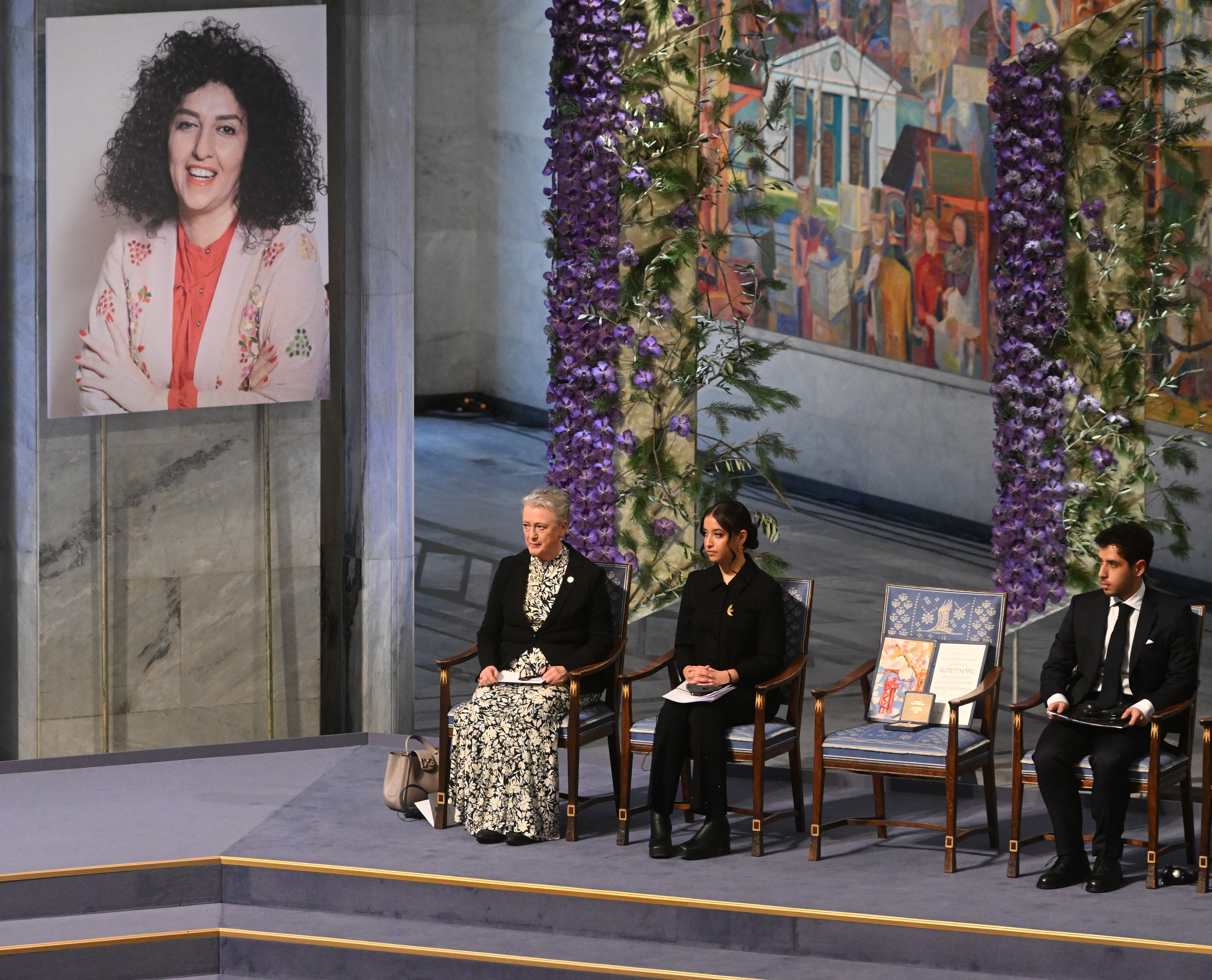
When the Nobel Committee announced her win in October 2023, there was a brief flash of hope. Surely, the world thought, the Iranian government wouldn't let a Nobel winner die in a cage. That was wishful thinking. If anything, the award made her a bigger target. It embarrassed the regime on a global scale.
The prize was a recognition of her fight against the oppression of women in Iran and her struggle to promote human rights and freedom for all. But in the eyes of the hardliners in Tehran, that's just a fancy way of saying "national security threat." They don't see a peace activist. They see a woman who has the power to mobilize the streets. And they're terrified of her.
What the Woman Life Freedom movement actually costs
We see the hashtags. We see the protests on the news. But the actual cost of this movement is measured in the years stolen from mothers like Narges. She hasn't seen her children in years. They live in France with their father, Taghi Rahmani, who is also a veteran of the Iranian prison system. Imagine winning the world's most prestigious prize and not even being able to hear your children's voices to celebrate. That's the reality of her life.
The movement triggered by the death of Mahsa Amini in 2022 didn't just disappear. It went underground, and it moved into the prison wards. Mohammadi has been leading protests from inside the female ward of Evin, organizing sit-ins and issuing statements that get smuggled out and posted to her Instagram. She's essentially running a resistance cell from a 10-by-10 room.
Silence from the international community is a green light
Governments love to issue "strongly worded statements." They’re great for press releases but they don't open prison doors. The UN has called for her release. Human Rights Watch has sounded the alarm. Amnesty International is constantly documenting her decline. Yet, the diplomatic pressure hasn't been enough to move the needle.
There’s a cynical calculation happening here. Countries are balancing their human rights rhetoric against geopolitical interests—oil, nuclear deals, and regional stability. But when we allow a Nobel laureate to perish because we're afraid of rocking the boat, we're basically telling the Iranian government that their hostage diplomacy works.
What you can actually do to help
It’s easy to feel helpless. You’re sitting at a desk or on a bus, and she’s in a cell in Tehran. But the one thing the Iranian regime hates is a spotlight that won't turn off. They want the world to get bored. They want Narges Mohammadi to become "old news."
Don't let that happen.
Pressure works when it’s consistent and loud. Contact your local representatives and demand that Narges Mohammadi’s health be a priority in any diplomatic discussion with Iran. Support the Free Narges Coalition. Share the updates from her family. It sounds small, but in the world of high-stakes political imprisonment, visibility is the only shield these people have.
The Iranian authorities need to know that if Narges Mohammadi dies in their custody, the cost will be higher than they’re willing to pay. This isn't just about one woman anymore. It's about whether the international human rights framework has any actual teeth or if it's just a collection of nice ideas on expensive paper.
She hasn't stopped fighting for us. It’s about time we made sure she has the chance to keep breathing. If she's willing to face down the Revolutionary Guard from a hospital bed without a headscarf, the least we can do is make sure people know her name and the state of her heart. Every day without specialized medical care is a day closer to a tragedy that is entirely preventable. Stop waiting for the next headline and start demanding action now.