Pakistan’s immediate obligation to repay $3.5 billion to the United Arab Emirates (UAE) is not merely a budgetary line item but a stress test for the country's sovereign solvency framework. While public discourse often focuses on the diplomatic friction or the "distress" of the lender—as characterized by Senator Mushahid Hussain’s recent remarks—the underlying mechanics reveal a deeper structural misalignment between Pakistan’s debt maturity profile and its foreign exchange reserve accumulation. The core problem is a Negative Feedback Loop of Rollovers, where short-term relief from Gulf partners creates a persistent "repayment cliff" that prevents long-term capital expenditure.
The Triad of Sovereign Dependency
The relationship between Islamabad and Abu Dhabi is defined by three distinct economic pillars. Understanding these is essential to diagnosing why a $3.5 billion repayment represents a systemic risk rather than a routine transaction.
- The Liquidity Bridge: UAE deposits in the State Bank of Pakistan (SBP) serve as artificial inflation for gross reserves. These are not "investments" in the traditional sense; they are accounting entries designed to meet IMF-mandated Net International Reserve (NIR) targets.
- The Remittance Corridor: The UAE remains a primary source of US Dollar inflows via Pakistani expatriates. This flow acts as a natural hedge against trade deficits, yet it remains vulnerable to UAE labor policy shifts.
- The Strategic Rollover Expectation: Pakistan’s fiscal planning operates on the assumption that bilateral debt will never actually be settled in cash. When a lender like the UAE signals a shift from "deposits" to "equity-based investments," the assumption of an infinite rollover collapses, creating the current liquidity panic.
Mechanizing the 3.5 Billion Dollar Pressure Point
The $3.5 billion figure consists of multiple tranches of time-bound deposits. To quantify the impact of this repayment, we must examine the Reserve-to-Debt Ratio. Pakistan’s usable reserves—excluding gold and SDRs—often hover near the two-month import cover mark. A $3.5 billion outflow represents a significant percentage of total liquid assets, potentially triggering a currency devaluation.
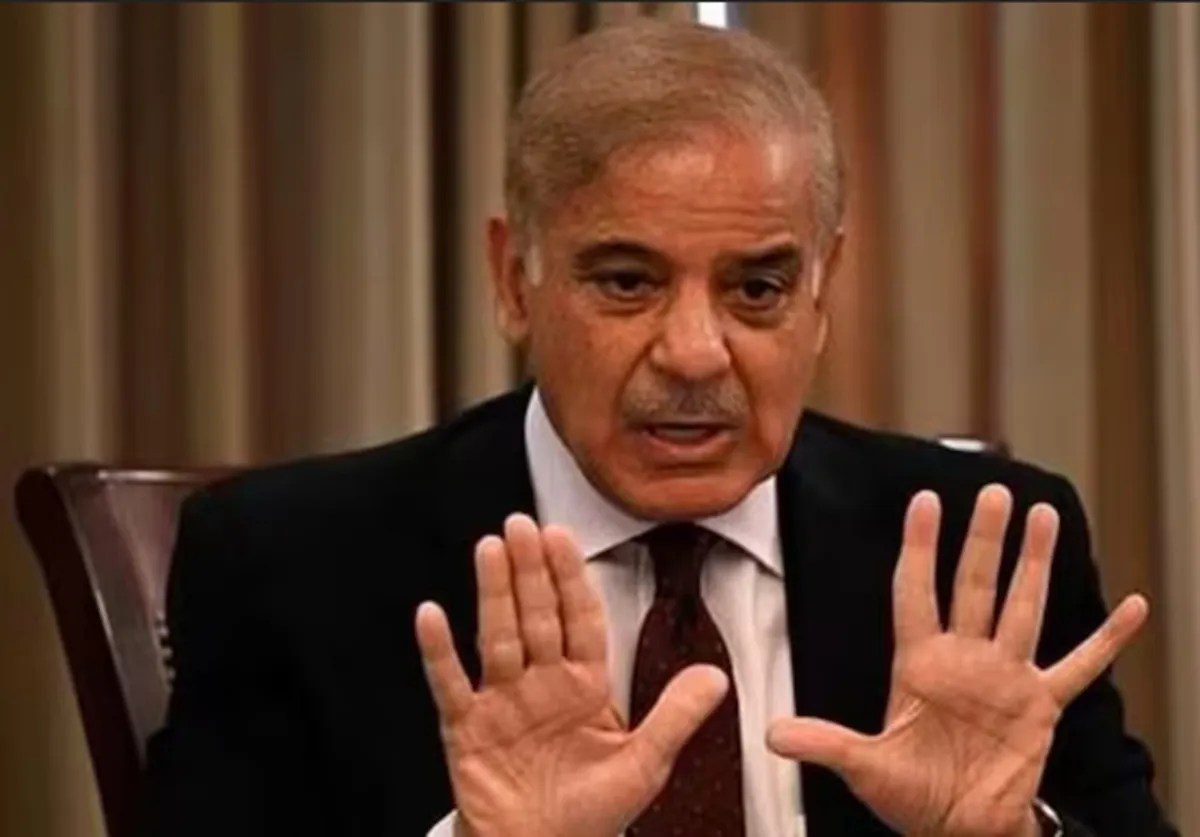
The "Bechara" (poor/helpless) label applied to the UAE by Senator Hussain is a rhetorical inversion of the actual power dynamic. From a credit analysis perspective, the UAE is not "helpless" because it needs the money; it is "exhausted" by the lack of a turnaround strategy. The UAE's transition from a donor state to an investment-driven state means they are prioritizing Internal Rate of Return (IRR) over diplomatic goodwill. They are seeking stakes in state-owned enterprises (SOEs) like airports, seaports, and energy infrastructure in exchange for debt relief.
This creates a Sovereign Asset Swap scenario. Pakistan is no longer being asked to pay in cash—which it lacks—but in equity. The friction arises because the Pakistani political apparatus is optimized for debt-shuffling, not for the rapid privatization and regulatory overhaul required to facilitate these asset transfers.
The Structural Bottlenecks of Debt Servicing
The inability to settle the UAE debt stems from a bifurcated fiscal crisis.
The Revenue-Expenditure Mismatch
Pakistan’s tax-to-GDP ratio remains stagnant, while interest payments consume more than 70% of federal tax revenue. This leaves the state in a position where it must borrow locally to fund government operations and borrow internationally to service existing foreign debt. The UAE loan is caught in this Circular Debt Trap. To pay the UAE, Pakistan must secure a fresh IMF tranche or another bilateral loan from China or Saudi Arabia, essentially trading one creditor’s timeline for another.
The Opportunity Cost of Rollovers
Every time a loan like the $3.5 billion UAE deposit is rolled over, the interest rate is typically renegotiated. In a high-interest global environment, "cheap" bilateral credit is disappearing. The cost of "kicking the can down the road" is increasing exponentially, making the eventual principal repayment even more improbable without a total debt restructuring under the G20 Common Framework—a path Pakistan has desperately tried to avoid to maintain market access.
The Geopolitical Credit Rating
Standard credit agencies look at "willingness to pay" alongside "ability to pay." The UAE’s hesitation to provide unconditional rollovers indicates a downgrade in Pakistan’s Geopolitical Credit Score. The UAE's focus has shifted toward the "India-Middle East-Europe Economic Corridor" (IMEC) and internal diversification. Pakistan’s value proposition as a strategic security partner is being weighed against its performance as an economic liability.
Senator Hussain’s critique reflects a nationalist frustration with this shift. By calling the UAE "poor" or "helpless," he attempts to frame the UAE’s demand for repayment as a sign of their own financial overextension rather than Pakistan’s failure to reform. This is a tactical miscalculation. The UAE’s $1.3 trillion sovereign wealth fund (ADIA) suggests their demand for repayment is a matter of Capital Discipline, not a lack of liquidity.
The Path to Solvency: Equity for Debt
The only viable mechanism to address the $3.5 billion obligation without crashing the Rupee is the Special Investment Facilitation Council (SIFC) framework. This involves:
- Valuation Accuracy: Establishing transparent market values for assets like the Karachi Port or Roosevelt Hotel to satisfy UAE investment boards.
- Regulatory Harmonization: Removing the bureaucratic hurdles that have historically stalled Gulf-led projects in the energy sector.
- De-risking the Currency: Providing guarantees that profits from these investments can be repatriated in USD, which is difficult given the current reserve scarcity.
The UAE is moving from a "Lender of Last Resort" to a "Buyer of Last Resort." This transition is painful because it involves a loss of sovereign control over critical infrastructure. However, the alternative—a hard default on the $3.5 billion—would trigger cross-default clauses in other international bonds, leading to a total freeze of the economy.
The strategic play for Pakistan is to stop viewing the UAE’s demand for repayment as a diplomatic slight and start viewing it as a mandatory pivot toward a FDI-led economy. The era of the "unconditional rollover" is over. Success now depends on the speed at which Islamabad can convert its sovereign debt into bankable investment projects. Failure to do so by the next maturity date will necessitate a move toward formal debt restructuring, which will impose much harsher austerity measures than those currently dictated by the IMF.
The immediate move is not to seek a "pardon" but to finalize the sale of the minority stakes in the OGDCL (Oil & Gas Development Company) and PPL (Pakistan Petroleum Limited) to Emirati funds. This settles the debt through the balance sheet rather than the cash flow, preserving the thin layer of foreign exchange reserves required to prevent a total currency collapse.