The ink on a laminated card dries quickly. But the weight of what it represents—or what it denies—lingers for years.
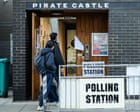
Imagine standing on a cold, slate-grey morning outside a community center in northern England. The wind bites through your coat. You have twenty minutes before your shift starts at the warehouse across town. You reach into your pocket, slide your hand past a crumpled receipt and a stray house key, searching for the plastic slip that proves who you are.
If you find it, you cross the threshold, drop your folded paper into a slot, and participate in a quiet ritual older than most living memories.
If you do not find it, you turn around.
That turning around is where democracy quietly fractures.
Andy Burnham, the Mayor of Greater Manchester, has spent years watching the machinery of civic life grind against the realities of ordinary people. When the policy requiring photographic identification at polling stations was introduced across the United Kingdom, the official promise was simple: security. Protection against a phantom menace of voter fraud. Clean elections.
Yet, as mayors, local councilors, and community organizers quickly discovered, the cure arrived with a toxic side effect. It created a invisible wall.
Consider a hypothetical resident named Arthur. Arthur is seventy-eight. He gave up driving a decade ago when his vision began to blur at dusk. His passport expired during the pandemic, sitting forgotten in a drawer until the pages yellowed. He doesn't go on holidays abroad anymore. He votes. Or, rather, he used to. When told he now needs a specific type of state-sanctioned photo card just to cast a ballot in local elections, Arthur experiences a familiar, sinking sensation. The bureaucratic labyrinth of application forms, digital uploads, and waiting periods feels designed to tell him one thing: your voice is no longer worth the trouble.
Burnham’s push to scrap or radically reform this photo ID requirement is not born out of partisan theory. It comes from the ground level. It comes from the soot-stained windows of municipal offices where public servants listen to pensioners, students, and low-income workers explain why they stayed home on election day.
Democracy thrives on friction, but only the right kind of friction. It should take thought to choose a leader. It should take consideration to weigh a manifesto. But it should never take a wallet full of specific credentials to claim your birthright as a citizen.
When the rules changed, the proponents argued that other European nations use photo ID. True. But those nations often feature universal identity schemes, free state-issued cards delivered automatically to every citizen's door, and robust civic infrastructures. The British system stitched a restrictive American-style restriction onto a traditional framework without the corresponding safety nets. The result was predictable. Thousands of eligible voters, cleanly excised from the rolls not by malice, but by friction.
We forget how fragile public participation is. We treat turnout like a weather pattern—something that simply happens to us, rather than something we actively shape.
When a mayor speaks out against these barriers, he is defending the margins. In politics, the center usually takes care of itself. The people with flexible office jobs, organized filing cabinets, and active passports rarely notice a new administrative hurdle. They press onward. But at the edges—the young person moving between rented flats, the elderly citizen whose world has shrunk to a three-block radius, the worker living paycheck to paycheck without spare time to navigate government portals—every extra hoop is a barrier designed to push them out.
Politics is fundamentally about who gets to sit at the table. When you make the door harder to open, you aren't just stopping fraud; you are stopping voices. You are quietly selecting a more compliant, more affluent, more established electorate.
The debate around Burnham's stance touches a raw nerve because it forces a society to look in the mirror. Are we a country that trusts its people to govern themselves, or are we a country that treats participation as a privilege to be audited?
The answer echoes in the empty spaces of the polling stations where the uncounted sit in silence.
There is an old photograph hanging in a Manchester archive. It shows men and women standing in the rain outside a polling station in the mid-twentieth century. Their clothes are heavy wool, worn at the elbows. Their faces are lined with the exhaustion of post-war recovery. They waited for hours. Not because it was easy, but because they knew what happened when ordinary people surrendered the pen.
They did not stand in that rain so that their grandchildren could be turned away at the door for lacking the right piece of laminated plastic.
The struggle over voter identification laws is far from over. It sits at the intersection of modern administration and ancient rights. As the debate rolls forward, fueled by municipal leaders who see the human cost daily, the core question remains stripped of all legalistic jargon.
Do we want a system that counts every citizen, or one that only counts the convenient ones?
The ink on the card is dry. But the ballot box is still open, waiting for an answer.