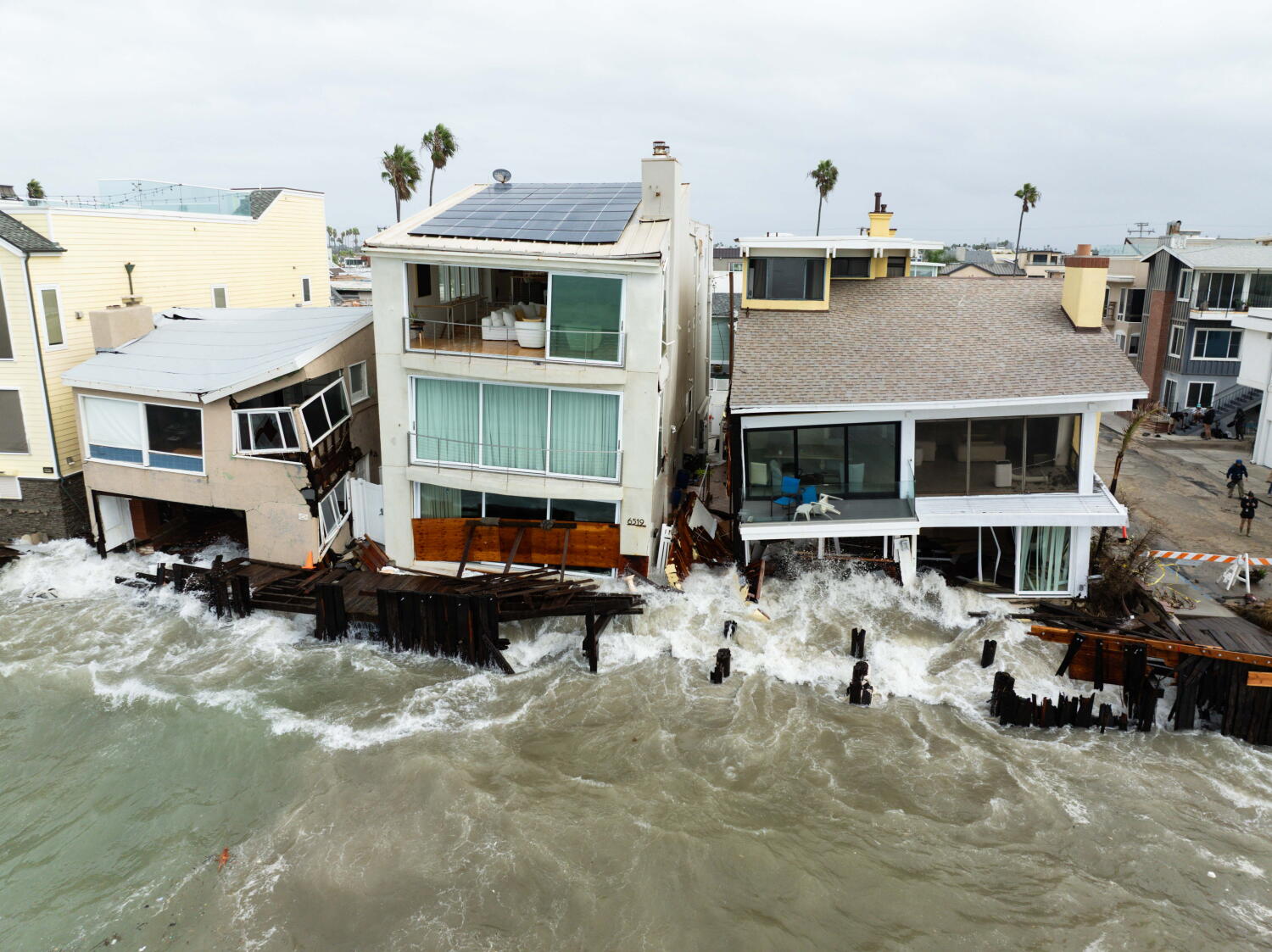
Coastal municipalities face an escalating fiscal collision between rising sea levels and fixed infrastructure investments. When heavy surf compromises structural integrity, red-tags residential properties, and destroys public corridors like boardwalks, local governments confront a profound valuation crisis. The standard municipal response relies on reactive disaster recovery: FEMA disaster declarations, emergency beach replenishment, and temporary shoring of seawalls. This cycle treats structural systemic failure as a series of isolated weather events rather than a predictable, continuous depreciation of coastal real estate value.
The core economic failure lies in mispriced risk. For decades, property taxes on beachfront parcels have captured high short-term municipal revenues while externalizing long-term adaptation costs onto federal disaster relief funds and future taxpayers. When wave action breaches the structural threshold of a boardwalk or residential foundation, the immediate capital expenditure required for reconstruction frequently eclipses the total municipal tax revenue generated by those parcels over a multi-year horizon. This dynamic creates a negative compounding loop where public capital is continually siphoned away from core municipal services to subsidize private assets located in high-hazard zones.
Addressing this vulnerability requires shifting from defensive engineering to structured asset triage. Municipalities must categorize vulnerable zones into three distinct operational tiers: defendable corridors where capital investment yields a verified multi-decade protective ROI, transitional zones where hybrid green-gray infrastructure can buy bounded time, and unviable zones where managed retreat is the sole economically rational outcome. Attempting to armor an entire coastline against rising hydrodynamic energy defies basic cost-benefit analysis. The long-term trajectory for vulnerable municipal coastlines depends entirely on disciplined property buyouts, zoning revisions that prohibit rebuilding in red-tagged footprints, and the redeployment of public infrastructure away from the immediate littoral fringe.