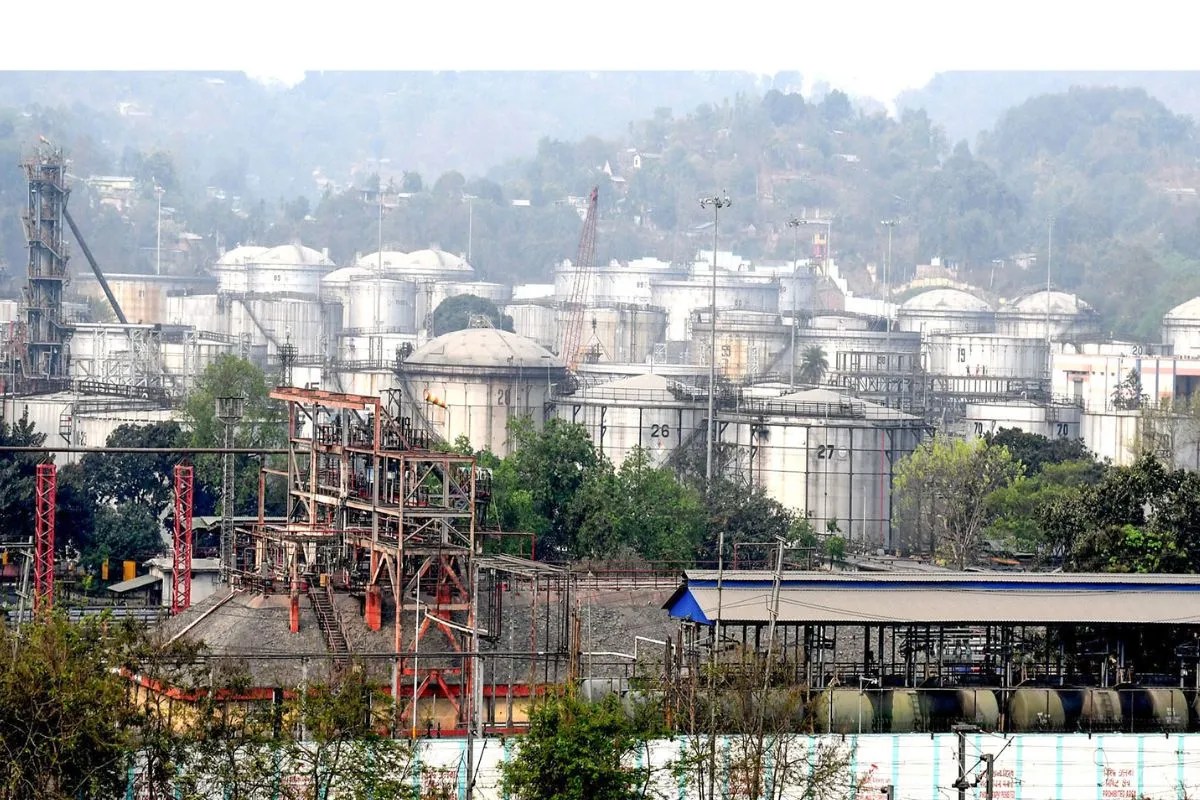
The air in the Eastern Province of Saudi Arabia doesn't just carry the scent of salt from the Persian Gulf. It carries the weight of a silence that feels like a held breath. When the horizon flickers, even for a second, the collective pulse of the region skips. It isn't just about the oil anymore. It is about the fundamental, jagged reality that trust, once ground into the sand, cannot be swept back into a pile.
Adel al-Jubeir, the Saudi Minister of State for Foreign Affairs, didn't use the language of a diplomat when he spoke of the recent strikes against the kingdom’s energy infrastructure and the commercial vessels navigating the narrow, vital veins of the Gulf. He used the language of a man who has run out of patience. The message was stripped of its usual ornamental courtesy. It was a warning that the "wave of attacks" attributed to Iranian influence had pushed the region to a precipice where the view is terrifyingly clear.
Imagine a deckhand on a Norwegian-flagged tanker, waking up to a shudder that feels like the world itself has cracked. He doesn't think about geopolitical leverage or the Joint Comprehensive Plan of Action. He thinks about the sheer volume of water between him and the shore. This is the human cost of the "shadow war." It is the constant, low-grade fever of anxiety that defines life in the world’s most critical energy corridor.
The Anatomy of a Broken Promise
For decades, the relationship between Riyadh and Tehran has been a pendulum swinging between cold pragmatism and hot resentment. But something changed when the drones began to hum over the Abqaiq processing plants. The technical sophistication of the strikes revealed a gap between what was said in the halls of the United Nations and what was being manufactured in the darkened workshops of regional proxies.
The Kingdom’s stance is no longer just about defending a border. It is about defending a global promise. When a tanker is limping through the Strait of Hormuz with a hole in its hull, the price of a gallon of milk in a suburb in Ohio begins to vibrate. The connectivity of our modern existence means that a spark in the Gulf is a fire in the global economy. Saudi Arabia is signaling that it will no longer bear the burden of maintaining that stability alone while its neighbor supposedly holds the match.
The "Trust completely shattered" headline isn't hyperbole. It is a diagnosis. In the Middle East, trust is the only currency that actually matters, and currently, the coffers are empty. Saudi officials are now pointing to a pattern of behavior—from the support of Houthi rebels in Yemen to the harassment of international shipping—as evidence that the time for "strategic patience" has evaporated.
The Invisible Stakes of the Strait
To understand why a few charred pipes in the desert matter, you have to look at the numbers, though they rarely tell the whole story. Roughly one-fifth of the world’s total oil consumption passes through the Strait of Hormuz. It is a choke point in every sense of the word. If the flow stops, the machinery of the modern world grinds to a halt.
But the invisible stakes are higher. They are found in the eyes of the young Saudi entrepreneurs in Riyadh who are trying to build a future beyond oil under the Vision 2030 banner. They are found in the Iranian students who want a life connected to the rest of the world, rather than one defined by sanctions and silos. These people are the "hypothetical" victims of a military retaliation that feels more likely with every passing sunset.
A conflict between these two titans wouldn't look like the wars of the 20th century. It would be a nightmare of cyber-attacks, asymmetric drone strikes, and the systematic dismantling of the digital infrastructure we take for granted. It would be a war of attrition where the "front line" is everywhere—from a desalinization plant on the Red Sea to a server farm in Tehran.
The Language of Retaliation
Jubeir’s warning of "military retaliation" is a heavy card to play. It’s a statement that acknowledges a terrifying truth: diplomacy requires two parties who believe the other is capable of keeping their word. When that belief dies, the only language left is the one spoken by batteries of Patriot missiles and the roar of F-15s.
The Kingdom has spent billions on defense, not because it seeks a war, but because it fears one is being brought to its doorstep. There is a specific kind of exhaustion that comes from being the world’s gas station while standing in a room full of people smoking. Riyadh is tired of the smoke. They are demanding that the international community stop looking at these attacks as isolated incidents and start seeing them as a coordinated effort to rewrite the rules of the region by force.
Consider the ripple effect of a single sea mine. It doesn't just damage a ship. It sends insurance premiums skyrocketing. It forces captains to take longer, more expensive routes. It creates a "war risk" surcharge on everything from electronics to grain. The "dry facts" of a news report about a tanker attack are actually the opening chapters of a story about global inflation and supply chain collapse.
Beyond the Rhetoric
Is there a way back from the edge?
The tragedy of the current moment is that both sides know exactly what a full-scale war would cost. They know it would be a "lose-lose" scenario that could set the region back half a century. Yet, the momentum of pride and the gravity of past grievances keep pulling them closer to the center of the storm.
Saudi Arabia’s call for a firm international response is a plea for a third path. They are looking for a world where the "shattered trust" can be replaced by a verifiable, enforceable framework. But until that happens, the Kingdom is making it clear that it will not be a passive observer of its own destabilization.
The sand dunes near the border don't move much, but the political landscape beneath them is shifting at a terrifying speed. We are watching the end of an era of managed tension and the beginning of something far more volatile.
The sun sets over the Gulf, casting long, golden shadows across the water. On the surface, it looks peaceful. But beneath that surface, and in the war rooms of Riyadh and Tehran, the tension is a physical weight. The world watches the horizon, hoping the next flicker is just the sun, and not the start of a fire that no one knows how to put out.
The deckhand on the tanker watches the same horizon, his hand tight on the railing, waiting for the silence to break.