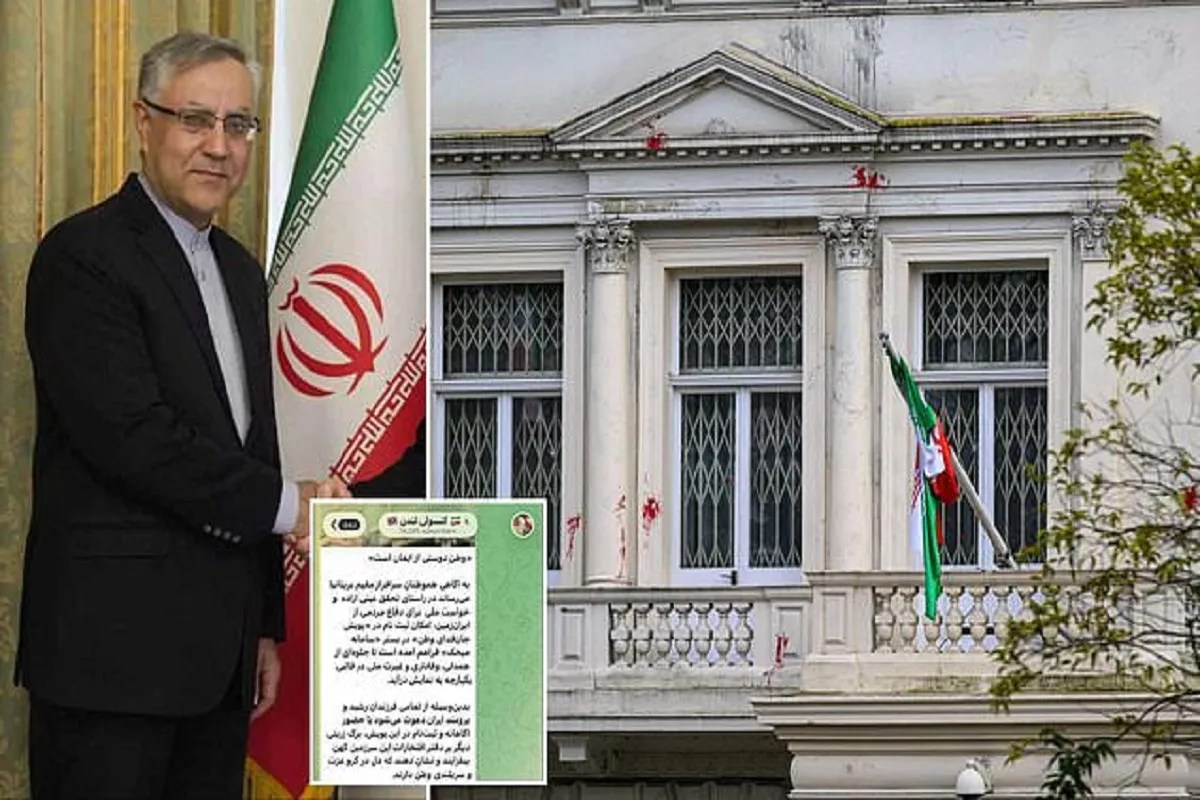
A phone vibrates on a bedside table in a quiet London suburb. It is 3:00 AM. For most, this is the hour of deep sleep, but for the Iranian diaspora, the glow of a smartphone screen often brings the weight of a world left behind. This time, the notification isn't a message from a cousin or a photo of home-cooked ghormeh sabzi. It is a directive from the Iranian Embassy.
The words are chillingly clear. They demand a loyalty that transcends borders, laws, and the very instinct of self-preservation. "Give your life if necessary," the message suggests. It is an appeal to martyrdom sent via a digital push notification. If you liked this piece, you might want to look at: this related article.
The Ghost in the Machine
To understand the impact of such a message, you have to look past the diplomatic cables and the formal protests of the British government. You have to look at someone like "Arash"—a name we will use for a man who fled Tehran a decade ago. Arash works in tech. He pays his council tax. He worries about the price of petrol and whether his daughter is spending too much time on TikTok.
But when Arash sees a message like that from his home country’s embassy, his London life feels like a thin veil. The embassy isn't just a building with a flag; to the diaspora, it is a long arm reaching out from across the continent to tap them on the shoulder. It reminds them that even in the safety of a British democracy, they are being watched. For another look on this event, check out the recent update from Associated Press.
The Iranian government’s message was framed as a call to defend the "values of the revolution" against foreign interference. In reality, it was a psychological anchor. By telling citizens abroad to be ready to die for the regime, the state effectively colonizes their sense of safety. It turns a walk through a London park into a moment of internal conflict.
A Breach of the Unspoken Contract
Every immigrant lives by an unspoken contract. You leave your home to find peace, and in exchange, you follow the rules of your new host. You expect that the soil you stand on will protect you from the shadows you escaped. When an embassy—the official representative of your birthplace—issues a call for radical sacrifice on foreign soil, that contract is set on fire.
The British government’s reaction was swift. They labeled the message "unacceptable." Diplomatic language is often dry, but "unacceptable" is the polite version of a scream. It marks a violation of sovereignty that goes beyond borders. It isn't just about politics; it is about the safety of people who have built lives based on the promise of British protection.
Consider the sheer audacity of the move. While the UK provides a sanctuary for free speech and political dissent, the Iranian embassy attempted to bypass those protections to instill a sense of militant obligation. It is a form of transnational repression that doesn't use bullets—at least, not yet. It uses guilt, fear, and the haunting possibility that your family back home might pay the price for your lack of "loyalty" in London.
The Weight of the Invisible Leash
The psychological toll is exhausting. Imagine living your life with a constant, low-frequency hum of anxiety. You want to attend a protest in Trafalgar Square to support women’s rights in Iran, but then you remember the message. You want to post a critical comment online, but you wonder if the person who sent that "give your life" directive is monitoring your IP address.
This isn't paranoia. It is a lived reality for thousands. The Iranian state has a documented history of reaching across oceans to silence its critics. When the embassy issues such a blatant call for martyrdom, it isn't expecting everyone to grab a weapon. It is expecting everyone to be afraid.
Fear is the cheapest and most effective tool of control. It requires no soldiers on the ground, only a few lines of text and the knowledge that the regime has a very long memory.
The Geometry of Power
Diplomacy is usually a game of chess played in wood-paneled rooms. However, this incident reveals a different kind of geometry. It is a triangle of tension between the British state, the Iranian regime, and the individual caught in the middle.
The British government is tasked with maintaining a delicate balance. They must protect their citizens and residents from foreign interference without triggering a total collapse of diplomatic channels. But how do you negotiate with a power that tells its people that death is the ultimate service?
There is a fundamental disconnect in worldviews here. One side views the individual as a sovereign being with rights; the other views the individual as a vessel for a cause, a resource to be spent in the pursuit of ideological purity. When these two philosophies collide in the streets of London, the fallout isn't just a news headline. It is a fractured sense of belonging for an entire community.
The Silence of the Streets
Walk through any neighborhood with a high concentration of Iranian shops and cafes. You will see the outward signs of integration—the English signage, the friendly waves to neighbors. But listen to the conversations when the cameras aren't rolling. The talk isn't about the "unacceptable" nature of the embassy's message in a political sense. It is about the practical terror of it.
"Will they stop my mother from leaving the country?"
"Is my name on a list now?"
"Can I ever go back?"
These are the questions that the standard news reports miss. They focus on the government's "strong words" and the "diplomatic spat." They miss the human heartbeat of the story—the way a single message can turn a cozy London flat into a cage of uncertainty.
The Iranian embassy’s message was a reminder that for many, the revolution never ended. It followed them across the sea. It moved into their pocket. It sits in their inbox, waiting to be read in the middle of the night.
The Finality of the Choice
History is littered with governments that demanded the ultimate sacrifice from their people. Usually, those demands are made during times of open war. To make such a demand of civilians living in a peaceful, foreign country is a different kind of aggression. It turns the diaspora into a potential fifth column, whether they want to be or not.
It forces a choice that no one should have to make. You can either ignore the call and live with the nagging fear of being a "traitor," or you can succumb to the pressure and let the regime’s ideology dictate your life in London.
There is no middle ground in the language of martyrdom.
The British government can protest. They can summon diplomats. They can issue statements. But for the people who received that message, the damage is already done. The peace of their new home has been punctured. The shadow of Tehran has grown a little longer, stretching across the English Channel, over the white cliffs, and into the very palms of their hands.
The message wasn't just text. It was a tether. And until that tether is cut by something stronger than a diplomatic "unacceptable," the people it targets will never truly be home.
They will always be one vibration away from being told that their life belongs to someone else.