Darkness does not merely exist; it presses. It has weight, texture, and a smell. It smells of damp earth, pulverized stone, and the cold sweat of fear. When the mountain collapsed and the floods came rushing down the slopes of Nepal, two men found themselves trapped in a subterranean tomb. Days bled into nights. The watch on a wrist stopped ticking, drowned in mud. Time ceased to be a measure of hours and minutes and became measured only by the agonizing slow expansion of a chest, drawing in air that grew thinner and heavier with every passing rotation of the earth.
Imagine being buried alive. No, let us be precise—hypothetically, strip away the sensory comforts of your current room. Close your eyes. Picture the concrete ceiling pressing down, the roar of monsoon waters echoing through jagged rock fractures, and then, absolute, suffocating silence. That was the reality for two workers swallowed by a tunnel project when nature unleashed its fury. More than a week passed. Seven days. One hundred sixty-eight hours. Most people outside the rubble had already traded hope for quiet mourning.
Rescue in such conditions is an exercise in stubborn defiance against impossible odds. Heavy machinery could not simply carve through the debris without risking a secondary collapse that would crush the very lives they sought to save. Every boulder was a gamble. Every shovel of mud was moved with prayers whispered into the damp wind. Above ground, families waited near makeshift tents, their eyes hollowed out by sleeplessness, watching the slate-gray monsoon skies with a mixture of hatred and desperation. They clung to a thread of possibility so thin it threatened to snap at the slightest tremor.
Then came the miracle. Not the cinematic kind with flashing lights and triumphant brass instruments, but a messy, gritty, exhausted reality.
Rescuers heard a sound. Faint. Scraping. A human voice scratching against the granite.
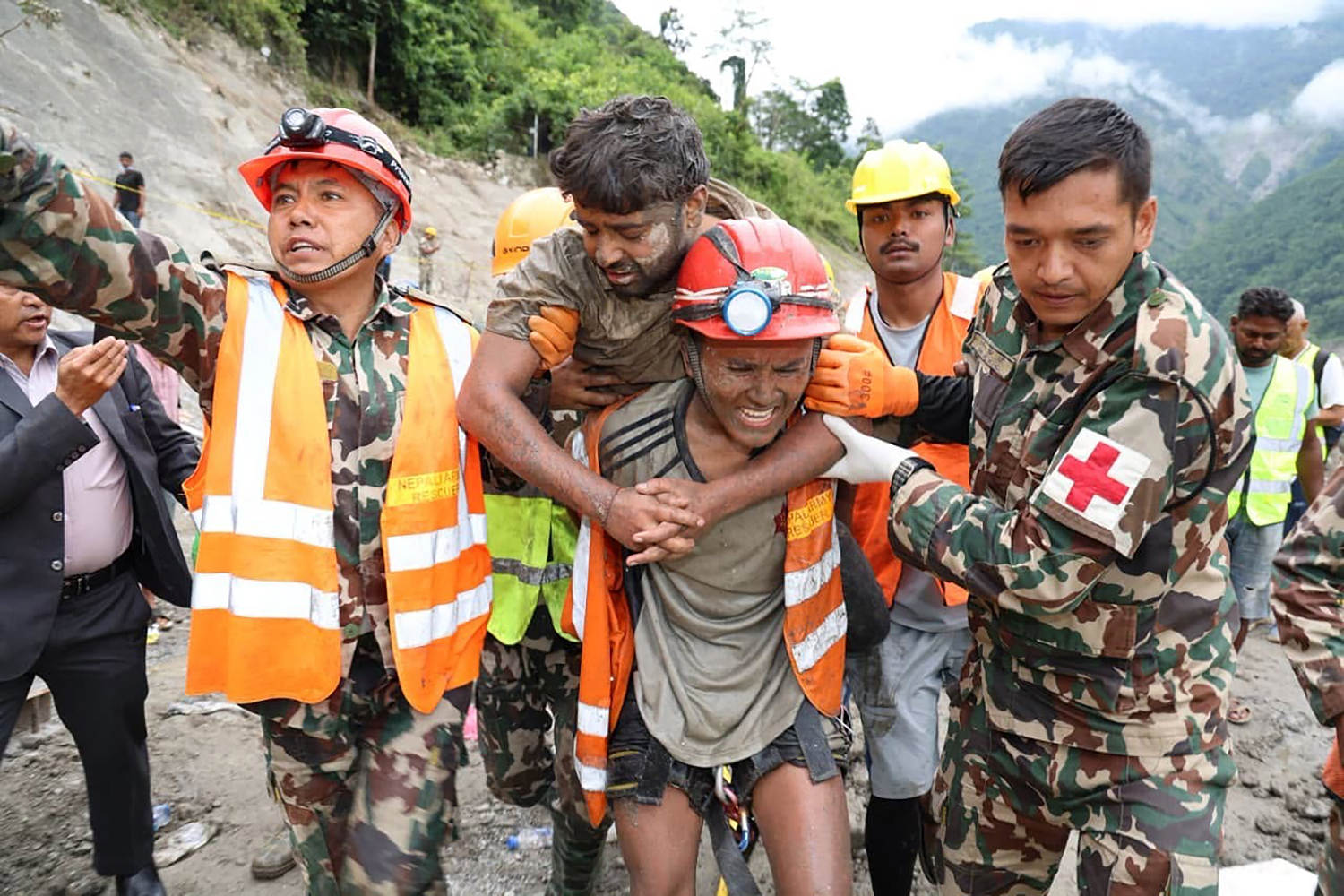
When the extraction team finally broke through to the pocket of air where the two workers had endured the unendurable, the men were pulled out alive. Blinking against the cruel assault of daylight. Skin pale as paper. Lips cracked and bleeding. They were carried out on stretchers, wrapped in thermal blankets, alive against every statistical probability.
We read these headlines and scroll past them on our phones while sipping morning coffee. We categorize them as distant tragedies with happy endings. But the human element gets lost in the brief ticker-tape flash of news. We forget what it means to stare into the abyss and refuse to blink. We forget the resilience embedded in ordinary people who leave their homes at dawn with lunch pails, hoping to build a better life, only to find themselves fighting a primordial battle for survival against the weight of the earth.
The mountain is quiet again now. The monsoon has retreated, leaving behind scarred hillsides and stories that will be told by the fireside for generations. Those two workers are learning how to walk again, how to stand under the open sky without flinching at the wind. They carry the dark inside them, a permanent shadow etched behind their eyes. Yet, they breathe. They draw in the sweet, unfiltered air of a world they were told they would never see again. And somewhere in that quiet endurance lies the raw, beating heart of what it means to be human.