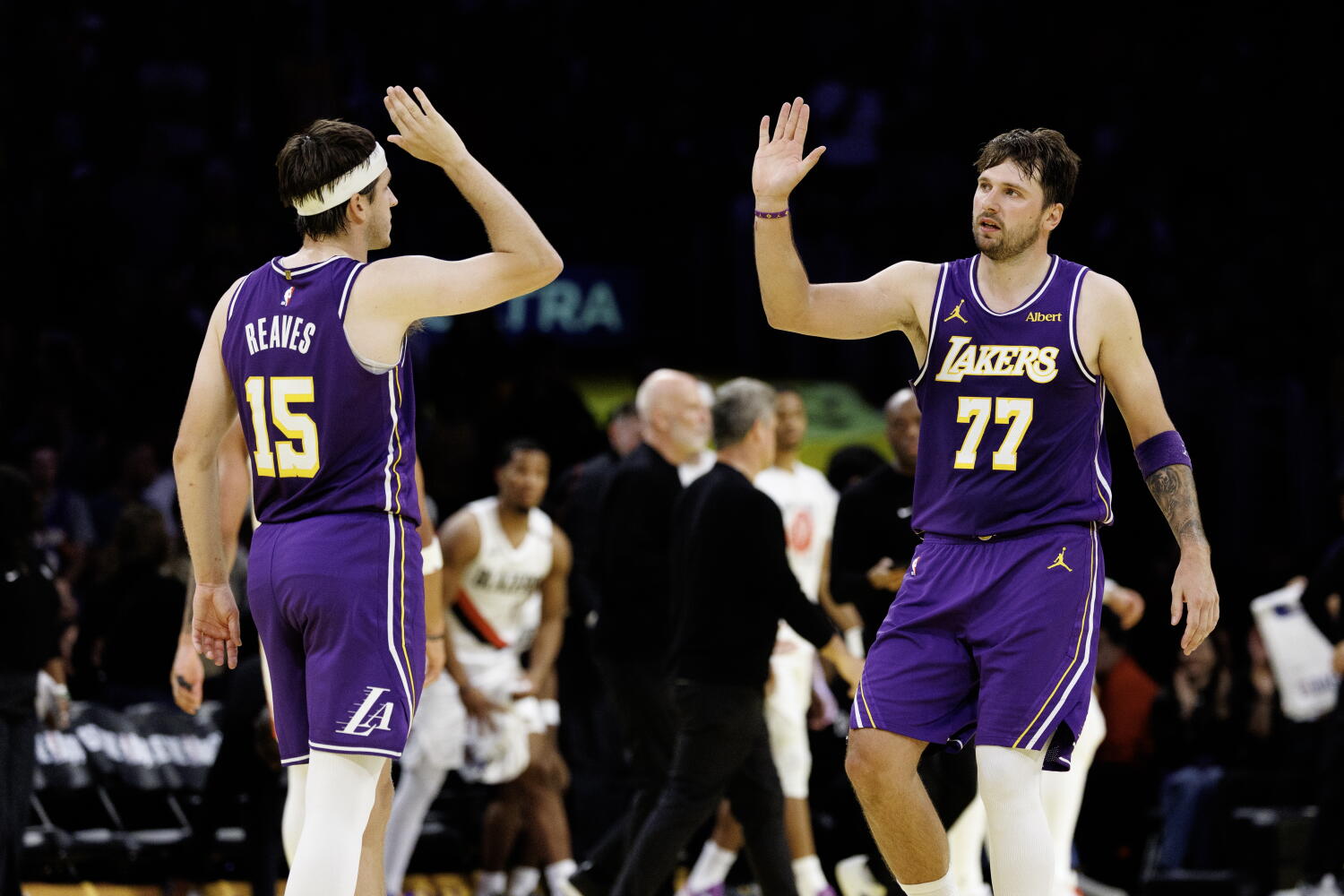
Acquiring a generational playmaker does not automatically yield a championship roster; it shifts the team's structural bottleneck from creation efficiency to defensive coverage and asset allocation.
When analyzing a scenario where Luka Doncic transitions to the Los Angeles Lakers, traditional commentary focuses on star power and brand alignment. A rigorous basketball analytics framework reveals a complex balance of playmaking efficiency, defensive liabilities, and cap mechanics. The success of such a pairing hinges not on market prestige, but on solving three distinct structural challenges: usage distribution, defensive perimeter containment, and roster depth preservation under strict luxury tax constraints.
Usage Distribution and the On-Ball Friction Model
Luka Doncic represents one of the highest individual usage profiles in modern NBA history. His offensive value stems from centralizing decision-making through high pick-and-roll volume, isolating against mismatches, and generating high-value perimeter and rim looks for role players.
Combining a heavy-usage ball-handler with an existing roster architecture creates specific structural frictions:
- Heliocentric Usage Overlap: Doncic operates most effectively with a usage rate exceeding 33%. Placing him alongside secondary creators requires a radical shift in off-ball movement, cutting frequency, and catch-and-shoot willingness.
- Pace Misalignment: Doncic systematically slows game pace to execute half-court set-pieces, probing drop defenses and hunting switches. If paired with transition-heavy scorers, the team must establish clear tactical protocols for early-clock offense versus late-clock isolation.
- Shot Quality vs. Rhythm: Dominant ball-handlers elevate the efficiency of spot-up shooters. However, elite secondary options often experience efficiency drops when converted into passive floor-spacers who only touch the ball late in the clock.
The offensive viability of a Doncic-led system does not depend on total scoring output, but on whether the team can maintain top-five half-court offensive efficiency while mitigating the fatigue factor that degrades his individual efficiency in fourth quarters.
The Defensive Coverage Tax
Evaluating a roster transformation requires accounting for defensive compromise. While Doncic provides elite defensive rebounding for a guard, his perimeter containment metrics and transition defense tracking reveal clear vulnerability points that opponents systematically exploit in a seven-game series.
+-----------------------------------------------------------------------+
|                       THE DEFENSIVE COVERAGE TAX                      |
+-----------------------------------------------------------------------+
|  Primary Vulnerability: Limited Lateral Quickness on Perimeter        |
|  Direct Opponent Strategy: Target via Drag Screens & High Switches     |
+-----------------------------------------------------------------------+
                                   |
                                   v
+-----------------------------------------------------------------------+
|                     REQUIRED STRUCTURAL OFFSET                        |
+-----------------------------------------------------------------------+
| 1. Elite Rim Protection      --> Erases Line-Break Blow-bys          |
| 2. High-Activity Wing Stoppers --> Navigates Screens / Rotates Fast    |
| 3. Defensive Rebounding      --> Closes Possessions Cleanly          |
+-----------------------------------------------------------------------+
To prevent a Doncic-centric team from collapsing defensively in deep postseason runs, the surrounding roster must satisfy three rigid criteria:
- Vertical Rim Protection: The defense requires a premier drop-coverage or roaming rim protector capable of erasing defensive blow-bys without committing premature fouls.
- Point-of-Attack Compensation: The backcourt partner must take the primary perimeter defensive assignment every night, masking Doncic’s lateral limitations against quick, penetrating guards.
- Low-Tag Rotation Speed: Because opponents target Doncic in screening actions to force switches, weak-side help must rotate faster than average to contest corner three-pointers off secondary passes.
If the front office sacrifices defensive length and athletic wing depth to acquire Doncic, the resulting roster suffers from a structural imbalance: an elite half-court offense paired with a bottom-tier transition and isolation defense.
Asset Depletion and the Collective Bargaining Agreement Bottleneck
The modern NBA Collective Bargaining Agreement (CBA) severely penalizes roster consolidation at the top end of the salary cap. Under the second apron rules, teams matching mega-max contracts face strict team-building handicaps that limit how a front office builds around a superstar core.
Acquiring a player of Doncic's caliber via trade requires clearing an immense hurdle of matching salary and draft capital. The mechanics of such a transaction expose the franchise to severe financial and structural risks:
- Depth Liquidation: Reaching the required salary matching figure typically forces the outgoing team to strip its middle-tier rotation assets, leaving the roster dependent on minimum-contract veterans and unproven draft picks.
- First-Round Draft Pick Freeze: Exceeding tax thresholds restricts the ability to trade future draft picks, eliminating the primary mechanism for mid-season roster upgrades.
- Loss of Transactional Flexibility: Second-apron teams lose access to the Non-Taxpayer Mid-Level Exception (NTMLE) and cannot aggregate salaries in trade matching, effectively locking the roster in place once the initial deal is struck.
The cost of bringing Doncic to Los Angeles is not merely the players sent away in the trade; it is the permanent loss of structural flexibility required to construct a functional 9-man postseason rotation around him.
Strategic Execution Framework for Title Contention
If a franchise commits to building a championship team around Luka Doncic, management must execute a strict sequence of operational moves rather than chasing auxiliary star power:
- Prioritize 3-and-D Wing Profiles Over Secondary Stars: Allocate remaining cap space and exception slots exclusively to lengthy, high-volume perimeter shooters who grade in the upper percentiles for defensive lateral movement.
- Implement a Two-Tier Offense System: Run high-pick-and-roll through Doncic for 32 minutes per game, but establish a rigid, ball-movement-heavy secondary motion offense for minutes when he rests, avoiding complete offensive stagnation.
- Cap Inflation Hedging: Structure non-star contracts with declining salary scales to preserve mid-level trading flexibility under second-apron constraints.
The path to a championship with Luka Doncic does not run through high-profile headlines or casual talent stacking. It requires cold, mathematical optimization: isolating his historical playmaking efficiency while constructing a hyper-specialized defensive framework engineered to absorb his structural limitations. Franchises that balance this ledger contend for titles; those that rely solely on individual brilliance fall short in the postseason crucible.