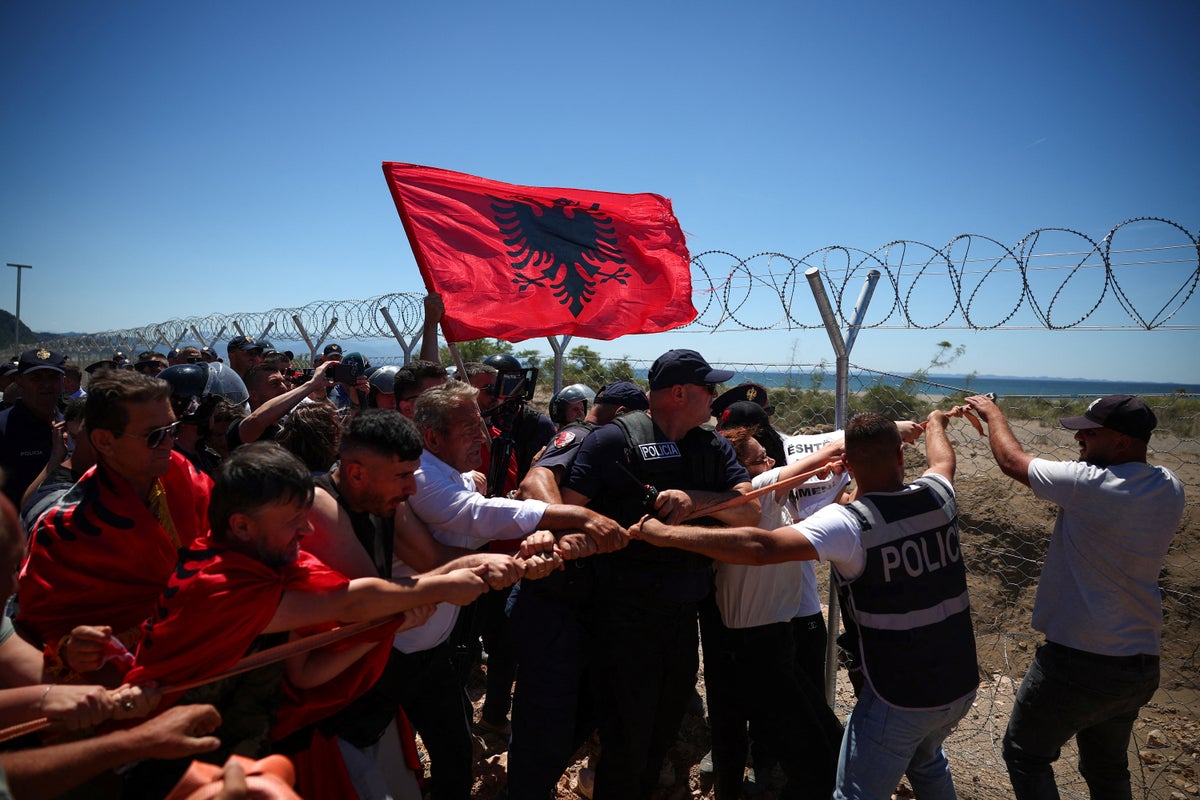
You can only push people so far before the wire cutters come out. On June 13, 2026, the breaking point arrived for about 200 villagers in Rrjoll, a quiet coastal pocket in northwestern Albania. Armed with wire cutters and sheer anger, locals tore down massive metal and razor-wire fences enclosing a new five-star luxury resort site. They waved national flags, faced down police lines, and shouted a word that should make developers very nervous: "Revolution."
This isn't an isolated local property dispute. It is part of a massive, country-wide blowback against how the Albanian government is handling its sudden tourism boom. From the pristine northern pine forests of Shkodra down to the sun-drenched southern wetlands, locals are realizing that the multi-billion-dollar rush to build elite Mediterranean playgrounds is happening at their expense.
The Myth of Vacant Land
The biggest lie told about the Albanian coast is that it is an empty canvas waiting for foreign capital. Investors see a beautiful, untouched shoreline. The government sees a golden ticket to economic growth. But the people who actually live there see something entirely different: their inheritance being stolen.
The situation in Rrjoll lays bare the messy, painful reality of land ownership in post-communist Albania. When the regime collapsed decades ago, land distribution was chaotic. Today, families hold property deeds and tax records for seaside plots their ancestors farmed for generations. Yet, overnight, the government can grant an outside corporation "strategic investor status." This designation basically gives private firms the power to bypass local consultation and clear out anyone standing in the way of construction.
Zeke Nikolle Shullani, a 56-year-old landowner from Rrjoll, represents 200 families who say their coastal land was seized without a single lek of compensation. For months, they tried the polite route. They petitioned officials. They asked the developers to sit down for a basic consultation. The developers refused. When corporate security and razor wire went up on their beaches, the polite route ended.
When Foreign Billions Meet Protected Ecosystems
If you want to understand why Albanians are hitting the streets, you have to look south to the Vjosa-Narta Nature Reserve. That is the epicenter of what locals are calling the Flamingo Revolution.
A firm linked to Jared Kushner and Ivanka Trump is backing a massive $1.4 billion luxury mega-resort inside this protected delta. This isn't just any beach; it is one of the last remaining intact river-delta ecosystems in the entire Mediterranean. It is a critical sanctuary for migrating flamingos, loggerhead sea turtles, and endangered Mediterranean monk seals.
In late April 2026, heavy machinery rolled into the Pishë Poro-Narta protected landscape. Bulldozers began ripping through sand dunes and tearing down coastal pine trees. The shockwave from those initial, unpermitted clearings triggered weeks of nightly mass protests in the capital, Tirana. Activists carrying giant inflatable flamingos and signs reading "Albania is not for sale" have turned a conservation fight into a national movement against political corruption.
Prime Minister Edi Rama keeps insisting that everything is legal and that these ultra-luxury resorts will respect the environment. He promises the projects will lift Albania into the top tier of global tourism. But the European Union has already flags up major warnings, demanding that Albania clean up its act and align its fast-tracked coastal laws with strict EU conservation standards.
The Broken Promise of the Tourism Windfall
The core conflict comes down to a simple question: Who actually benefits from a five-star resort?
Governments love high-end tourism because it brings massive headline numbers. But the wealth generated by these exclusive enclaves rarely trickles down to the local fishmonger or the village baker. Instead, the public loses access to the beaches they grew up on.
Take Kostaq Konomi, an 81-year-old villager from Zvërnec. He recently tried to walk down to a deserted cove where he used to swim as a boy, only to be stopped by barbed wire and private guards in black uniforms. His land had been sold out from under him to international developers without his knowledge. When old men who survived decades of brutal communist dictatorship are saying they are ready to grab hunting rifles to defend their access to the sea, you know the social fabric is tearing.
The independent anti-corruption prosecutorial body, SPAK, has stepped in to investigate the shady land transfers and rushed government approvals dating back to 2024. But for the villagers standing in the dust in Rrjoll, legal battles take too long. They want their coast back now.
If you are an investor eyeing the next "untouched" European paradise, or a traveler looking for a pristine getaway, look closer at the fences. When a country fast-tracks luxury developments while cutting out the people who live there, those shiny new resorts aren't a symbol of progress. They are a flashpoint for revolt.
To truly fix this crisis, the Albanian government needs to halt the automated approval of "strategic investor" permits until land titles are fully cleared and verified. Local communities must have a legal, binding seat at the negotiation table before any bulldozers arrive. True economic development doesn't require razor wire to keep the locals out.