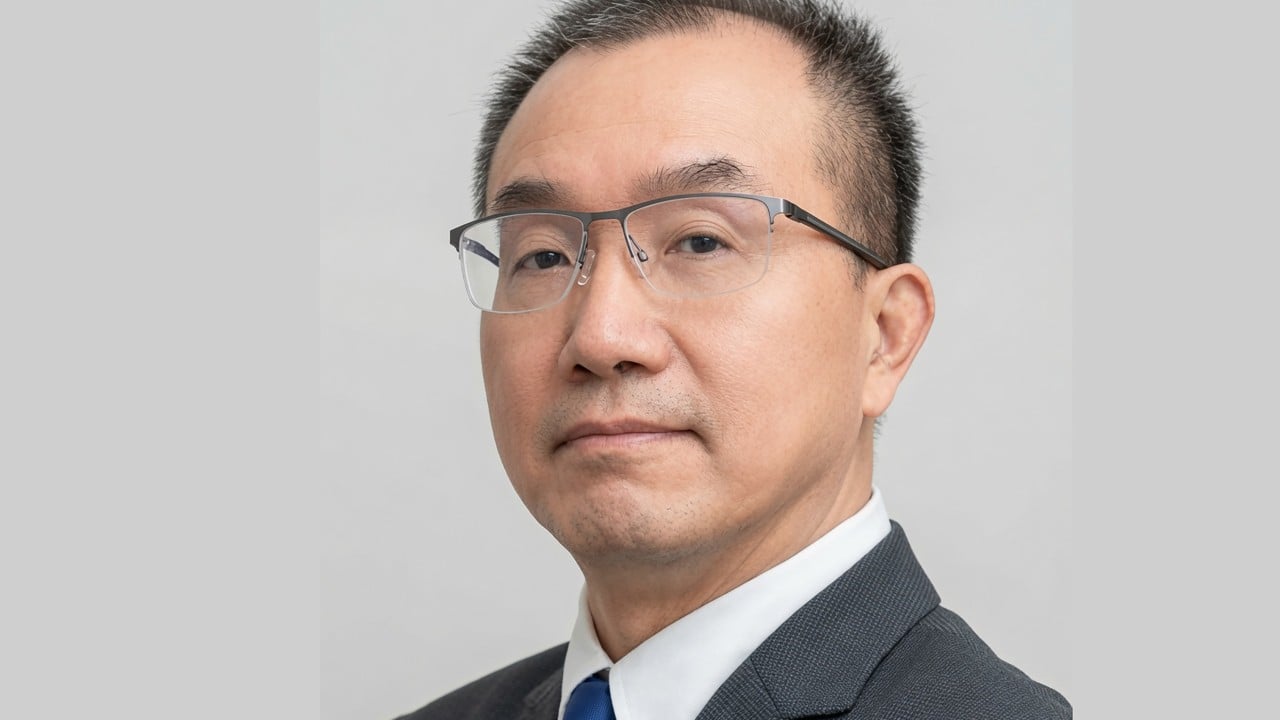
The tech press is predictable. Whenever a top-tier scientist shifts institutions, the headlines read like a corporate press release mixed with regional cheerleading. The recent move of materials scientist Pei Qibing to the University of Macau is the latest example. Mainstream commentators treat this appointment as a definitive victory for the Greater Bay Area, a sign that importing high-level academic pedigree instantly transforms a region into a deep-tech powerhouse.
They are wrong.
Hiring a world-class researcher from UCLA to lead a new institute is a great PR move for university rankings. It is a terrible blueprint for industrial transformation. The assumption that top-down academic appointments automatically catalyze commercial technology hubs is a persistent, expensive illusion. Having spent two decades analyzing how intellectual property actually transitions from university labs to the market, I can tell you that the friction points are rarely found in the lab itself. They are found in the ecosystem outside it.
Macau is attempting to buy scientific credibility. But history proves you cannot simply import a tech hub one academic at a time.
The Linear Innovation Fallacy
The mainstream narrative relies on the linear model of innovation: put brilliant minds in a well-funded lab, wait for them to publish groundbreaking papers, and watch factories magically materialize to build the products.
This model is dead. It has been dead for fifty years.
True innovation requires an aggressive, messy interplay between basic science, venture capital, regulatory flexibility, and local manufacturing capacity. Pei Qibing is an absolute titan in electroactive polymers and flexible electronics. His work on artificial muscles and stretchable displays is genuinely brilliant. But the bottleneck in flexible electronics isn't a lack of smart people thinking about polymers. The bottleneck is the yield rate in scaling up manufacturing from a cleanroom petri dish to a high-volume production line.
Consider the classic Silicon Valley comparison. Stanford did not create Silicon Valley merely because it hired smart professors. Silicon Valley happened because Fairchild Semiconductor and subsequent spin-offs were driven by ruthless commercial pressure, military procurement contracts, and a legal environment that refused to enforce non-compete clauses.
Macau lacks this entirely. The city’s economic DNA is built on gaming, hospitality, and real estate. The institutional memory of its financial sectors is geared toward quick, predictable returns from tourism, not the high-risk, ten-year horizon required for deep-tech materials science.
The Reality of Academic Relocation
When a heavyweight researcher moves from an institution like UCLA to the University of Macau, the public expects an immediate shift in the scientific center of gravity. What actually happens behind the scenes is far more bureaucratic.
- The Lab Rebuild Lag: It takes years to replicate a highly specialized materials science lab. Equipment must be ordered, customized, calibrated, and certified. During this multi-year setup phase, publication output and tangible research breakthroughs frequently slow down, not speed up.
- The Talent Pipeline Deficit: A professor is only as good as their postdocs and doctoral candidates. Moving to a younger institution means competing against established global brands (MIT, Stanford, Tsinghua) for the absolute top 1% of graduate student talent. Without that baseline army of brilliant, overworked researchers, a lab director’s productivity is severely throttled.
- The IP Trap: Western universities, despite their flaws, have mature Technology Transfer Offices (TTOs) that understand how to spin out companies, license patents, and manage conflict-of-interest issues for faculty founders. Developing that institutional muscle takes decades. A university that is primarily structured around teaching and regional prestige cannot overnight handle the complex, aggressive legal maneuvering required to defend global materials science patents.
To argue that one prestigious appointment alters this trajectory is to ignore the structural realities of academic administration.
Materials Science is the Hardest Tech to Commercialize
Let's look specifically at Pei’s domain: materials science.
Software startups are cheap. You need a few laptops, a cloud computing subscription, and some highly caffeinated developers. If you fail, you pivot. The capital destruction is minimal.
Materials science is the exact opposite. It is capital-intensive, slow, and binary. A new polymer either works at scale or it doesn't. If it fails, you can't just change three lines of code and try again; you have to scrap the entire batch, clean the equipment, and spend six months synthesizing a new variant.
Imagine a scenario where Pei’s new institute develops a revolutionary, highly efficient dielectric elastomer for soft robotics. To make that discovery commercially viable, you need:
- A specialized chemical supply chain capable of delivering ultra-pure monomers.
- Precision manufacturing equipment that can coat films at micrometer thicknesses without defects.
- An automotive or consumer electronics client willing to risk their product line on an unproven material.
Where are those partners in Macau? They aren't there. They are in Shenzhen, Dongguan, or Suzhou.
By separating the research institute from the manufacturing heartland, you introduce geographic and cultural friction. The "Greater Bay Area" concept aims to bridge this gap, but physical distance and distinct legal systems between Macau and mainland manufacturing hubs mean that data doesn't flow freely. Meetings require border crossings. Regulations differ. The synergy is a marketing term; the friction is a daily reality.
Dismantling the "People Also Ask" Assumptions
When people look at high-profile scientific appointments in Asia, they generally ask the wrong questions. Let’s address the flawed premises driving the public conversation.
Does hiring top foreign-trained scientists guarantee technological self-reliance?
No. It guarantees an increase in high-impact journal publications. Technological self-reliance isn't a supply problem; it’s a demand problem. If domestic industries do not have the capability or willingness to adopt advanced materials, those materials sit on a shelf. True self-reliance is achieved by building a tight feedback loop between industrial problems and academic solutions, not by hoarding prestigious resumes.
Can Macau successfully diversify its economy through deep-tech research?
Not through the current strategy. True diversification requires building an unglamorous middle layer of engineering talent, technicians, and local venture funds willing to write $500,000 checks for unproven hardware. Betting entirely on superstar academic recruits is an expensive distraction from the hard work of building a local vocational and entrepreneurial infrastructure.
The Counter-Intuitive Alternative
If the goal is genuine industrial impact, the strategy must change completely. Stop chasing the Nobel laureates of tomorrow with massive compensation packages and pristine, isolated laboratories.
Instead, look at the downsides of the contrarian approach I am advocating. If you focus strictly on building the unglamorous middle layer—the manufacturing engineers, the TTO lawyers, the specialized supply chains—you will lose the rankings war in the short term. Your university will not climb the Times Higher Education charts next year. Politicians will not get their photo opportunities next to famous scientists.
But you will build something that lasts.
Instead of funding isolated institutes, universities should create joint-venture labs physically located inside the manufacturing plants of Guangdong. The researchers should be forced to spend half their time on the factory floor, understanding why their theoretical materials fail when exposed to real-world assembly line tolerances.
Pei Qibing’s move is a win for his personal research funding and a win for the University of Macau’s global branding. But do not confuse academic migration with industrial revolution. Until the surrounding ecosystem changes, the brilliant discoveries made in these new labs will face the same fate as countless other materials science breakthroughs: trapped in academic journals, unable to find a bridge to the real world.