The map of human ambition is drawn in lines of steel and fuel. Look down from fifty thousand feet at midnight, and you will see the glowing arteries of our civilization. Cargo vessels carve precise paths across pitch-black oceans. Freight trains rattle through continental interiors, their containers stacked like colored building blocks. Above them all, aircraft chase the sun, burning thousands of gallons of jet fuel to deliver packages across the globe in less than forty-eight hours.
We are told that this is a miracle of modern efficiency. We are told that the global supply network is an unstoppable engine of abundance, capable of moving any object, anywhere, at any time. Also making waves in related news: Why Republicans in Red States Are Quietly Breaking From Trump.
Until you try to feed a hungry child.
Then, the miracle stutters. Then, the vast, humming apparatus of global trade collides with bureaucracy, indifference, and fractured priorities. Food rots in shipping containers while markets starve ten miles away. Grain sits siloed behind impenetrable walls of tariffs, speculation, and transport bottlenecks, while families count grains of rice to stretch a single meal across three days. Further details into this topic are detailed by The New York Times.
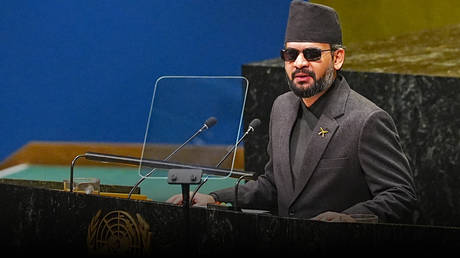
When leaders stand at international podiums and point out the glaring absurdity of our collective choices, they are naming a quiet, grinding tragedy. Consider the contrast. When nations decide to wage conflict, distance ceases to matter. Supply lines stretch across continents with terrifying precision. Millions of tons of heavy equipment, electronics, fuel, and provisions are delivered to remote corners of the earth with clockwork accuracy. There is no waiting list for ammunition. There is no bureaucratic delay for artillery shells. The machinery of destruction operates with a terrifying, flawless grace.
Yet, when the mission is peace—when the objective is simply ensuring that every human being has enough calories to survive—the system suddenly becomes impossibly complicated. Suddenly, the trucks break down. Suddenly, the funding dries up. Suddenly, the borders become too difficult to cross.
To understand why this happens, we have to look past the spreadsheets and examine the human choices built into the infrastructure of our world.
The Anatomy of an Iron Pipeline
Imagine a cargo staging area during a major military deployment. Every variable is accounted for. Satellite feeds track the exact coordinates of every crate. Algorithms calculate fuel consumption down to the final drop. If a bridge collapses, engineering corps rebuild it within hours. If a port is blocked, mobile docks are towed into position overnight. Money is not an obstacle. Bureaucracy is bypassed by executive decree.
Now, shift your gaze to a rural agricultural hub in a developing nation.
A farmer named Ram stands at the edge of his field, watching a portion of his harvest turn brown under the midday sun. His crops are healthy, nurtured by months of exhausting labor. But the local roads are unpaved, cratered by seasonal monsoons. The refrigerated trucks needed to transport perishable goods are too expensive to rent, or simply unavailable because the national fuel subsidies prioritize urban transport over agricultural logistics.
By the time Ram's harvest reaches a regional market, half of it has spoiled. The remaining half is subjected to a gauntlet of middlemen, each taking a cut, until the price on the shelf is too high for the local families who grew it in the first place. Meanwhile, thousands of miles away, agricultural commodities are traded on digital exchanges as financial assets, their prices swinging wildly based on geopolitical panic rather than actual human need.
This is not an accidental failure. It is the result of what happens when financial and political systems prioritize security over sustenance.
For decades, global economic policies have treated food as a commodity to be optimized for profit rather than a fundamental right to be secured. When profit margins dictate the flow of goods, food travels away from hungry mouths toward markets that can pay the highest price. A nation can experience severe malnutrition while its own fertile lands export luxury crops to wealthy countries. The logistical lines exist, but they are wired to pull resources toward wealth, not toward need.
The Geography of Neglect
To grasp the full weight of this disparity, consider how infrastructure funding is distributed.
When a government plans its national budget, transportation projects are rarely evaluated by how many lives they save from hunger. Instead, they are measured by gross domestic product contributions, export efficiency, and strategic connectivity. Ports are deepened to accommodate massive container ships carrying manufactured goods. Highways are paved to speed up industrial transit.
Rural feeder roads—the narrow dirt paths that connect smallholder farmers to regional distributors—are treated as an afterthought. Yet these minor roads are the exact lifelines that determine whether a village eats or starves during a crisis.
When a shock hits the global system—whether through conflict, climate disruption, or economic shockwaves—the vulnerability of these neglected lifelines is immediately exposed. The large, centralized supply chains designed for global corporations snap under pressure, while local food systems, starved of investment, lack the resilience to pick up the slack.
We saw this dynamic play out with brutal clarity during recent global supply chain disruptions. Luxury goods continued to move across oceans, tracked by real-time dashboards, while local food banks ran empty. The system did what it was designed to do: protect capital and maintain high-value trade routes, while the vulnerable absorbed the shock.
Rewiring the Priority
Changing this reality requires more than charity. It requires a fundamental rethinking of what we consider essential.
If human societies can muster the organizational genius, engineering talent, and financial capital to build global logistics networks for war, those exact same tools can be deployed for human survival. This is not a matter of technological limitation; it is a question of political will.
Imagine if food distribution was treated with the same urgency as military logistics.
Regional grain reserves would be strategically positioned near vulnerable population centers, insulated from speculative market shocks. Transportation corridors dedicated to agricultural produce would receive priority funding and maintenance, ensuring that perishable goods move from farm to table without catastrophic loss. Digital tracking systems—currently used to monitor high-end electronics—would be deployed to transparently map food flows, identifying bottlenecks before they turn into famines.
Most importantly, smallholder farmers—who produce a massive share of the developing world's food—would be treated as critical national security assets. Providing them with reliable storage facilities, affordable transport, and direct access to markets would do more to stabilize global security than any weapon system ever could.
The Cost of Inaction
We live in an era of staggering technological achievement. We can land rovers on distant planets, edit the building blocks of life, and communicate instantly across vast distances.
Yet, millions of people go to sleep hungry every night not because the earth fails to yield enough food, but because the systems we built choose not to reach them.
The critique voiced by leaders like Nepal's Prime Minister is a challenge to our collective conscience. It forces us to confront the uncomfortable truth about our priorities. Every time a budget is passed that prioritizes destruction over nourishment, every time an infrastructure project bypasses the hungry in favor of the profitable, we make a choice.
The machinery of the world is powerful enough to move anything anywhere. It is time we turned that immense power toward the one thing that truly matters.


