Western economic warfare operates under a fundamental constraint: state actors cannot effectively sanction an energy super-producer when global spare capacity approaches zero without inflicting asymmetric damage on their own domestic economies. The UK Department for Business and Trade's issuance of indefinite trade licenses permitting the import of secondary-refined Russian jet fuel and diesel, alongside maritime transport waivers for Sakhalin-2 and Yamal liquefied natural gas (LNG), represents a calculated retreat dictated by physical market deficits. By abandoning the planned October 2025 expansion of the third-country processing ban, policymakers have signaled that domestic inflation containment now supersedes the secondary isolation of Russian hydrocarbon revenues.
This policy shift operates as a structural relief valve for an economy experiencing an acute energy supply shock. Understanding this pivot requires breaking down the geopolitical bottlenecks, the mechanics of the laundering architecture, and the mathematical trade-offs balancing geopolitical leverage against domestic fiscal stability.
The Strait of Hormuz Bottleneck and the Cost Function of Fuel Disruption
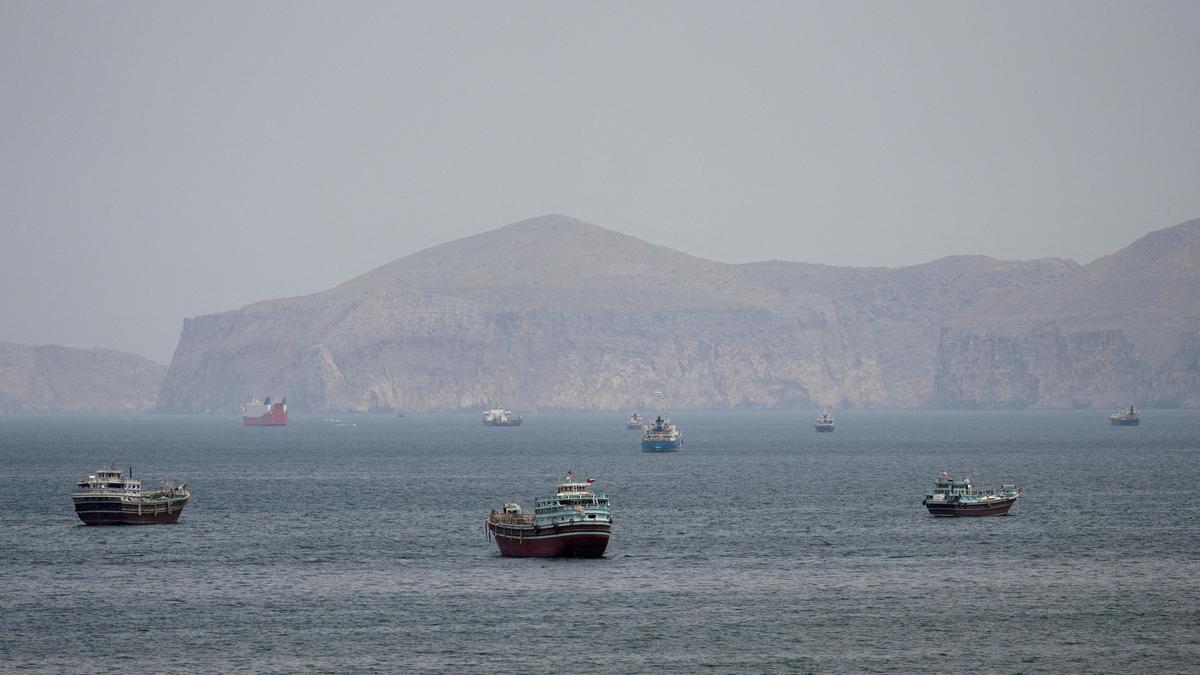
The proximate cause for the UK's policy reversal is not a shift in geopolitical alignment, but a severe disruption to global supply logistics. The effective blockade of the Strait of Hormuz during the conflict involving Iran has compromised a transit corridor responsible for approximately 20% of global petroleum and LNG flows. Prior to this disruption, Western Europe relied on Middle Eastern refiners to displace direct Russian middle distillate imports. The closure of this chokepoint instantly eliminated these replacement flows, shifting the global oil market from a state of relative equilibrium into a structural deficit.
The impact of this supply shock propagates through the UK economy via a highly sensitive cost function. Middle distillates—specifically ultra-low sulfur diesel (ULSD) and aviation turbine fuel (Jet A-1)—possess low demand elasticity in the short term. The agricultural, logistics, and aviation sectors cannot substitute these inputs when prices spike.
[Global Supply Disruption]
       │
       ▼
[Strait of Hormuz Blockade] ──► [Elimination of Middle Eastern Refined Exports]
       │
       ▼
[UK Structural Distillate Deficit] ──► [Inelastic Demand Forces Price Surges]
       │
       ▼
[Policy Response: Third-Country Sanctions Carve-Out]
The mathematical reality of this deficit is reflected at the pump and in corporate balance sheets:
- Retail Fuel Costs: UK forecourt prices for standard unleaded reached 158.5p per litre, surpassing historical thresholds and threatening to breach the critical 160p per litre resistance level.
- Aviation Fuel Volatility: European jet fuel prices surged by over 100% immediately following the outbreak of hostilities, before stabilizing at a structural plateau 50% above pre-conflict benchmarks.
Faced with a systemic supply contraction, the state has two options: permit clearing prices to destroy domestic demand, or expand the pool of available supply by relaxing secondary sanctions. The UK opted for the latter.
The Laundering Architecture: Third-Country Processing Mechanics
The trade licenses capitalize on a legal and chemical transformation principle built into the original G7 price cap framework: the substantial transformation doctrine. Under long-standing rules of origin, when crude oil is chemically cracked, desulfurized, and reformed within a third-party jurisdiction, the resulting product is legally classified as an export of the refining nation, not the crude origin nation.
The primary beneficiaries of this architecture are intermediary refining hubs, most notably India and Turkey. These nations operate as massive energetic processing interfaces. They purchase discounted Russian Urals crude—frequently transported via a non-Western insured shadow fleet—and process it within high-complexity coastal refineries. The refined products, chemically indistinguishable from fuels derived from non-Russian crudes, are then exported to Western markets at global index prices.
Data from the Centre for Research on Energy and Clean Air highlights the scale of this trade route, indicating that approximately £1.8 billion worth of petroleum products derived from Russian crude entered the UK via India and Turkey between December 2022 and the implementation of the recent restrictions.
By indefinitely deferring the enforcement of the strict October 2025 ban on these third-country imports, the UK government has formalized this processing route. The mechanism provides two distinct economic functions:
- Volume Stabilization: It ensures physical product continuity for UK aviation and logistics networks, preventing operational fuel rationing during peak summer travel periods.
- Spread Arbitrage: It allows global markets to retain access to Russian volumes, preventing a global bidding war for non-Russian crude that would otherwise drive Brent prices far past the $110 per barrel mark.
The LNG Shipping Concession and Infrastructure Vulnerabilities
Simultaneously, the UK issued a time-limited waiver extending until January 1, 2027, for the maritime transportation, financing, and brokering of Russian LNG originating from the Sakhalin-2 and Yamal projects. This concession targets a critical vulnerability within the European gas market: specialized maritime transport constraints.
Unlike crude oil, which can be transferred via conventional tankers, Arctic LNG extraction requires specialized, ice-breaking Arc7 LNG carriers and complex ship-to-ship transfer operations in European waters. Western firms dominate the marine insurance (via the International Group of P&I Clubs) and maritime financing sectors required to legally execute these voyages.
A total ban on providing these services would have immediately frozen the export capacity of Yamal LNG, removing significant gas volumes from the global market ahead of winter stockpiling phases. The decision to grant a multi-month waiver reveals an acknowledgement that European gas storage infrastructure remains highly vulnerable to structural deficits if global LNG availability contracts.
The Strategic Balance: Revenue Generation vs. Inflation Mitigation
The fundamental tension of the sanctions regime is a zero-sum trade-off between minimizing the Russian Federation's federal budget revenues and minimizing domestic macroeconomic friction.
┌──────────────────────────────────────────────────────────┐
│              THE SANCTIONS BALANCE EQUATION              │
└────────────────────────────┬─────────────────────────────┘
                             │
              ┌──────────────┴──────────────┐
              ▼                             ▼
   [Geopolitical Objective]      [Macroeconomic Constraint]
   Maximize Discount on          Minimize Domestic Distillate
   Russian Urals Crude           Price Inflation (CPI)
              │                             │
              └──────────────┬──────────────┘
                             │
                             ▼
              [Equilibrium Compromise Achieved]
              Third-party refiners capture rent;
              UK secures physical molecules.
The G7 price cap and third-country refining mechanisms were originally designed to depress the price of Russian crude by limiting its buyers, while keeping global supply intact. The system allowed intermediary refiners to capture the economic rent—buying cheap Russian input and selling expensive refined output to the West.
However, as Russia's shadow fleet expanded to bypass Western shipping bans, Moscow's reliance on Western services decreased, softening the financial hit of the price caps. The onset of the conflict involving Iran and the closure of the Strait of Hormuz altered this equilibrium. The global market lost significant refining capacity from the Middle East, making the retention of Russian crude molecules processed in India and Turkey essential to prevent severe supply shortages.
The policy shift carries clear strategic compromises:
- Sanctions Evasion and Leakage: The decision leaves open a major source of demand for Russian crude oil, providing steady revenue to the Kremlin's war budget.
- Political Capital Erosion: The decision creates a visible policy contradiction, drawing criticism from opposition leaders and international allies who argue that domestic economic relief is being prioritized over geopolitical commitments to Ukraine.
The government's defense relies on a distinction between direct and indirect trade, characterizing the waivers as a temporary phase-in of new restrictions rather than a rollback of existing ones. In practice, this distinction is minor. The economic reality is clear: when energy security and geopolitical goals conflict, physical supply constraints take precedence.
Tactical Outlook for Energy Procurement and Corporate Strategy
The relaxation of these sanctions dictates a specific operational playbook for industrial energy consumers, airlines, and logistics firms navigating the current market.
Organizations must adjust their procurement frameworks to account for an extended period of fractured, multi-tier supply chains. The indefinitely extended trade licenses mean that fuel originating from Indian and Turkish refining complexes will remain a structural component of the UK's import mix. Procurement officers should not pay an unnecessary premium for non-Russian certified distillates unless explicitly mandated by corporate governance rules, as the state has legally validated the blended supply chain.
Logistics and aviation financial planning models should project a structural floor for fuel prices, even with these waivers in place. The continuous disruption of the Strait of Hormuz means that while the waivers prevent an outright supply failure, they cannot restore pre-conflict price structures. Supply models must budget for Brent crude remaining above $100 per barrel, with volatile crack spreads for jet fuel and diesel reflecting high global refining utilization rates.
Finally, risk management teams must monitor the mandatory review periods embedded within the UK trade licenses. Because these waivers are subject to administrative review and can be amended or revoked based on shifting market conditions or political pressures, they introduce regulatory risk into long-term fuel hedging strategies. Supply contracts should include specific clauses that allow for rapid adjustments or termination if these trade licenses are suddenly withdrawn, ensuring that corporate supply lines remain insulated from sudden shifts in international trade policy.