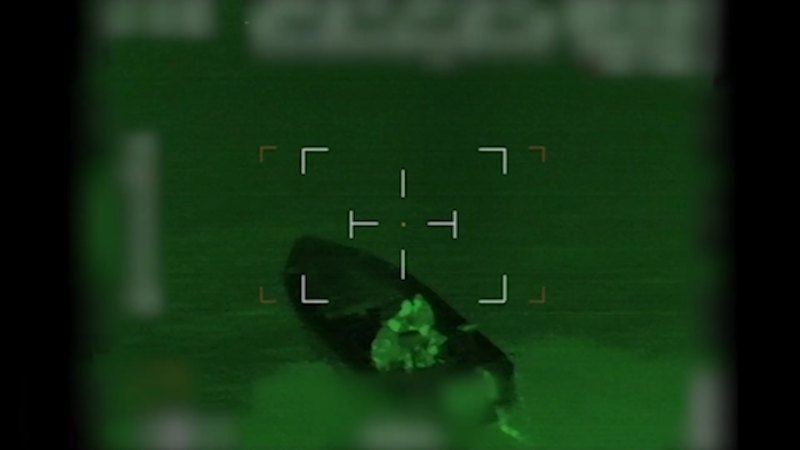
The headlines write themselves. The French Marine Nationale pulls off a cinematic interception off the coast of Madeira, seizing illicit cargo, burning fuel, and generating spectacular public relations material for naval command. The crowd applauds. The politicians tweet their congratulations. The lazy consensus is reinforced: military interdiction works, the blockade is tightening, and the state is winning.
It is a comforting narrative. It is also completely wrong.
Naval interdictions of this scale are not victories; they are glaring indicators of a structural failure in maritime security strategy. When a military superpower has to deploy a multi-million-dollar warship to intercept a single vessel near a critical European archipelago, it reveals that the supply lines are wider, deeper, and more resilient than anyone admits. We are celebrating a tactical drop in a strategic ocean.
The Mirage of the Hard Power Victory
Mainstream reporting treats these seizures as crippling blows to transnational syndicates. Having analyzed maritime security logistics and supply-chain vulnerabilities for over a decade, I can tell you the reality on the water looks entirely different. Cartels do not operate like traditional corporations; they operate like decentralized logistics networks. They treat asset forfeiture as a baseline cost of doing business.
When the Marine Nationale intercepts a shipment near Madeira, the loss is already priced in.
Imagine a scenario where a global shipping company loses 5% of its cargo to unpredictable weather. It does not go bankrupt; it adjusts its margins, optimizes its remaining routes, and moves forward. Cartels view naval patrols exactly like bad weather. The loss of a single vessel—even one carrying multiple tons—is merely an operational overhead expense.
By celebrating these isolated wins, naval authorities fall into the trap of measuring performance by inputs (number of ships deployed, tons seized) rather than outcomes (market disruption, price spikes on the street). If a multi-ton seizure does not cause a sustained spike in the wholesale price of illicit goods in European hubs like Rotterdam or Antwerp, the interception has failed to achieve strategic impact. The data shows prices remain stubbornly stable, meaning the supply chain adapted before the French warship even docked.
The Madeira Chokepoint Fallacy
The geographical focus on Madeira exposes a massive flaw in Western naval deployment. The waters surrounding the Azores, Madeira, and the Canary Islands form a vast transit zone known in maritime intelligence as the Atlantic gap. Standard operating procedure dictates flooding these zones with grey-hull warships to deter trafficking.
This is an expensive misuse of high-end naval assets.
Deploying an advanced frigate to hunt low-profile vessels or modified speedboats is an absurd economic mismatch. A modern warship costs tens of thousands of dollars per hour to operate. The vessels they are chasing often cost less than a luxury SUV. When you spend millions to intercept a asset worth a fraction of that cost, you are losing the economic war of attrition.
Furthermore, pushing traffickers out of the Madeira corridor does not stop the flow; it merely forces them to utilize the West African route or shift to containerized maritime trade. The consensus media cheers when the Atlantic gap gets tighter, ignoring that the North Sea ports are completely overwhelmed by the resulting shift in traffic.
Dismantling the Supply Chain Myth
Public analysis always asks the same flawed question: "How can we increase the interception rate?"
This is the wrong question entirely. Increasing the interception rate from 10% to 15% does not collapse a market where profit margins routinely exceed 1,000%. The real question we should be asking is: "Why are we using 20th-century naval blockades to fight 21st-century distributed networks?"
The answer lies in institutional inertia. Navies want to justify their blue-water budgets. Governments want visible, cinematic victories to show voters. A photo of commandos standing over wrapped bales on a warship deck is great PR; a boring, complex financial investigation that freezes cartel assets in European banks does not make the evening news.
Yet, targeting the physical cargo at sea is the least efficient way to disrupt these networks. The cargo is highly replaceable. The raw materials are cheap. The crews are expendable mercenaries. The only parts of the cartel network that are truly difficult to replace are the financial facilitators, the corrupt port officials in Western Europe, and the encrypted communication infrastructure.
The Downside of the Hardline Counter-Approach
To be fair, shifting from high-seas military interdiction to deep-tier financial and port intelligence is not a silver bullet. It requires a level of international cooperation and intelligence-sharing that current bureaucratic structures are simply not built to handle.
It also lacks the deterrence element. Navies argue that a visible military presence acts as a psychological deterrent. There is some truth to this; traffickers will avoid areas with active naval drills. But deterrence in one sector merely creates displacement to another. By closing the Madeira route, you inevitably turn the West African coast or the Baltic sea into the next major transit zone. You do not solve the problem; you just export the violence and corruption to weaker states.
The Playbook Must Change
If we actually want to secure the Atlantic maritime routes, we have to stop treating drug syndicates like military adversaries and start treating them like highly efficient, dark logistics firms.
- Stop the Grey-Hull Obsession: Replace expensive frigate patrols with long-endurance, unmanned aerial and surface surveillance assets. Use warships for high-end warfare, not as glorified coast guard cutters.
- Target the Ports, Not the Ocean: The vast majority of illicit cargo enters Europe through major commercial container ports. Focus resources on corrupt terminal operators and automated container scanning, where the volume is highest.
- Acknowledge the Economics: Stop printing triumphant press releases for mid-ocean seizures. Until an interception actually shifts the street-level economics of the trade, it is a public relations exercise, not a security victory.
The next time you see a headline about a dramatic naval shootout or seizure off the coast of Madeira, do not applaud. Ask yourself how many vessels sailed right past the horizon while the cameras were rolling.