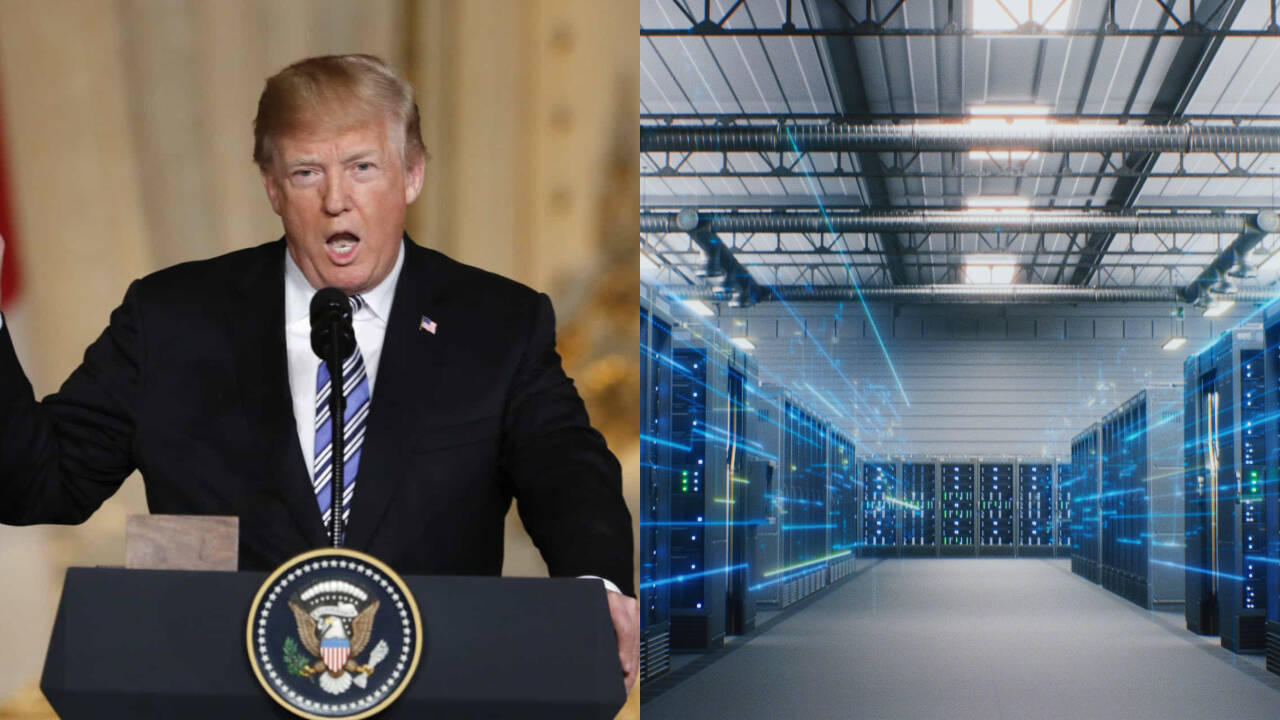
Washington just gave itself a standing ovation for solving a problem it completely misunderstands.
The U.S. Senate passed sweeping energy legislation forcing artificial intelligence data centers to foot a larger share of the bill for regional power grid upgrades. The mainstream press immediately framed this as a populist triumph. Big Tech pays its fair share. Everyday ratepayers get protected. Everybody wins.
That narrative is pure fiction.
If you believe forcing hyperscalers to fund transmission lines and substation overhauls will shield residential consumers from skyrocketing utility bills, you do not understand how regulated monopolies actually make money. Worse, you have fallen for the exact regulatory trap that incumbent utility companies spent millions lobbying Congress to build.
Here is the uncomfortable reality of American energy infrastructure. By mandating that AI companies pay directly for grid expansion, lawmakers have effectively handed investor-owned utilities a blank check to gold-plate the grid, lock out independent energy competition, and pass the hidden secondary costs straight back onto your monthly statement.
The Regulatory Illusion of Cost Allocation
To understand why this legislation backfires, you have to strip away the political theater and look at the mechanics of utility rate-making.
In most of the United States, electric utilities operate as regulated monopolies. They do not make profits by selling you electricity. They make profits by building capital infrastructure—poles, wires, transformers, and substations—and earning a guaranteed rate of return on those assets, approved by state Public Utility Commissions (PUCs).
When a traditional energy journalist writes about "making AI pay for grid upgrades," they assume the utility has a fixed bucket of upgrade costs and is simply shifting the invoice from Grandma’s house to a Microsoft or Google server farm.
That is not how the math works.
I have sat in countless utility interconnection meetings over the past decade watching energy developers try to get basic projects approved. When you tell a monopoly utility that a massive, price-insensitive customer with a trillion-dollar balance sheet is legally required to pay for whatever grid upgrades the utility deems necessary, the utility does not optimize for efficiency. It optimizes for capital expenditure.
Sudden spikes in transmission upgrade estimates are already legendary in the energy sector. When interconnection queues get backed up, utilities routinely hand developers eye-watering bills for "network upgrades" that magically solve decades-old deferred maintenance issues on the utility's existing system. Under this new Senate framework, hyperscalers become the ultimate piggy bank for utilities to rebuild aging infrastructure under the guise of "AI load accommodation."
And what happens once those shiny new high-voltage transmission lines are energized?
Operational and maintenance (O&M) expenses, property taxes, vegetation management, and depreciation costs get rolled into the broader regional rate base over a 30-to-40-year asset lifecycle. The hyperscaler pays the upfront connection fee, takes the PR hit or credit, and the utility expands its permanent rate base—meaning residential and small business customers end up paying the ongoing carrying costs for decades.
Why Hyperscalers Are Secretly Thrilled About This Bill
Notice how quietly the major tech lobbies reacted to the Senate vote. You did not see an all-out scorched-earth campaign from the hyperscalers to kill the provision. Ask yourself why.
If you are Amazon, Google, or Meta, your primary constraint in the AI race is not money. Capital is cheap when you sit on tens of billions in free cash flow. Your real constraint is time to power.
Waiting five to seven years in a regional transmission organization (RTO) interconnection queue—like PJM Interconnection or MISO—is a death sentence for an AI cluster. By the time a traditional utility finishes studying the grid impact and building a new substation, the GPUs you ordered are obsolete.
By codifying a "pay-to-play" upgrade mandate into federal law, Congress just created a legalized fast-track lane for the richest tech companies on earth.
- Regulatory Moats: Smaller AI startups, regional colocation providers, and mid-sized industrial manufacturers cannot absorb a $300 million upfront substation upgrade fee. Only the top four or five tech giants can write that check without blinking.
- Priority Queue Jumping: When you pay 100% of the upgrade cost upfront, utilities and regulators suddenly find ways to expedite your permits. The Senate didn't punish Big Tech; it institutionalized their monopoly over scarce gigawatts.
- Stranded Asset Protection: If a hyperscaler builds its own behind-the-meter microgrid, it owns the risk. By paying into the regulated grid, it shifts long-term reliability risk onto the public utility system while securing firm capacity guarantees.
The Behind-the-Meter Trap We Just Created
Before this legislation, the market was actually starting to solve the grid bottleneck on its own—without costing residential ratepayers a single dime.
Faced with massive utility delays and punitive tariff structures, data center developers were rapidly pivoting to "behind-the-meter" (BTM) generation. Imagine a scenario where an AI campus is built directly next to a nuclear power plant, a massive solar-plus-storage array, or an underutilized natural gas facility. The data center draws power straight from the generator, completely bypassing the public transmission grid.
Zero strain on local transformers. Zero transmission upgrade costs passed to homeowners. Zero taxpayer subsidies.
Yet regulated utilities hate behind-the-meter deals. Why? Because every megawatt a data center buys directly from an independent power producer is a megawatt that does not flow through the utility's wires—meaning the utility loses out on transmission tariffs and infrastructure rate-base growth.
Over the last two years, utilities and certain commissioners at the Federal Energy Regulatory Commission (FERC) have fought tooth and nail to restrict co-located data center deals, arguing that taking existing generation offline for private use threatens grid reliability. Now, with the Senate locking in a rigid cost-allocation model tied to traditional grid upgrades, Washington is nudging developers back onto the congested public grid instead of encouraging truly isolated, self-funded power architectures.
Dismantling the "People Also Ask" Myths
Whenever energy policy hits the front page, the same flawed questions dominate the conversation. Let's tear down the three biggest misconceptions driving this debate.
Are AI data centers really causing residential blackouts?
No. When the grid fails during a winter freeze in Texas or a heatwave in California, it is rarely because a server farm was training a large language model.
Blackouts happen because regional grids lack dispatchable baseload generation during extreme weather events, and because transmission networks across state lines are hopelessly fragmented. In fact, modern data centers are among the most predictable, flat-load customers on the entire grid. Unlike residential neighborhoods—where everyone cranks their air conditioning at 5:00 PM on a Tuesday—data centers run at a steady, predictable draw 24 hours a day, 365 days a year. Utilities actually love flat loads because they stabilize grid frequency.
Can't data centers just run on 100% wind and solar?
Only if you ignore basic physics.
Wind and solar are intermittent resources. Their capacity factors—the actual energy produced compared to their maximum theoretical output—typically hover between 25% and 45% depending on geography. An AI training run involving 100,000 H100 or Blackwell GPUs cannot simply pause because a cloud bank rolled over West Texas or the wind died down in Iowa.
When a tech company claims its data center is "100% renewable," it is almost always using accounting tricks—buying Renewable Energy Credits (RECs) from a wind farm three states away while physically drawing electrons from the local coal or combined-cycle gas plant at 2:00 AM. Pretending otherwise leads to catastrophic grid planning errors.
Will forcing tech companies to pay more actually lower my monthly bill?
Never. Utility rates in the United States almost never go down; they only rise at different speeds.
Even if a data center pays 100% of the transmission line connecting its facility to the nearest high-voltage backbone, adding massive new continuous demand to a constrained power market drives up the wholesale clearing price of electricity. In competitive wholesale markets like PJM or ERCOT, the price of electricity for everyone is set by the most expensive power plant needed to meet the final megawatt of demand. When AI pushes regional demand higher, older, less efficient gas peaker plants have to run more hours of the year. That spikes the wholesale energy charge on every single residential bill in the region—a cost that no "grid upgrade fee" will ever offset.
The Brutal Trade-Offs Nobody Wants to Admit
To be completely transparent, my contrarian stance comes with real operational risks that cannot be hand-waved away.
If we abandon strict grid-upgrade mandates and allow hyperscalers to freely pursue behind-the-meter deals and private microgrids, we face a serious cannibalization problem. If a tech giant buys up the entire output of an existing nuclear reactor—as we saw with high-profile deals in Pennsylvania—that clean, firm power is removed from the public pool. The remaining grid is forced to rely more heavily on fossil fuels, driving up both carbon emissions and wholesale power prices for everyday families.
Furthermore, without federal guardrails, smaller rural electric cooperatives and municipal utilities lack the legal leverage to negotiate against the armies of lawyers employed by trillion-dollar tech firms. A small utility in the Midwest can easily be bullied into socializing grid costs onto local farmers if there is no statutory floor protecting them.
The Senate bill attempts to solve those real vulnerabilities. The problem is that it uses a blunt, 20th-century regulatory hammer to fix a 21st-century computational load problem.
What Actually Works: How to Fix the Grid Without Fleecing Ratepayers
If Congress actually wanted to protect consumers while keeping America competitive in artificial intelligence, it would stop obsessing over who pays for copper wires and start fixing how electrons are generated and dispatched.
Here is the blueprint that energy insiders know works, even if politicians refuse to touch it:
- Mandate Interruptible Load Tariffs for AI Training. Not all compute is time-critical. Inference—answering user prompts in real time—requires 99.999% uptime. Model training does not. If an AI company wants a fast-track grid connection, require it to install automated demand-response software that throttles GPU power consumption by 30% to 50% during the 100 peak hours of the year when the grid is stressed. You instantly eliminate the need for billions of dollars in peak-capacity grid upgrades.
- Require "Additionality" for Behind-the-Meter Deals. Stop letting data centers buy up existing nuclear or hydro plants that already serve the public. Pass a strict rule: if you want to bypass the public grid and avoid transmission upgrade fees, you must fund and build new, net-additional firm generation—whether that is advanced geothermal, small modular reactors, or natural gas with carbon capture—to match your exact hourly load.
- Overhaul Interconnection Queues from "First-Come" to "First-Ready." Right now, regional transmission grids are clogged with thousands of speculative solar and battery projects that will never be built, blocking legitimate industrial loads. FERC needs to aggressively purge zombie projects from the queue and standardize regional transmission planning so utilities cannot pad upgrade bills with unrelated maintenance.
- Cap Utility Return on Equity (ROE) on Customer-Funded Assets. If a hyperscaler pays upfront for a grid upgrade, the utility should be legally barred from earning a guaranteed profit margin on that contributed capital. Right now, tax rules and accounting loopholes still allow utilities to extract financial upside from assets they didn't even pay to build.
Washington loves passing bills that sound tough on Big Tech. It makes for great campaign ads and effortless headlines.
But electrons do not care about Senate press releases, and monopoly utilities never lose a negotiation they helped write. Until lawmakers stop treating the power grid like a static tollbooth and start demanding flexible compute and net-new generation, the tech giants will keep buying up the grid—and you will still be paying for it every single month.


