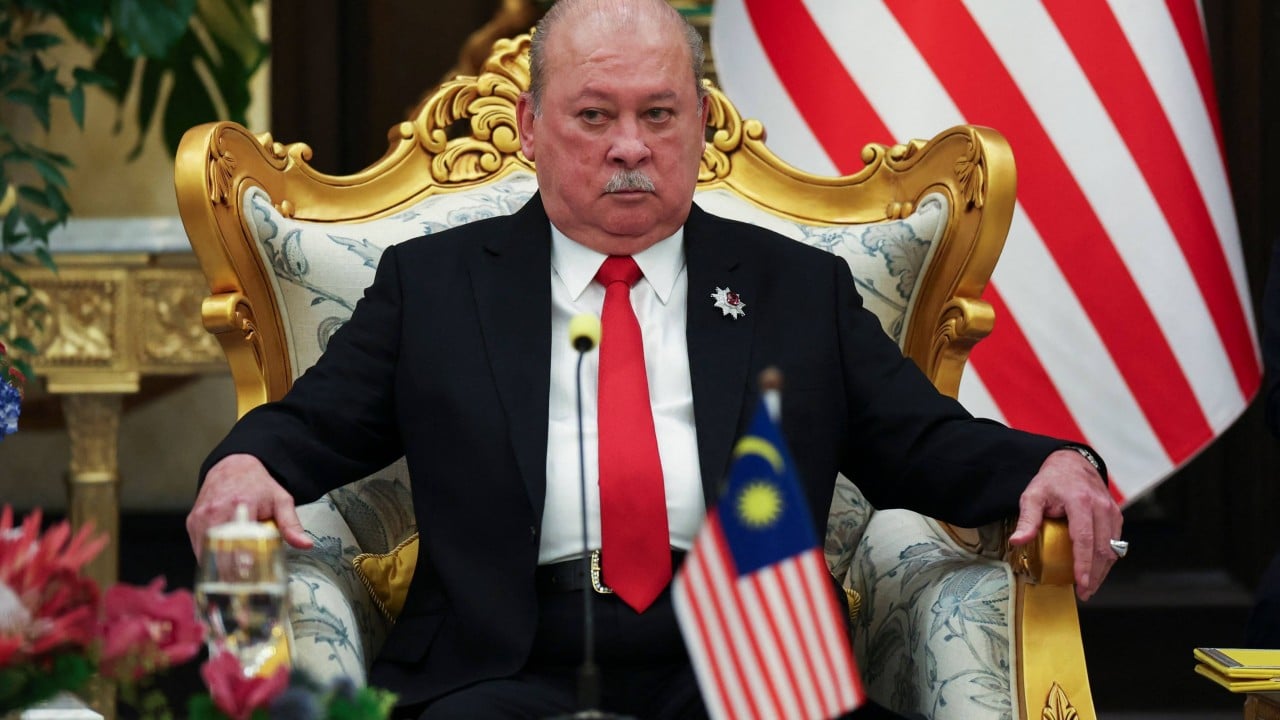
Malaysia’s King has issued a rare, pointed warning against challenging the royal prerogative of mercy, directly addressing the fierce legal and political battle over former Prime Minister Najib Razak’s bid to serve the remainder of his prison sentence under house arrest. The statement from Istana Negara—the national palace—lands at a volatile moment for Prime Minister Anwar Ibrahim’s coalition government, signaling that the monarchy will not tolerate public or judicial encroachment on its constitutional authority to grant pardons and commute sentences.
For months, Kuala Lumpur has been gripped by a constitutional tug-of-war over an alleged supplementary royal decree—known locally as a titah adendum—purportedly issued by the previous King, Sultan Abdullah Ri'ayatuddin Al-Mustafa Billah Shah, just before his five-year reign ended in January 2024. While the Federal Territories Pardons Board officially halved Najib’s 12-year sentence for his conviction in the SRC International corruption case, Najib’s legal team insists a separate royal addendum granted him the right to serve those remaining six years at home. By stepping into the fray now, the current King, Sultan Ibrahim Iskandar, has effectively drawn a red line around royal discretion, leaving politicians, judges, and civil society groups scrambling to figure out where constitutional monarchy ends and judicial review begins.
The Anatomy of a Constitutional Collision
To understand why a single palace statement carries such weight in Malaysia, you have to look at the mechanics of Article 42 of the Federal Constitution. Under this provision, the Yang di-Pertuan Agong—Malaysia’s rotating constitutional monarch—holds the power to grant pardons, reprieves, and respites for offenses committed in the Federal Territories of Kuala Lumpur, Labuan, and Putrajaya.
Traditionally, Malaysian courts have treated royal clemency as non-justiciable. That means judges refuse to review the merits of a King's pardon, viewing it as an absolute act of royal mercy rather than an administrative decision subject to legal challenge.
Najib’s lawyers turned that precedent upside down. They aren't challenging the pardon itself; they are suing the government to compel it to confirm the existence of the alleged house arrest addendum and execute it. In doing so, they dragged the inner workings of the Pardons Board—and by extension, the former King’s private deliberations—into open court.
When Sultan Ibrahim warned against disputing the King's prerogative, he wasn't merely defending his predecessor. He was protecting the institution of the monarchy from being cross-examined in a courtroom. If the High Court or Court of Appeal allows litigants to subpoena palace documents or compel ministers to testify about what a King intended behind closed doors, the aura of royal finality evaporates overnight.
Why the House Arrest Addendum Matters
The controversy boils down to procedure and secrecy. In February 2024, the Pardons Board announced that Najib’s sentence had been reduced from 12 years to six, and his fine slashed from 210 million ringgit to 50 million ringgit. There was zero mention of house arrest.
Weeks later, Najib filed a judicial review application, claiming he had received reliable information that Sultan Abdullah had signed an additional order on January 29, 2024, allowing him to serve the rest of his term at his private residence. Affidavits filed by senior political figures—including Deputy Prime Minister Ahmad Zahid Hamidi, who leads Najib’s former party, UMNO—claimed they had seen a copy of the document on a mobile phone.
Yet the government neither confirmed nor denied the decree’s existence for months, hiding behind legal arguments that affidavits based on hearsay were inadmissible. That silence fueled public fury and political paranoia.
Anwar Ibrahim’s Impossible Balancing Act
No one feels the heat of this royal warning more acutely than Prime Minister Anwar Ibrahim. His "Unity Government" is an unlikely marriage of convenience between his own reformist Pakatan Harapan coalition and UMNO, the very party Najib once led and which remains fiercely loyal to its jailed former boss.
Anwar built his political brand over two decades on anti-corruption crusades and institutional reform. His core urban voter base already swallowed a bitter pill when he allied with UMNO to form a government after the hung parliament of 2022. They tolerated the initial halving of Najib’s sentence only because it was framed as an undeniable royal decision over which Anwar had no control.
House arrest is a different beast entirely.
- The Reformist Backlash: Allowing a man convicted of looting millions from a state-linked fund to sit comfortably in a luxury mansion—receiving political visitors and pulling strings from his living room—would shred whatever remains of Anwar’s anti-graft credibility.
- The UMNO Ultimatum: Conversely, if Anwar’s administration is seen as actively blocking or hiding a royal decree that benefits Najib, UMNO’s grassroots could revolt, potentially pulling out of the coalition and collapsing the government.
- The Palace Factor: Sultan Ibrahim is widely known in Malaysian political circles as an assertive, hands-on monarch who dislikes political theater and expects his prime ministers to maintain stability. Openly defying or embarrassing the palace is political suicide in Kuala Lumpur.
The King’s warning actually hands Anwar a temporary political shield. By framing the issue around respect for royal prerogative rather than partisan politics, the palace shifts the debate away from whether Najib deserves leniency and toward whether politicians are obeying the constitution. Still, shields only work until the next court hearing.
The Legal Precedent Nobody Wants to Set
Strip away the political drama, and the legal questions haunting Kuala Lumpur’s Palace of Justice are genuinely unprecedented. Malaysian law currently has no clear statutory framework for "house arrest" as a post-conviction alternative for white-collar criminals who have already been sentenced to prison by the Federal Court.
Under the Prisons Act 1995, the Home Minister has certain powers to declare specific premises as places of detention, and the government has previously floated the idea of introducing home detention laws to ease prison overcrowding for non-violent offenders. However, applying such a mechanism retroactively to a high-profile convict via an unpublicized royal addendum creates a legal minefield.
Consider the practical questions that legal scholars and constitutional lawyers have been debating behind closed doors:
- Can a King act outside the Pardons Board? Under Article 42, the King exercises his power of pardon on the advice of the Pardons Board, which includes the Attorney General and the Minister responsible for the Federal Territories. Critics argue that a unilateral addendum issued without the board’s formal deliberation violates constitutional procedure. Defenders of royal power counter that the King is not bound to follow the board's advice, only to consider it.
- Does secrecy invalidate a royal decree? In modern administrative law, executive orders affecting the status of a prisoner must be officially gazetted or communicated through formal channels to the Prisons Department. An order kept secret from the public—and allegedly withheld by officials—raises troubling questions about accountability and the rule of law.
- What happens to ongoing trials? Najib is not out of the woods. He still faces the massive 1MDB trial involving billions of dollars in misappropriated sovereign wealth funds, alongside other charges. If he is granted house arrest for the SRC International conviction, how does that interact with his legal status if he is convicted in the 1MDB case?
If the courts rule that they have no jurisdiction to examine how the addendum was created or withheld, they reinforce absolute royal discretion. If they rule that they do have jurisdiction to compel the government to produce the document and explain its legal validity, they risk triggering a direct confrontation with the monarchy.
Public Trust and the Shadow of 1MDB
Outside the air-conditioned courtrooms and palace gates, ordinary Malaysians are watching with a mixture of cynicism and exhaustion. For nearly a decade, the 1MDB scandal has defined Malaysia’s international reputation and domestic politics.
When Najib was finally sent to Kajang Prison in August 2022 after exhausting every possible appeal, many citizens believed the country had turned a corner. It proved, however briefly, that even the most powerful political dynasts were not above the law.
The rapid succession of events since then—first the 50% sentence reduction, and now the push for house arrest—has eroded that faith. To the average taxpayer dealing with rising living costs and a sluggish currency, the debate over constitutional nuances feels like a rigged game designed to protect the elite.
Anti-corruption watchdogs, including the Malaysian Bar and civil society groups like Bersih, have voiced deep unease. While careful not to breach Malaysia’s strict sedition laws—which criminalize any speech deemed to bring hatred or contempt against the rulers—legal commentators have pointed out that transparency in the pardon process is essential for public confidence. Mercy, they argue, should not look like impunity.
The Sedition Law Shadow Over Public Debate
One crucial detail often glossed over in international coverage of this story is how tightly speech is policed in Malaysia whenever the monarchy is involved. Under the Sedition Act 1948—a colonial-era law that successive governments promised to repeal but repeatedly kept—questioning the sovereignty, prerogatives, or powers of the Malay Rulers is a criminal offense punishable by fines and imprisonment.
Furthermore, Anwar’s government has heavily emphasized policing the "3Rs"—Race, Religion, and Royalty—warning that any commentary crossing the line on these subjects will be met with swift police investigations.
When the King issues a public warning against challenging royal prerogatives, it carries an implicit legal chill. Opposition politicians, activists, and journalists have to weigh every word carefully. Criticizing the government’s handling of the Najib addendum is fair game; questioning the King’s right to issue it in the first place can land a citizen in a police lockup before sundown.
This dynamic creates an asymmetrical battlefield. Najib’s supporters can loudly champion royal mercy as an unquestionable sacred right, framing anyone who objects to his house arrest as disloyal to the crown. Meanwhile, critics of the move are forced to walk a tightrope, attacking the government's lack of transparency while professing total deference to the palace.
What Happens When the Courts Reconvene
The immediate battleground remains the Malaysian judiciary. Following rulings that allowed Najib’s appeal over the judicial review to proceed to higher courts, the government faces mounting pressure to come clean on the exact status of the January 29 addendum.
If the courts eventually order the government to confirm the document’s existence, Anwar’s administration will have nowhere left to hide. Confirming it means either implementing house arrest—and facing the wrath of urban voters—or arguing that the addendum is legally defective because it bypassed proper Pardons Board procedures, which risks infuriating both UMNO and the palace.
Denying its existence, on the other hand, directly contradicts sworn affidavits filed by sitting cabinet ministers, opening a Pandora's box of perjury allegations and cabinet implosions.
The King’s intervention was meant to quiet the noise and reassert authority over a messy political crisis. Instead, it has highlighted just how fragile the compromise holding Malaysia’s government together truly is, leaving the country’s highest court to decide a question that neither the politicians nor the palace can cleanly resolve.