The Myth of the Backyard Boatbuilder
We love the mythology of the solitary craftsman. A man retreats to a freezing workshop in the Nordics, surrounded by wood shavings and quiet desperation, and emerges years later with an ocean-going vessel. It makes for good Sunday morning viewing. It plays nicely into our collective exhaustion with mass production and corporate supply chains.
Strip away the romanticism, and you find something far more uncomfortable.
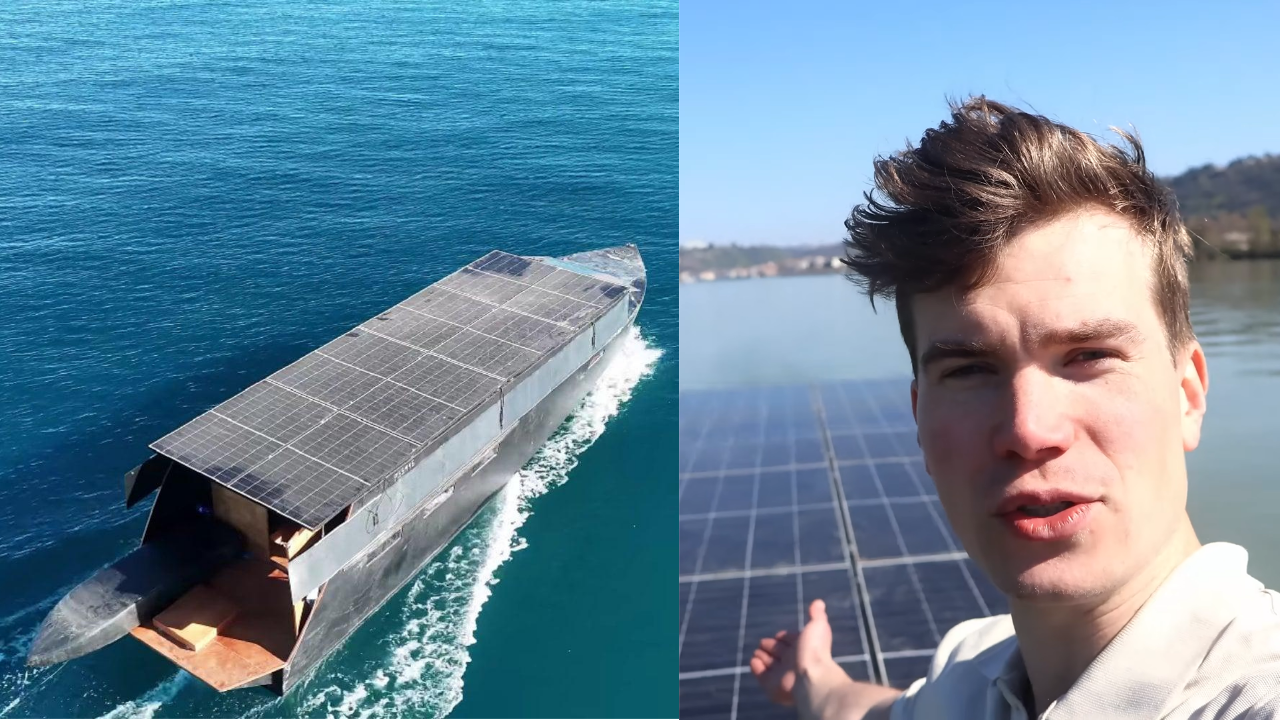
Building an 11-metre yacht from scratch using photovoltaic arrays is not a charming hobbyist project. It is an act of engineering defiance against an industry that wants to charge you six figures for a floating plastic box that depreciates the moment it touches salt water. In Finland, a boatbuilder named Patrik Lindholm decided he had enough of the marine industry's pricing models and technological stagnation. He spent years constructing a solar-powered cruiser in his yard.
The mainstream press reported it as a feel-good story about green energy. They missed the underlying threat.
When an individual can construct a high-efficiency electric vessel in a northern climate without corporate backing, it exposes the massive markup and unnecessary complexity of modern boat manufacturing. Marine engineering has spent decades convincing consumers that propulsion requires massive diesel engines, complex gearboxes, and constant maintenance. Lindholm proved otherwise using basic geometry, composite wood, and commercially available panels.
Stripping Away Marine Industry Inflated Margins
Let us look at the financial reality of recreational boating. Walk into any marina, and you are surrounded by floating assets that cost more than suburban homes while offering a fraction of the utility. The traditional yacht industry relies on closed ecosystems. Proprietary parts, specialized maintenance crews, and fuel dependency trap buyers in an endless cycle of expenditure.
Lindholm bypassed this trap entirely by adopting a philosophy of radical simplicity.
Traditional Yacht Model vs. Owner-Built Solar Model
┌───────────────────────────┬───────────────────────────┐
│ Traditional Marine        │ Owner-Built Solar         │
├───────────────────────────┼───────────────────────────┤
│ High fuel dependency      │ 100% photovoltaic harvest │
│ Proprietary diesel parts  │ Open-source electronics   │
│ Heavy fiberglass hulls    │ Light composite wood      │
│ Dealer-locked service     │ Self-repairable systems   │
└───────────────────────────┴───────────────────────────┘
The hull of his 11-metre vessel was not pressed in a multimillion-dollar industrial mold. It was constructed using traditional strip-planking methods, coated in epoxy and glass cloth. This construction method offers a high strength-to-weight ratio while remaining accessible to someone without a corporate shipyard budget. Weight is the primary enemy of electric propulsion. Every unnecessary kilogram requires more battery capacity, which adds more weight, creating a compounding engineering penalty.
By keeping the displacement low, Lindholm reduced the power requirements for cruising speed. He did not need a massive bank of industrial batteries. He needed enough storage to bridge the gap between peak sunlight hours and evening cruising.
The Hard Physics of Solar Marine Propulsion
The romance of green technology often collides with the brutal laws of thermodynamics. Solar panels on a boat sound revolutionary until you calculate the surface area available versus the energy required to push a hull through water.
Water offers significantly more resistance than air. Pushing a displacement hull through a chop requires continuous, sustained energy. A typical recreational powerboat demands dozens of kilowatts to maintain planing speeds. At those rates, a roof covered in solar panels becomes a decorative hat; it cannot harvest enough photons to keep up with the demand.
Lindholm solved this by abandoning the desire for speed.
His yacht is a displacement vessel, designed to cruise efficiently at hull speed rather than race across the waves. By accepting a modest cruising velocity of six to seven knots, the power consumption drops to a level that rooftop photovoltaic arrays can actually supply.
Power Demand vs. Hull Speed
  High Speed (Planings)  [████████████████████] Massive draw (Diesel/Heavy Battery)
  Hull Speed (Displacement) [████                 ] Low draw (Solar Viable)
This is the design constraint that traditional boatbuilders refuse to embrace. Consumers have been conditioned to expect speedboat performance, even when they spend ninety percent of their time sitting at anchor or putting through narrow channels at idle speed. By designing the vessel around the actual operational profile of a cruiser, the math shifts entirely. The sun provides the fuel, and the batteries act as a buffer rather than a primary reservoir.
The Supply Chain Vulnerability
There is a geopolitical subtext to backyard shipbuilding that few commentators dare to address. Modern commercial boats are tethered to globalized supply chains that are increasingly fragile. When a marine transmission fails or a common-rail diesel injector clogs, the owner is at the mercy of international shipping lanes, specialized technicians, and steep import duties.
When you build your own vessel using open-architecture components, you change the power dynamic.
Lindholm’s electrical architecture relies on standard, off-the-shelf solar charge controllers, inverters, and lithium iron phosphate cells. If a component fails in a remote archipelago, the replacement part does not need to come from a specialized marine dealer in Florida or Germany. It can be sourced from industrial electronics suppliers or automotive surplus.
This approach points toward a future of localized manufacturing. We are reaching the limits of consumerism in heavy hobbies. The cost of entry for recreational boating has risen so steeply that younger generations are effectively locked out of the market. When ownership becomes impossible through traditional retail channels, people resort to fabrication.
The Reality Check on Autonomous Cruising
We must not romanticize this transition too far. Building an 11-metre yacht from scratch is not something the average weekend warrior can accomplish in a two-car garage.
It requires thousands of hours of painstaking labor, deep knowledge of structural physics, and an extreme tolerance for frustration. Lindholm’s project took years of dedication. Dust in the lungs, resin dermatitis, and structural miscalculations are part of the hidden ledger. For every triumphant launch day, there are dozens of half-finished hulls rotting in backyards across the northern hemisphere, abandoned when the builders realized the sheer scale of the commitment.
Furthermore, solar marine propulsion has hard geographic limits.
It works brilliantly in the Nordic summer, where the sun barely sets for weeks at a time. Try the same configuration in the overcast, short-day winters of the North Sea or the Pacific Northwest, and your energy budget collapses. A solar boat at high latitudes is a seasonal toy, not a year-round liveaboard platform, unless supplemented by alternative generation methods like hydro-generation or wind turbines.
Geographic Viability Index
┌─────────────────────────┬─────────────────────────┐
│ High Latitude (Summer)  │ High Latitude (Winter)  │
│ 20+ hours sunlight      │ Minimal low-angle light │
│ High solar harvest      │ Severe energy deficits  │
├─────────────────────────┼─────────────────────────┤
│ Equator / Tropics       │ Mid-Latitude Oceans     │
│ Consistent daily yield  │ Variable cloud cover    │
│ Thermal management risk │ Balanced requirements   │
└─────────────────────────┴─────────────────────────┘
The marine industry knows these limitations well. They use them as an excuse to maintain the status quo, arguing that internal combustion is the only reliable choice for all-weather, all-latitude navigation. But that argument is a deflection. It protects profit margins rather than serving the actual needs of recreational sailors, most of whom never venture far from the coast during favorable weather windows.
The Quiet Rebellion at the Dock
When Patrik Lindholm casts off his lines and moves silently out of the harbor, he is not just demonstrating a clever technical achievement. He is offering an indictment of an entire economic sector.
He proves that a single person with patience, raw materials, and an understanding of physical limits can bypass the multi-billion-dollar marine leisure complex. You do not need a line of credit from a marine finance firm. You do not need a branded service contract. You need wood, resin, panels, and an unwillingness to accept that things must be done the way they have always been done.
The boatyards are watching. They are not impressed by the green credentials; they are terrified by the economics. If more people realize that an 11-metre cruiser can be built at home and run on sunshine without a drop of fossil fuel, the entire foundation of recreational marine retail starts to look very shaky indeed. The era of the bloated, overpriced motor yacht is facing a slow, quiet challenge from the workshop floor.