Some people leave a country with packed suitcases, boarding passes crinkled in their palms, and the heavy scent of tearful goodbyes still clinging to their coat collars. Others simply walk across a threshold, blink against the neon glare of a foreign city, and quietly forget to leave.
Imagine looking at your watch, noting that your fifteen-day tourist visa expires on a Tuesday, and then watching that same Tuesday stretch out across three decades.
That is not a math problem. It is an erasure.
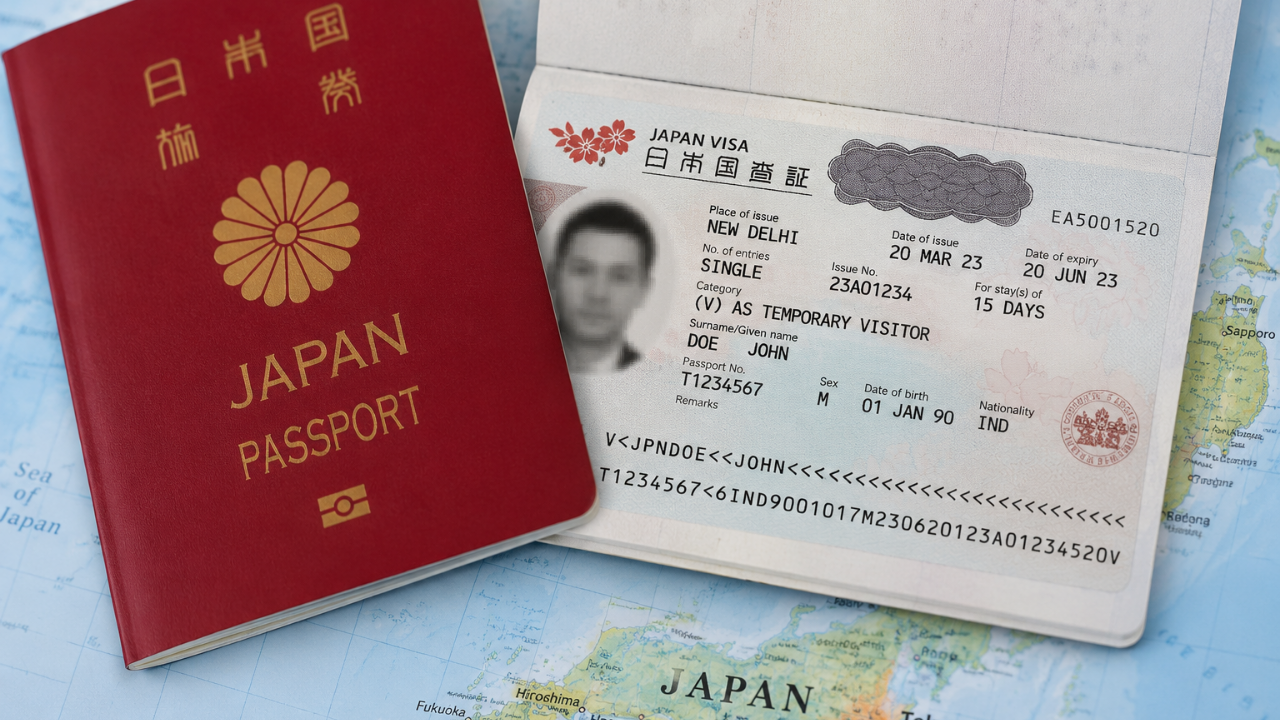
In the late autumn of nineteen ninety-one, a seventy-two-year-old South Korean man packed light. He arrived in Japan carrying the paper authorization of a temporary visitor, a document designed for brief curiosities. Sightseeing. A quick bowl of steaming ramen in Shinjuku. A snapshot beneath the fading canopy of autumn maples in Kyoto. The state expected him back in Seoul before the ink on his departure stamp grew cold.
Instead, he stayed.
Thirty-three years. Let that number settle against your ribs for a moment. Entire political regimes rose and crumbled. The global economy shifted from analog whispers to digital roars. Children born the year he arrived grew up, married, had children of their own, and grew middle-aged. Pop culture mutated beyond recognition. Through it all, this man lived in the margins of a society that officially pretended he did not exist.
How does a human being survive in plain sight for a third of a century without a legal identity?
The answer is a masterclass in calculated invisibility. You learn the rhythm of the streets. You avoid the bright lights of official institutions. You become a ghost who pays rent, buys groceries, and breathes the same humid summer air as everyone else, yet leaves no footprint in the municipal ledger.
He did not live in a villain’s lair or a cinematic hideout. He lived in the quiet, mundane texture of everyday neighborhoods. The baker who handed him warm morning bread likely never asked for his passport. The landlord who collected cash rent likely looked the other way, preferring punctual payment over bureaucratic entanglement. Humanity operates on a vast network of unspoken accommodations. People choose not to see things that complicate their day.
For decades, his existence was an administrative impossibility. Japan is a nation famous for its precision, its registries, its tracking of every resident down to the exact square meter of their neighborhood association. Every individual is cataloged through the juminhyo residency management system. To fall outside this grid is to become a non-person. You cannot open a bank account. You cannot sign a legal employment contract. You cannot walk into a hospital when your chest tightens without inviting immediate, catastrophic exposure.
Fear becomes a second skin. It is not the dramatic, cinematic fear of sirens wailing in the dark. It is the dull, grinding ache of knowing that a routine traffic stop, a medical emergency, or a simple misspoken word could unravel an entire lifetime built on stolen time.
Why did he stay?
People often assume undocumented migration is driven by grand ambitions, criminal conspiracies, or cinematic desperation. Often, it is much simpler and far more tragic. It is inertia born of fear, tangled with the realization that returning home meant facing an empty room, a forgotten past, and a life that had moved on without you. Home stops being a physical place and becomes an abstract memory. Back in South Korea, relatives aged and passed away. Friends forgot his face. By the time years turned into decades, returning required an impossible reconciliation with a ghost. What do you say to a homeland that has spent thirty-three years learning how to live without you?
Then came the morning that changed everything.
Aging has a way of dismantling even the most carefully constructed illusions. At over a hundred years old—having crossed the threshold of a century while living in the shadows—the physical reality of his existence could no longer be contained by silence. Health failed. The body, resilient as it had been, finally demanded intervention that only the state could provide.
When he finally walked into a Japanese immigration office to surrender himself, it was not an arrest. It was an inevitability.
The encounter must have been surreal for the officials behind the counter. They deal with overstayers regularly, of course. People slip through visa cracks every day. But a man who had been ghost-walking through the Heisei and Reiwa eras on a Showa-era tourist stamp? That belongs in a historical archive, not a standard case file.
Japan's immigration authorities faced a profound moral and bureaucratic puzzle. The law was absolute: he had entered legally, but he had overstayed by more than thirty years. By the strict letter of the statute, deportation was the automatic gears of the machine turning. Yet, human discretion had to wrestle with the reality of his advanced age. You do not simply deport a centenarian without asking what purpose it serves. Justice stripped of context is merely cruelty with a stamp.
The story highlights a quiet truth about our modern world. We build vast, gleaming borders of steel, glass, and digital verification, imagining them to be absolute. We treat nations as airtight containers. Yet human beings are stubborn, fluid things. They leak through the cracks. They find tiny, improbable spaces and build whole lives inside footnotes.
We look at statistics—millions of undocumented people globally, complex immigration debates, policy briefs stacked high on legislative desks—and we see numbers. We see immigration crises. We forget that behind every single statistical anomaly is an old man sitting in a modest room, watching the seasons change outside a window, wondering how much longer he can keep his secret.
He broke the law. That is the fact. The state has rules, and borders require boundaries to mean anything at all. But as he stood before the authorities, frail and stripped of the invisibility that had protected him for half a lifetime, the law met something much older and much harder to categorize: a human life lived entirely in the margins, enduring the quietest kind of exile.
He didn't conquer the world. He didn't change history. He simply endured, hour by hour, day by day, for thirty-three years, proving that a person can become a ghost and still feel the cold bite of winter on their face.