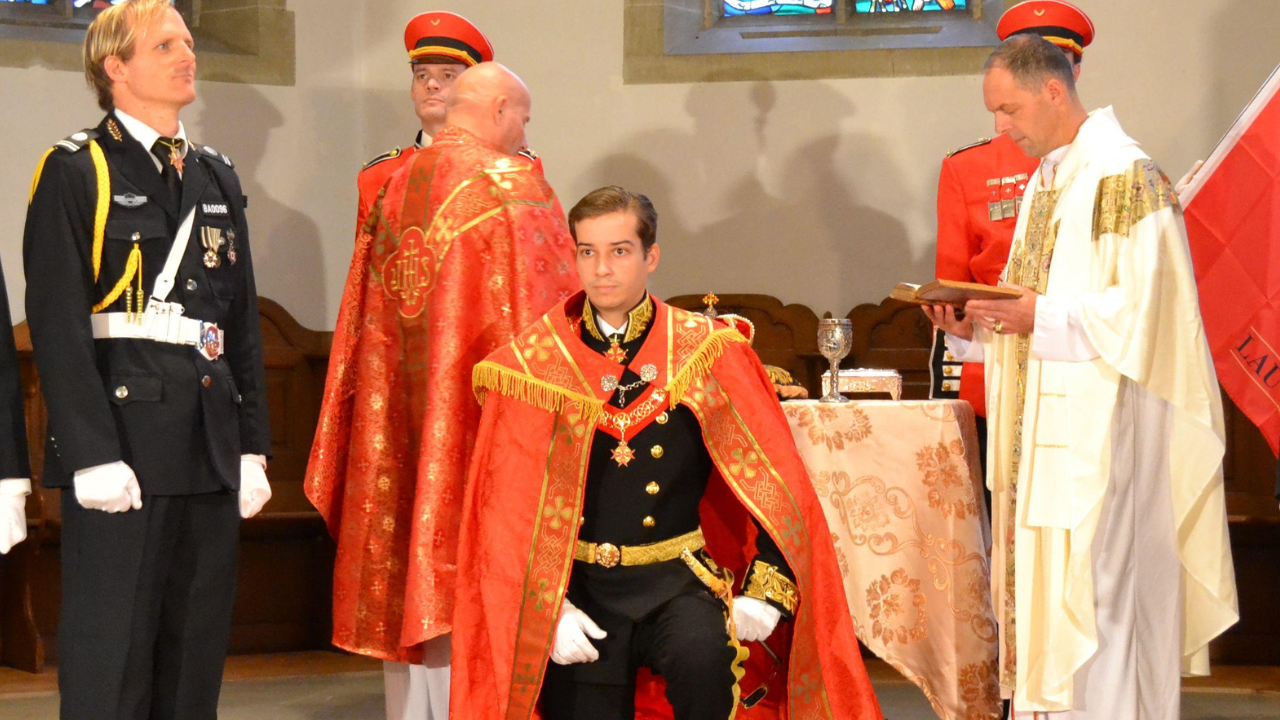
The concept of personal sovereignty often begins in a basement and ends in a courtroom. Recently, a narrative began circulating about a self-proclaimed monarch who supposedly carved an "empire" out of Switzerland, operating entirely for free. While the internet loves a David versus Goliath story involving a lone individual outsmarting a global banking hub, the reality is far more grounded in legal eccentricity and the exploitation of administrative loopholes. This is not a tale of a new nation rising, but a case study in how fringe legal theories can be used to bypass civil obligations—until the state decides to stop humoring the performance.
The individual in question did not actually seize territory or gain diplomatic recognition from the United Nations. Instead, he utilized a cocktail of "Sovereign Citizen" ideology and specific interpretations of Swiss communal law to claim that he was no longer subject to taxes, debt collections, or federal oversight. In his view, he had seceded. In the eyes of the Swiss authorities, he was simply a resident in significant arrears.
The Mechanics of a Paper Empire
To understand how someone "builds an empire for free," you have to look at the cracks in modern bureaucracy. Most Western systems are built on a foundation of good faith and the assumption that citizens will follow the rules. When someone moves from "I disagree with this law" to "This law does not apply to me because I am a living soul and not a corporate entity," the system often stutters.
This specific individual began his campaign by filing voluminous amounts of paperwork with local municipalities. These weren't standard forms. They were dense, pseudo-legal declarations filled with archaic language, claiming his home was an embassy and his person was a sovereign state. Because Swiss bureaucracy is notoriously thorough, every piece of mail required a formal response. This created a temporary vacuum of enforcement. While the officials were busy figuring out which department handled "secession via registered mail," the self-proclaimed king stopped paying his bills.
He wasn't building infrastructure or a military. He was building a shield made of paper. By declaring his property a sovereign zone, he effectively dared the local police to commit an international incident by entering. For a time, it worked. Not because he was right, but because the cost of removing him—legally and physically—exceeded the immediate benefit of collecting a few thousand francs in tax.
Why Switzerland Became the Backdrop
Switzerland is a peculiar choice for a revolution. It is perhaps the most stable democracy on earth, rooted in a bottom-up federalism where local communes hold significant power. This decentralization is exactly what the "king" exploited.
In a highly centralized state, a declaration of independence is met with immediate federal force. In Switzerland, the layers of government meant he could play the commune against the canton, and the canton against the confederation. He utilized the principle of subsidiarity—the idea that matters should be handled by the smallest, lowest, or least centralized competent authority—to keep his case mired in local disputes.
The Financial Illusion of Free
The "empire for free" headline comes from his refusal to participate in the monetary system. He claimed that because he was a king, he could issue his own credit or simply ignore the debts accrued to "foreign" entities (the Swiss state).
- Tax Evasion as Sovereignty: By reframing a refusal to pay income tax as a geopolitical stance, he gained a following among those frustrated with the high cost of living.
- The Barter Loophole: He attempted to set up a micro-economy within his "borders" based on trade and self-issued certificates.
- Squatting in Plain Sight: Because the legal process for eviction in Switzerland involves specific protections, he stayed in his "palace" for years without paying a cent in rent or mortgage, leading to the public perception that he had conquered the system.
The Dangerous Allure of the Sovereign Myth
This isn't an isolated incident of eccentricity. It's part of a growing global trend where individuals use "strawman" theories to escape debt. The core belief is that your birth certificate creates a dual entity: the "flesh and blood" human and the "legal person" owned by the government. By separating the two, these people believe they can enjoy the benefits of society—roads, police protection, emergency rooms—without the financial burden.
The problem with this "empire" is that it is parasitic. It relies entirely on the stability and services of the nation it claims to reject. If the Swiss electricity grid goes down, the king sits in the dark. If the road to his house is blocked, his subjects (mostly curious internet followers) cannot visit.
Legal Precedent vs. Internet Legend
There is a significant difference between a micronation and a sovereign citizen claim. Micronations like Sealand or the Republic of Molossia are generally viewed as harmless hobbies or performance art. They don't usually try to stop paying local property taxes or interfere with the legal rights of their neighbors.
The "King of Switzerland" crossed the line from hobbyist to high-risk litigant. He began issuing his own "arrest warrants" for local judges and sending "bills" to the Swiss government for trillions of dollars in perceived damages. This is a common tactic known as paper terrorism. The goal is to overwhelm the legal system with so much nonsense that it collapses under its own weight, allowing the protagonist to claim victory by default.
The High Cost of No Cost
While the articles portrayed a man living a dream of total freedom, the reality was a life of extreme isolation and impending ruin. You cannot actually build an empire for free. You simply defer the costs until they arrive with an interest rate that can break a man.
The Swiss authorities eventually lost their patience. In these cases, the "empire" usually ends in a pre-dawn raid. The legal documents are shredded by a court order, and the king is moved from a palace to a prison cell or a psychiatric facility. The tragedy of the story is that it offers a false map to people who are genuinely struggling with the complexities of modern life. It suggests there is a magic word or a secret document that can erase your problems.
There isn't.
The Verdict on the Empire
The "empire" was never a territory. It was a brand. By filming videos of himself "ruling" his living room and "granting audiences" to YouTube commenters, he created a digital footprint that looked like power. To a certain segment of the internet, a man standing up to a bank is a hero, regardless of whether his legal arguments make any sense.
We are seeing a rise in these "pop-up sovereigns" because the traditional paths to success feel increasingly blocked. When the cost of housing and the weight of debt become unbearable, the idea of declaring yourself a king becomes a seductive escape. But a kingdom without a tax base, a military, or recognition is just a house with a very stressed occupant.
The Swiss state didn't lose. It waited. In the world of high finance and international law, the state always has more time than the individual. The man who proclaimed himself king found out that while you can declare yourself whatever you want, the bailiff still works for the Republic.
His mistake was believing his own press. He thought the silence of the authorities was a sign of defeat. It was actually the sound of a very large, very slow machine finally turning its gears to crush a nuisance. The empire didn't fall; it was simply evicted.
If you want to build something that lasts, you have to do it within the framework of reality. You can't file a motion to dismiss the laws of physics, and you can't use a fake passport to cross the border of common sense. The true cost of his "free" empire was his standing in the community, his financial future, and his liberty. That is an expensive way to play dress-up.
The next time you see a headline about someone outsmarting the system with a few clever phrases, remember that the system wrote those phrases. It knows exactly how to handle people who try to use its own tools against it. Sovereignty isn't something you claim on a PDF; it's something you earn through power, and in the 21st century, the power remains firmly in the hands of the institutions.
Stop looking for the loophole. Start looking at the ledger.


