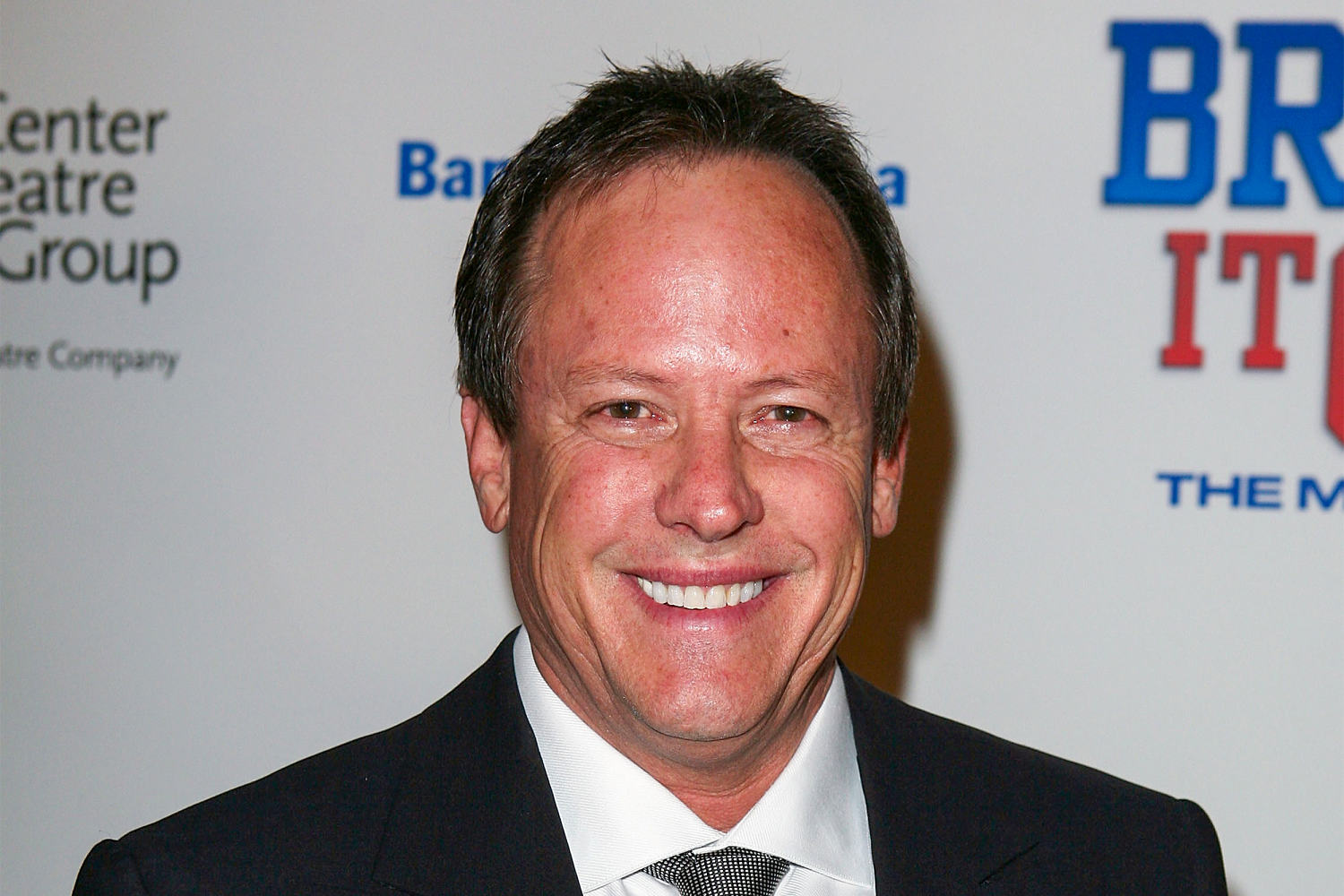
The roar of a Friday night stadium is a specific kind of American frequency. It is the smell of freshly cut grass mixing with diesel exhaust and popcorn, the rhythmic thud of cleats on a hollow wooden ramp, and the high-pitched, synchronized elective energy of the sidelines. For decades, if you looked at a cheerleading squad anywhere from a dusty Texas high school to a neon-lit national championship in Orlando, you weren't just looking at an athletic display. You were looking at the house that Jeff Webb built.
News broke recently that Webb, the architect of modern cheerleading and a polarizing power broker in conservative circles, died following an accident at the age of 76. To some, he was the ultimate mentor—a man who took a marginal sideline activity and turned it into a billion-dollar empire. To others, he was the man who commodified youth spirit, wrapping it in polyester and selling it back to the masses at a premium.
His life was a study in the intersection of sweat, glitter, and hard-nosed political maneuvering.
The Invention of an Empire
Before Jeff Webb, cheerleading was largely a disorganized collection of local traditions. It was social, sure, but it lacked a spine. In the early 1970s, Webb was a cheerleader at the University of Mississippi. He saw something others missed. He didn't just see students with megaphones; he saw a market.
He left the established National Cheerleaders Association to start his own venture, Varsity Spirit, in 1974. It was a classic American startup story, fueled by a borrowed $5,000 and a conviction that the "spirit" of a school could be standardized, packaged, and scaled.
Consider the logistical brilliance of his model. Webb didn't just sell uniforms. He sold the camps where you learned the routines to wear the uniforms. Then he sold the competitions where you performed the routines you learned at the camps. Finally, he worked to get those competitions on ESPN, turning a local school activity into a televised spectacle.
He created a closed loop. If you wanted to compete, you had to be part of his ecosystem. If you wanted the look, you bought from his catalog. It was a vertical integration that would make a steel tycoon weep with envy. By the time he stepped away from the daily operations of Varsity, the company was the undisputed titan of the industry, a monopoly in pom-poms.
The Invisible Hand on the Shoulder
But the story of Jeff Webb isn't contained within the walls of a gymnasium. In his later years, his influence drifted from the sidelines of football fields to the front lines of the American culture war.
He became a foundational figure for a new generation of conservative firebrands. Most notably, he was a mentor and a critical early supporter of Charlie Kirk, the founder of Turning Point USA. For Kirk, Webb wasn't just a donor; he was a blueprint. Webb understood how to mobilize the youth. He understood how to create a brand that felt like a movement.
When you look at the slick, high-production value of modern political youth summits, you can see the DNA of a Varsity Spirit national championship. The bright lights, the swelling music, the sense of being part of an elite, chosen group—these are the tools of the trade Webb perfected in the 80s and 90s. He knew that if you could capture the energy of the young, you could direct the future of the country.
His role as a mentor was quiet but profound. He provided the capital and the institutional knowledge to help Kirk scale Turning Point from a small student group into a national powerhouse. It was the same playbook he used for cheerleading: find a niche, standardize the message, and build a platform that no one else can ignore.
The Human Cost of the Routine
There is a tension in the legacy Webb leaves behind. To understand it, you have to look past the trophies.
In a hypothetical town—let’s call it Oakhaven—a teenage girl spends her entire summer working a part-time job just to afford the "Varsity-mandated" camp and the $400 shell top. She practices until her ankles ache and her voice is a rasp. She is chasing a dream that Webb helped define.
For that girl, Webb’s empire provided a sense of belonging and a path to athletic recognition that didn't exist fifty years ago. He helped make cheerleading "Stunt-heavy" and undeniably athletic. He gave it teeth.
Yet, critics argue that this same empire created a pay-to-play barrier that sidelined those who couldn't afford the entry fee. The "spirit" became expensive. The accident that claimed his life at 76 marks the end of an era where a single individual could exert such total control over a segment of American culture.
The Last Echo
Webb was a man who lived in the details. He cared about the height of a jump and the alignment of a political platform with equal intensity. He was a businessman who understood that humans don't just buy products; they buy identities.
His death leaves a vacuum in both the boardroom and the political strategy session. He was the quiet architect behind the scenes, the man who knew how to turn a cheer into a vote and a stunt into a broadcast.
The stadium lights are still humming. The bus is idling in the parking lot. Somewhere, a coach is blowing a whistle, and a group of teenagers is snapping into a formation that was designed in a corporate office decades ago. They are moving to a rhythm they didn't write, part of a machine that worked so well they forgot it was a machine at all.
He built a world where the noise of the crowd was never just noise. It was a commodity. It was a strategy. It was a legacy of gold glitter and iron will.
The music stops. The pose is held for a fraction of a second too long. Then, the girls run off the blue mat, their sneakers squeaking on the floor, leaving behind nothing but the faint scent of hairspray and the lingering shadow of the man who told them how to smile.