Dirt does not care about property lines.
If you stand on a ridge in the southern hemisphere and watch the wind move across the valley floor, you can see how human lines on a map are nothing more than lines drawn in sand. A fence goes up. A sign is hammered into an acacia trunk. A deed is signed in a high-backed chair forty miles away. But the dust keeps blowing. The herds keep walking. The dry season arrives with the same merciless heat, ignoring entirely who owns the paper that says they own the dirt.
For generations, the standard script of the land was simple: carve it up, fence it in, squeeze out whatever value remains, and leave the bones behind. We treated the earth like a puzzle box we were determined to take apart until nothing fit together anymore.
Then came a quiet kind of stubbornness.
Consider what happens when one family decides to tear down the fences instead of building taller ones. Eleven distinct farms. Eleven fragmented parcels of earth, each bearing the scars of overgrazing, depleted soil, and fractured ecosystems, stitched back together into a single, breathing canvas.
It sounds noble. It sounds like the kind of neat, tidy headline you scroll past on a Tuesday morning while your coffee cools.
It was actually terrifying.
I remember walking a dry creek bed years ago, before the recovery took hold. The earth there was brittle. It cracked beneath boots like cheap pottery. The cattle had stripped the banks bare, and when the seasonal rains finally broke, the water didn't sink in; it tore violent, bleeding gashes into the topsoil, carrying away decades of history in a single afternoon. You look at land like that and you feel a strange, hollow grief. You realize that we have spent centuries treating the planet like an inheritance we are desperate to liquidate before the will is even read.
Fixing that doesn't happen with a press release. It happens with blisters, broken machinery, and a terrifying amount of uncertainty.
When you buy eleven separate pieces of agricultural land, you aren't just buying dirt. You are buying eleven different histories of human exhaustion. You are buying old cattle enclosures, rusted wire that has grown deep into the bark of hardwood trees, and artificial water points that disrupted every natural migration route for fifty miles. You are buying a broken engine.
To fix it, you have to stop thinking like a landowner and start thinking like a conductor of an orchestra that has forgotten how to play.
The first step was structural, and it was brutal. Miles of wire had to come down. Imagine working under a blistering sun, pulling barbed wire that has rusted into the very flesh of the landscape, millimeter by millimeter. Every post you pull out is a quiet admission that the previous century got it wrong. The land didn't need more boundaries. It needed fewer.
By dropping the internal fences, something miraculous and terrifying happened. The space expanded. Not just on paper, but in the way the air felt.
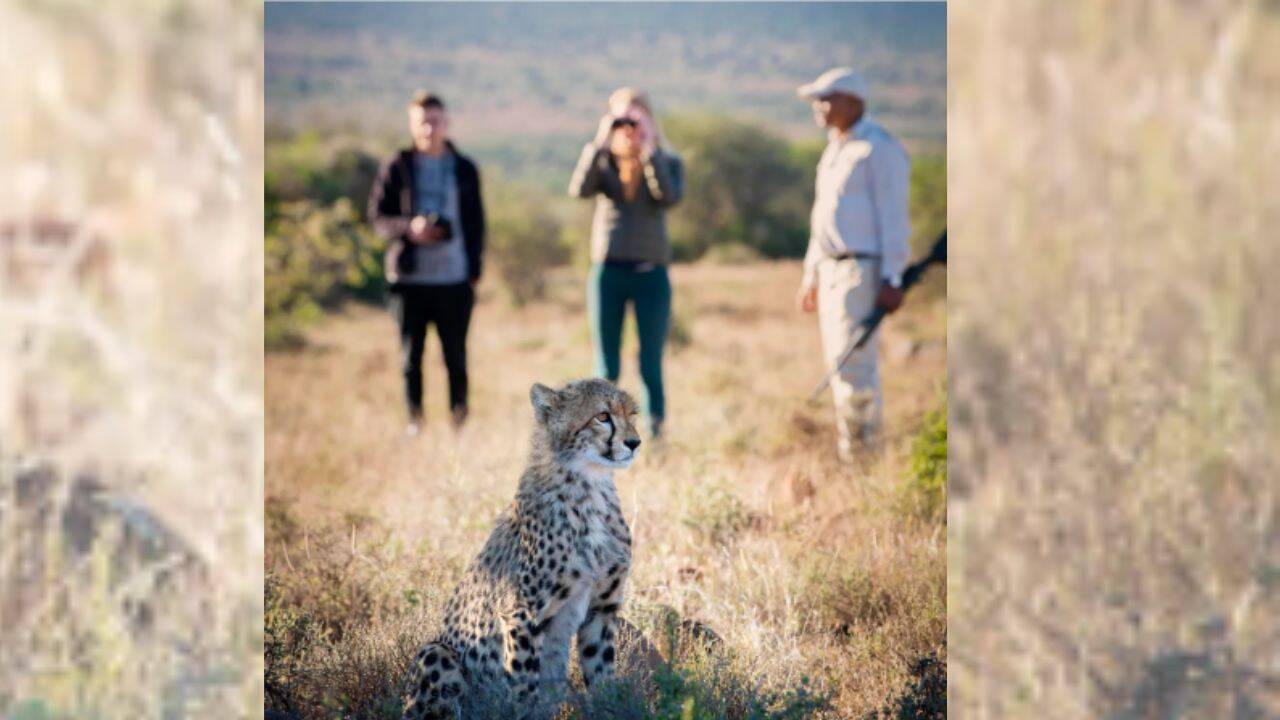
Animals are better mapmakers than humans. They do not read deeds. They read memory, instinct, and the ancient rhythm of survival. Within months of the barriers falling, the wildlife noticed. It was not a grand cinematic explosion of life overnight; it was a hesitant, nervous return. A solitary kudu standing frozen where a gate used to be, sniffing the air for a trap that was no longer there. A family of warthogs trotting through what used to be a corn paddock, now slowly reclaiming its wild sovereignty.
Big five wildlife does not tolerate cramped spaces. You cannot squeeze lions, leopards, elephants, rhinos, and buffalo into postage-stamp enclosures and expect nature to behave like a polite safari brochure. They need range. They need distance. They need the freedom to roam far enough that the land beneath them has time to heal behind their footsteps.
That is the hidden truth about ecological restoration that television documentaries rarely show: it is an act of letting go.
For years, human management of these tracts meant control. If the grass was short, add supplement feed. If predators came too close, eliminate the threat. Every intervention was a thumb on the scale, keeping a broken system artificially upright.
Turning those eleven farms into a unified wildlife haven required doing the hardest thing imaginable for modern humans. We had to step back and trust the chaos.
We brought back the species that had been hunted out or driven away decades prior. But you cannot simply drop apex predators into a landscape and hope for the best. The ecosystem has a memory. If the herbivores are out of balance, the vegetation collapses. If the vegetation collapses, the soil dies. Everything is a delicate, humming tension between predator and prey, rain and drought, life and decay.
I watched a herd of elephants cross a newly opened corridor between two of the former farm parcels. They moved with an unhurried, monumental grace, their massive shoulders brushing against trees that had grown up behind twentieth-century fences. They were reclaiming a path their ancestors had walked before the first European settler ever drove a wagon stake into the soil.
In that moment, the arbitrary nature of human borders felt absurd. The farms were gone. The titles were dissolved into a greater purpose. What remained was simply the earth, breathing out and breathing in.
There are lessons here that stretch far beyond conservation. We live in a world obsessed with compartmentalization. We build walls around our ideas, our disciplines, our communities, and our landscapes, terrified of what might happen if we let the edges blur. We spend our lives maintaining fences that only serve to isolate us from the very systems that sustain us.
The family who stitched those eleven farms together did not do it because it was easy or because there was a guaranteed playbook. They did it because they looked at a fragmented map and realized that survival requires scale. It requires connection.
The wildlife haven is not a monument to human cleverness. It is a monument to human humility. It stands as proof that when you give the earth back to itself, it knows exactly what to do.
Listen closely.
In the quiet hours before dawn, when the mist still clings to the riverbanks and the cicadas fade out their nocturnal song, you can hear it. Not the rumble of tractors or the clink of barbed wire, but the heavy, rhythmic thud of hooves hitting soil that is finally, truly wild again. The fences are gone. The land remembers. And the map is whole.


