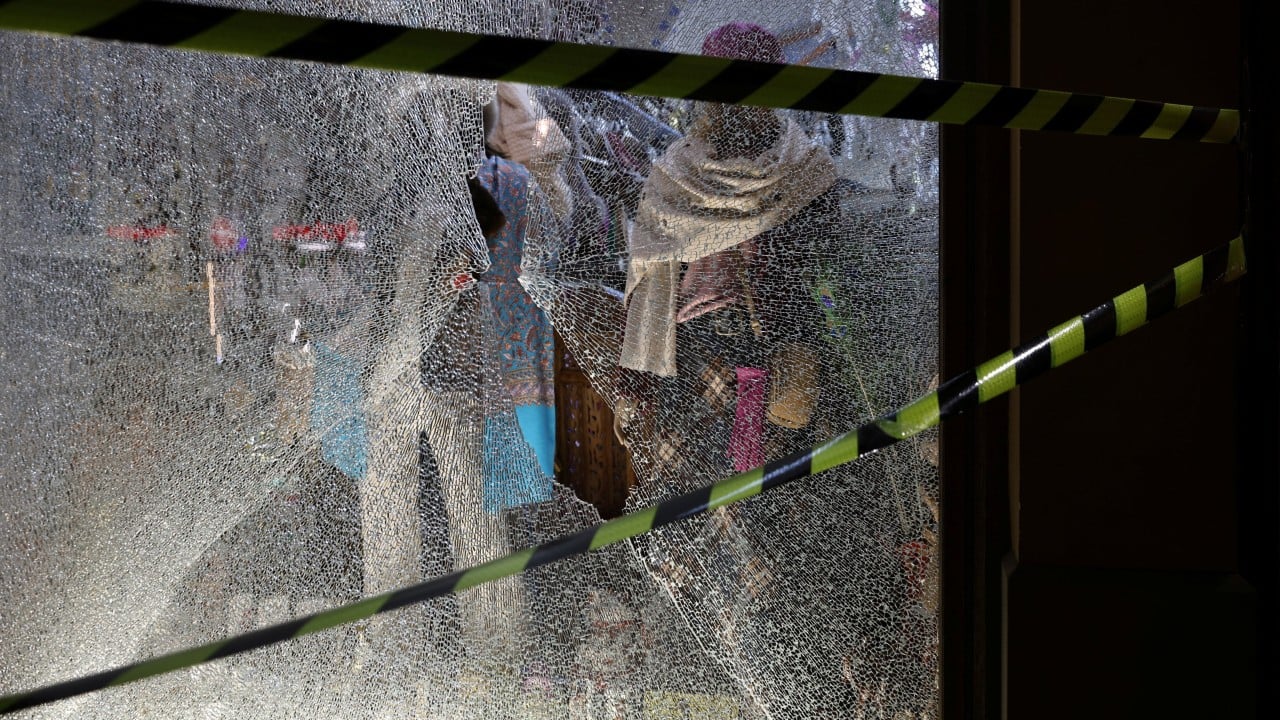
They brought banners. They brought megaphones. They blocked the boulevards of Pau, chanting about purchasing power, soaring grocery bills, and stagnant wages. And the local press ate it up, framing a few hundred angry citizens in the Pyrénées-Atlantiques as heroic underdogs fighting an invisible economic villain.
Here is the uncomfortable reality nobody on those streets wants to hear. Those marches do not lower the price of a baguette, a liter of diesel, or a studio apartment near Boulevard des Pyrénées. In fact, the exact policies demanded by street protesters in mid-sized French towns are the very mechanisms keeping their wallets empty.
Every time inflation bites in regional France, the lazy consensus kicks into overdrive. Politicians promise emergency subsidies. Unions demand across-the-board wage hikes divorced from productivity. Activists call for price caps on everyday essentials. It feels righteous in the moment. Economically, it is pouring gasoline onto a grease fire.
The Purchasing Power Illusion
Let us get our definitions straight before the slogans drown out basic math. Purchasing power—or pouvoir d'achat, the sacred cow of French political discourse—is not a measure of how many euros land in your bank account. It is a ratio between nominal income and the actual supply of goods and services available to buy.
When hundreds of protesters march in Pau demanding state intervention to ease the cost of living, they are almost always asking for nominal relief. They want energy checks. They want fuel rebates. They want mandated minimum wage bumps.
I have watched European governments pull this exact lever repeatedly over the last decade, and the result is always identical. Injecting state-funded cash into an economy facing supply constraints does not create more electricity, more wheat, or more rental apartments. It simply gives everyone more paper to bid on the exact same scarce resources. Merchants see the extra liquidity, their own wholesale costs remain elevated, and prices ratchet upward to absorb the subsidy.
Milton Friedman warned about this dynamic fifty years ago, yet local commentators still treat inflation as a moral failing by greedy supermarkets rather than a monetary and supply-side phenomenon. You cannot subsidize your way out of scarcity. When the state hands out a hundred-euro inflation bonus, the market quietly takes back a hundred and five at the checkout counter.
Why Pau Is Not Paris—And Why That Matters
The competitor coverage of the Pau protests falls into a classic journalistic trap. It treats a demonstration in a southwestern city of roughly 77,000 people as a carbon copy of the unrest in Paris or Lyon. That is a massive analytical blind spot.
Pau has a very specific economic anatomy. It is anchored by heavyweights like TotalEnergies, Safran, and a dense network of public-sector administration and aerospace subcontractors. For years, mid-sized French cities like Pau marketed themselves on a simple value proposition: lower housing costs and slower pace of life compared to the Parisian basin, paired with solid industrial wages.
Then remote work shifted the tectonic plates. Buyers from Bordeaux, Toulouse, and Paris discovered they could sell an overpriced shoebox in the capital, move to Béarn, and buy a stone house with a view of the Pyrenees without blinking. Local real estate prices jumped. Service costs followed. Suddenly, a retail worker or municipal clerk born in Pau found themselves priced out of their own neighborhood.
Protesting against "high living costs" in general misses the real culprit entirely. The crisis in Pau is not an abstract macro-inflation monster. It is a localized cost-of-housing and tax-wedge squeeze colliding with rigid French labor laws.
The Invisible Thief on Every French Payslip
If protesters in Pau truly wanted to see
Why the Pau Cost of Living Protests Are Fighting the Wrong Enemy
news, business
Mainstream outlets love a good street protest. Hundreds of people march through Pau, France, waving banners about inflation, grocery bills, and stagnant wages, and the legacy press writes the exact same lazy script they have recycled since 2018.
They frame it as a simple morality play. Greedy corporations and indifferent politicians on one side. Crushed working-class families on the other.
That narrative is comforting. It is also completely wrong.
Having spent fifteen years advising European municipal planners and regional retail networks on supply chain economics, I have watched local governments blow millions of euros on reactive subsidies that solve nothing. When reporters cover marches in mid-sized French cities like Pau, they miss the actual economic machinery strangling provincial households. They blame the symptom—rising sticker prices—while ignoring the structural trap built into regional French economics over the last three decades.
The Inflation Mirage in Provincial France
The standard news report treats inflation as a sudden weather event. Prices went up, wages stayed flat, and now people in the Pyrénées-Atlantiques department are angry.
Look closer at the numbers from INSEE (France’s National Institute of Statistics and Economic Studies), and a different picture emerges. Headline inflation in France has cooled significantly from its 2022–2023 peak, dropping back toward the European Central Bank's 2% target. Yet purchasing power—what French economists call pouvoir d'achat—feels worse than ever on the ground in Pau.
Why? Because disinflation is not deflation.
When inflation drops from 6% to 2%, prices do not go back down. They simply rise more slowly from an already elevated baseline. A basket of groceries in Nouvelle-Aquitaine that cost €100 four years ago now costs roughly €120, and it is still climbing, just at a gentler slope.
The Fixed-Cost Chokehold
The real culprit behind the anger in Pau is not the price of a baguette or a liter of milk. It is the silent explosion of non-negotiable fixed costs—known in economics as pre-committed expenditure (dépenses pré-engagées).
In the 1960s, French households spent around 12% of their disposable income on pre-committed expenses like housing, utilities, insurance, and telecoms. Today, according to INSEE data, that figure hovers near 30% for the average household, and exceeds 45% for low-income earners in provincial towns.
In a city like Pau, where public transit outside the urban core is limited, car dependency is total. You cannot opt out of fuel taxes, mandatory auto insurance, heating bills, or rising local property taxes (taxe foncière), which spiked across French municipalities after the central government abolished the taxe d'habitation and left local mayors scrambling to plug budget holes.
Protesting "high living costs" in the abstract misses this mechanism entirely. When 45% of your paycheck disappears before you buy a single gram of food, any minor shock in energy or supermarket pricing triggers a financial crisis.
Why Demanding Price Caps and Wage Hikes Backfires
Every protest in France eventually converges on two demands: raise the SMIC (the statutory minimum wage) and cap the price of basic goods.
Both sound great on a cardboard sign. Both make the problem worse in a mid-sized regional economy.
The SMIC Compression Trap
France already has one of the most aggressive minimum-wage indexing mechanisms in the developed world. The SMIC automatically adjusts to inflation, which protects the lowest earners in the short term.
Here is what the protesters—and the reporters covering them—ignore: wage compression.
When the government forces the bottom rung of the wage ladder up, mid-sized businesses in towns like Pau do not magically generate higher profit margins. Instead, they freeze raises for everyone earning 1.2 to 1.8 times the minimum wage. Technicians, nurses, mid-level administrators, and skilled tradespeople see their purchasing power erode while their tax brackets remain rigid.
Over time, France becomes a minimum-wage trap. Employers cannot afford to promote workers because social security contributions (cotisations sociales) spike aggressively once a salary climbs past 1.6 times the SMIC. The result is an economy where millions of skilled workers are stuck just above the poverty line, fueling the exact frustration spilling onto the streets of Pau.
The Illusion of Supermarket Price Caps
During the height of the grocery inflation crisis, the French Ministry of the Economy pressured major retailers like Carrefour, E.Leclerc, and Intermarché into "anti-inflation" price shields.
I have sat across the table from regional distribution executives during these negotiations. Retailers are not charities; they operate on razor-thin net margins of 1% to 3%. When forced to cap prices on 500 high-visibility items, they quietly raise margins on the remaining 15,000 products in the store—fresh produce, hygiene products, and local specialty goods.
Worse, price caps squeeze regional agricultural producers in the Southwest. When a supermarket chain absorbs a government-mandated price freeze, it passes the pain down the supply chain to local dairy farmers and vegetable growers around Pau, driving small farms out of business and reducing local food supply.
The Real Enemy Nobody Mentions: Land Use and Energy Policy
If you want to understand why living in Pau has become unaffordable, stop looking at supermarket receipts and start looking at urban zoning laws and European energy markets.
The ZAN Mandate and Housing Scarcity
France’s Zéro Artificialisation Nette (ZAN) law—aimed at halting net land take to protect biodiversity—is quietly strangling housing supply in provincial cities. By restricting mayors from opening new land for single-family homes on the outskirts of towns like Pau, the state has engineered artificial land scarcity.
At the same time, strict energy performance diagnostics (DPE) have banned landlords from renting out poorly insulated properties unless they spend tens of thousands of euros on renovations. Many small landlords in Bearn simply pulled their properties off the long-term rental market or converted them into short-term holiday lets.
Less supply plus steady demand equals higher rent. No street march will repeal basic supply and demand.
The ARENH Energy Distortion
French households and small businesses used to enjoy some of the cheapest electricity in Europe thanks to the country's nuclear fleet. That advantage was dismantled by European market rules—specifically the ARENH mechanism—which forced state utility EDF to sell cheap nuclear power to private competitors at a fixed price while tying retail electricity rates to volatile European gas prices.
Even as France reforms this system, businesses in Pau—bakeries, machine shops, cold-storage warehouses—spent years absorbing massive electricity surcharges. To survive, they baked those energy costs directly into the price of every loaf of bread and every service invoice in town.
What People Actually Need to Know About Surviving Provincial Inflation
When people search for answers about the Pau protests or the French cost-of-living crisis, they usually ask the wrong questions.
"Will the French government lower taxes to help workers?"
No. France carries a public debt exceeding 110% of GDP and a budget deficit consistently breaching EU limits. Paris has zero fiscal room for broad tax cuts. Any "aid package" announced after a protest is funded either by hidden stealth taxes elsewhere or by borrowing money that drives up long-term inflation. Waiting for Paris to rescue your household budget is a losing strategy.
"Are supermarkets gouging customers in Southwest France?"
No, not in the way critics claim. Major food manufacturers—the multinationals supplying the supermarkets—captured the bulk of the margin expansion during the 2022–2023 price spikes. Local franchise owners of E.Leclerc or Système U in the Pyrénées-Atlantiques are largely price-takers fighting brutal local competition.
"Can local mayors fix the cost of living?"
Only at the margins, and usually by making things worse. Mayors who subsidize bus fares or hand out local energy vouchers simply hike the taxe foncière on homeowners the following autumn. It is a shell game played with your own money.
The Uncomfortable Reality of My Contrarian View
To be completely transparent, dismantling state subsidies and opposing wage-indexation mandates carries a harsh short-term cost.
If France abandoned automatic SMIC hikes, loosened ZAN zoning restrictions, and let energy prices float without state shields, the poorest 15% of households in Pau would take an immediate, brutal hit before market corrections lowered housing and business costs. Free-market adjustments are slow, uneven, and politically lethal in a country built on the État-providence (welfare state).
That is precisely why politicians never do it. They prefer handing out €100 energy checks—a band-aid on a broken leg—because band-aids win headlines and quiet the streets for a few weeks.
What Actually Works Instead of Marching
If you live in a provincial city like Pau and want to break out of the purchasing-power squeeze, stop lobbying politicians for price controls and start attacking your pre-committed fixed costs directly.
- Audit and ruthlessly cut pre-committed expenses. The average French household overpays by €600 to €1,200 annually on auto insurance, home insurance, and mobile/internet bundles simply out of inertia. Use the Hamon Law and Lemoine Law—which allow penalty-free cancellation of insurance contracts after one year—to force providers to compete every twelve months.
- Bypass retail distribution chains. Pau sits in the middle of one of France’s richest agricultural regions. Buying directly from farm cooperatives (AMAPs or local magasins de producteurs) cuts out the multinational food conglomerates and wholesale middlemen responsible for the sharpest price markups.
- Demand local deregulation, not local subsidies. When engaging with municipal officials in Pau, stop asking for vouchers. Demand faster building permits, the relaxation of rigid commercial zoning rules, and cuts to municipal operating waste so the taxe foncière stops climbing every year.
- Reject the minimum-wage ceiling. For workers stuck in the SMIC compression zone, relying on union-negotiated sector raises will never outpace real inflation. The only reliable exit is acquiring portable, high-margin technical or trade skills—electrical work, heat-pump installation, industrial maintenance—where severe labor shortages force employers to pay well above state-mandated grids.
Marching down the Boulevard des Pyrénées makes for dramatic photographs on the evening news. It gives journalists an easy story and gives politicians an excuse to launch another ineffective subsidy committee.
Meanwhile, the structural machine that drains 45% of your income before Monday morning keeps running untouched. Stop protesting the price tag, and start dismantling the system that prints it.