The Evacuation of the Reefs
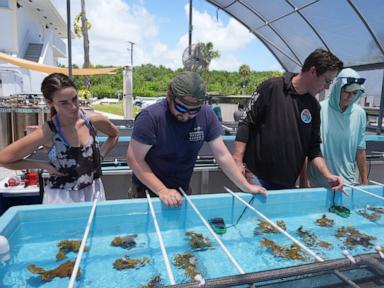
Marine biologists across South Florida were forced into an unprecedented emergency operation during the historic ocean heatwaves, pulling hundreds of endangered elkhorn coral specimens directly out of the Atlantic Ocean and transferring them to land-based holding tanks. The intervention was not a planned conservation milestone. It was a triage response to a thermal catastrophe that pushed water temperatures past 100 degrees Fahrenheit, turning shallow reefs into hostile, bleached environments within days. By relocating these foundational organisms to climate-controlled facilities, scientists managed to preserve vital genetic stock. However, moving an ecosystem onto land highlights a stark reality. Ex situ preservation buys temporary time, but it cannot repair an ocean that is rapidly becoming uninhabitable for reef-building species.
Elkhorn coral, historically the dominant reef-builder throughout the Caribbean and South Florida, provides the critical three-dimensional architecture that protects coastlines from storm surges and sustains marine biodiversity. Unlike soft corals or smaller solitary species, elkhorn builds massive, interlocking thickets that break wave energy before it reaches human infrastructure. When surface water temperatures remain elevated for extended periods, the symbiotic algae living inside the coral tissue are expelled. Without these photosynthetic organisms, the coral turns stark white and begins to starve. If temperatures do not drop, tissue mortality sets in quickly. Discover more on a connected issue: this related article.
The rescue effort required a coordinated logistical network spanning multiple marine institutes, non-profit organizations, and university research facilities. Teams equipped with specialized gear systematically detached healthy and partially bleached colonies from offshore nurseries and wild reefs, loading them into insulated transport containers supplied with oxygenators. These specimens were routed to land-based aquariums and onshore aquaculture systems designed to strictly regulate water temperature, light cycles, and chemistry.
The Limits of Onshore Refuges
Holding delicate marine invertebrates in land-based facilities presents immense technical and operational hurdles. Recirculating seawater systems require continuous monitoring, heavy filtration, and backup power infrastructure to prevent rapid drops in water quality. A single mechanical failure or power grid collapse can wipe out decades of genetic research in hours. Further reporting by The Guardian explores comparable views on this issue.
Maintaining live specimens on land also isolates them from natural evolutionary pressures. In a artificial tank, coral tissue is shielded from wild pathogens, predators, and wave dynamics, but it is also deprived of the natural environmental cues required for synchronized broadcast spawning. While land-based facilities have successfully induced spawning under highly controlled lighting and temperature regimes, the scale of this artificial production remains a small fraction of what a healthy natural reef generates.
| Facility Type | Primary Advantage | Major Operational Risk |
|---|---|---|
| In-situ ocean nurseries | High growth rates, natural lighting | Vulnerable to ocean heatwaves and storms |
| Land-based closed loops | Complete environmental control | High energy reliance, limited spatial capacity |
| Hybrid flow-through systems | Natural seawater chemistry | Vulnerable to coastal water quality spikes |
Land-based holding capacity is finite. Thousands of frags can be kept alive in coastal hatcheries, but millions of individual colonies are required to maintain a functioning barrier reef system along the Florida Keys. The physical footprint and energy costs required to keep thousands of gallons of seawater chilled during peak summer months make long-term land storage an unsustainable strategy for ecosystem-scale recovery.
Genetic Bottlenecks and Disease Resistance
Reef restoration efforts have historically prioritized rapid growth and physical reproduction, often cloning resilient strains to maximize outplanting volume. This strategy carries inherent risks. When an entire outplanted population originates from a narrow selection of parent colonies, the lack of genetic diversity leaves the re-established reef vulnerable to disease outbreaks.
The emergence of Stony Coral Tissue Loss Disease, alongside traditional afflictions like white pox, has devastated Florida's waters over the past decade. Scientists holding corals in land-based facilities are now forced to balance genetic diversity against thermal tolerance. Selecting only the individuals that survived extreme heat events risks breeding out traits that provide defense against pathogens or variable salinity levels.
                  [ Heat Wave Event ]
                          │
          ┌───────────────┴───────────────┐
          ▼                               ▼
 [ Severe Bleaching ]           [ Survival / Refuge ]
          │                               │
          ▼                               ▼
 [ High Mortality Rate ]       [ Narrow Genetic Stock ]
          │                               │
          └───────────────┬───────────────┘
                          ▼
            [ Long-Term Ecosystem Vulnerability ]
A hypothetical restoration project provides a clear example of this dynamic. If a nursery propagates 10,000 fragments derived from just three heat-resistant parent colonies, those outplanted corals may survive an unusually warm summer. However, if an opportunistic bacterium enters the reef system the following year, all 10,000 fragments share the exact same biological vulnerability. The entire restored plot can collapse in a matter of weeks.
The Outplanting Dilemma
The ultimate objective of bringing species ashore is to eventually return them to the wild. Yet returning tank-raised specimens to the ocean poses a fundamental dilemma. If coastal waters continue to breach thermal thresholds every summer, reintroducing laboratory-reared stock into the same conditions that caused their initial collapse offers little chance of long-term survival.
Re-entry strategies require precise timing and location selection. Restoration teams must target deeper reef zones or areas with natural upwelling where cooler waters offer a buffer against surface heatwaves. These micro-refuges are limited in geographic footprint and often lack the structural substrate required for young colonies to anchor effectively.
       [ Land-Based Facilities ]
                 │
                 ▼
       [ Temperature Control ]
                 │
                 ▼
       [ Outplanting to Reefs ]
                 │
                 ▼
     [ Recurrent Thermal Stress ]
Coastal development, agricultural runoff, and water management practices in mainland Florida compound the thermal stress on nearshore marine life. Elevated nutrient levels from fertilizer runoff spur macroalgae growth, which smothers young corals and competes directly for space on the seabed. Installing land-raised organisms back into water bodies plagued by poor quality and thermal stress creates a costly loop of rescue, culture, and loss.
The Cost of Inaction
Preserving marine biodiversity through land-based intervention is extremely expensive. Funding for conservation is frequently split between immediate emergency rescues and long-term mitigation strategies, leaving critical research gaps in coral pathology and selective breeding techniques.
Local economies in South Florida rely heavily on the marine barrier system. Reefs draw billions of dollars annually in recreational diving, commercial fishing, and tourism revenue. Beyond direct economic activity, the physical structure of the reef reduces coastal flood risks by absorbing wave energy during major hurricanes. Replacing the natural storm protection offered by a healthy barrier reef with artificial seawalls would require billions in public infrastructure expenditures.
Without drastic reductions in global emissions and aggressive local water quality management, pulling corals ashore will transition from a temporary emergency measure to an permanent hospice program for marine life. The technology to keep these organisms alive in tanks exists, but an aquarium is not an ocean.