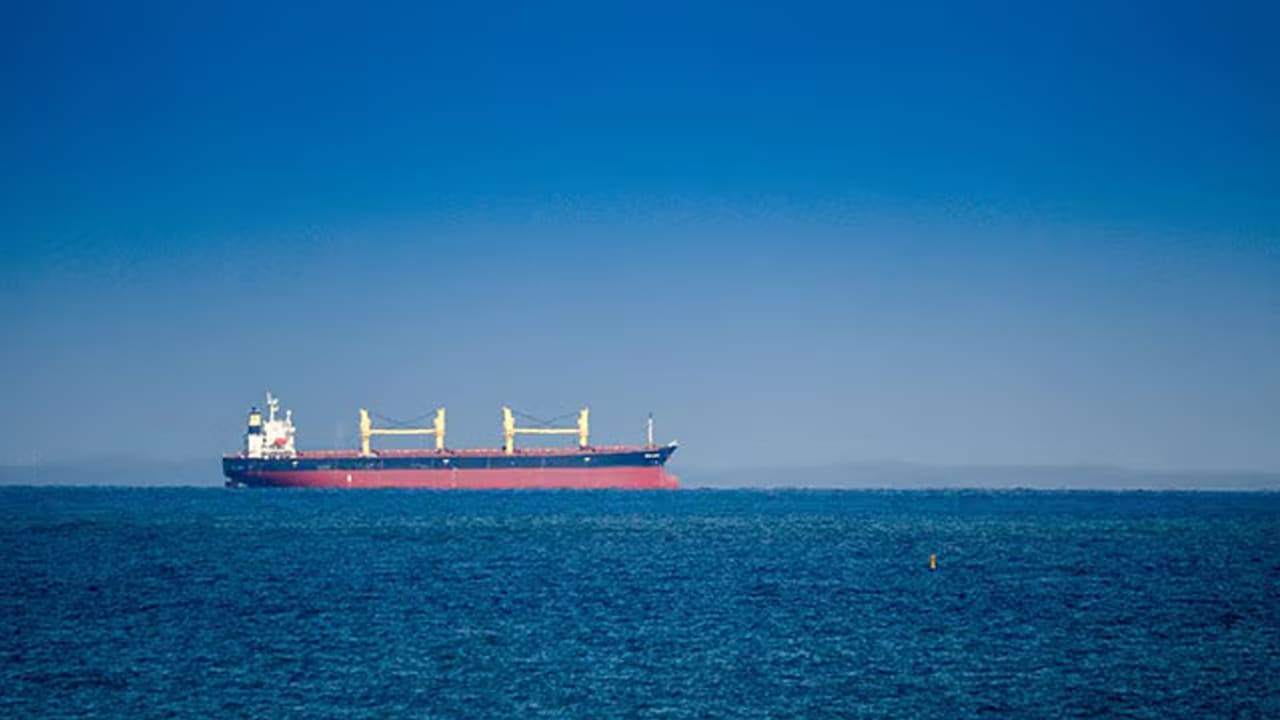
The reported drone strike on a Russian cargo vessel and the subsequent fire within Finnish maritime jurisdiction represents a structural shift in Baltic Sea security, moving maritime interdiction from kinetic state-on-state blockades to low-cost, asymmetric attrition. While surface-level reporting treats a burning cargo ship in Finnish waters as an isolated tactical incident, operational reality dictates a far broader impact. When an uncrewed aerial or surface system disables a commercial hull inside an Exclusive Economic Zone (EEZ) or territorial sea, it triggers a cascading failure across maritime insurance underwriting, coastal state environmental liability, and shadow-fleet logistics. Understanding this event requires separating confirmed physical mechanics from geopolitical attribution, then mapping the resulting cost functions onto global shipping corridors.
The Anatomy of Asymmetric Maritime Interdiction
Commercial cargo vessels are engineered for hydrodynamic efficiency and structural load-bearing, not damage control against precision kinetic strikes. Unlike naval combatants built with compartmentalized watertight bulkheads, redundant fire mains, and armored citadels, standard merchant hulls—such as bulk carriers, general cargo ships, and aging tankers—operate with minimal crew sizes, often between 15 and 22 personnel. When a drone carrying a shaped charge or incendiary payload strikes a merchant vessel, the damage mechanism exploits three inherent vulnerabilities:
- Superstructure and Bridge Concentration: Modern cargo ships centralize navigation, propulsion control, and crew quarters in a single aft block. A strike here blinds the vessel and severs automated engine-room telemetry, turning a controlled transit into an unpowered drift hazard.
- Engine Room Fuel and Lube Oil Density: High-flashpoint heavy fuel oil (HFO) and marine gas oil (MGO) lines run under high pressure throughout the machinery spaces. Even a modest warhead that ruptures a fuel manifold creates an immediate, self-sustaining Class B fire that rapidly overwhelms fixed carbon dioxide suppression systems if ventilation dampers fail to seal.
- Cargo Hold Volatility: Depending on the manifest—ranging from timber and fertilizers to refined petroleum products or dual-use industrial components—breaching a hatch cover introduces oxygen and ignition sources directly into high-volume fuel loads.
Because the competitor's reporting lacks verifiable telemetry regarding the launch platform, we must distinguish between known physical outcomes and operational hypotheses. The confirmed facts are binary: an unmanned kinetic event compromised a Russian-flagged or Russian-operated commercial hull, and Finnish maritime authorities confirmed an active fire within waters under their jurisdictional oversight. What remains unverified—and operationally critical—is the vector of attack. A long-range one-way attack (OWA) drone launched from continental territory requires sophisticated satellite or inertial guidance to strike a moving target at sea, whereas a short-range first-person-view (FPV) quadcopter or unmanned surface vessel (USV) implies a staging platform operating within a few dozen nautical miles, potentially disguised as a benign commercial or fishing craft.
Jurisdictional Friction and the Finnish Maritime Response
A burning vessel inside Finnish waters forces Helsinki into an acute operational dilemma governed by the United Nations Convention on the Law of the Sea (UNCLOS). Coastal states hold distinct legal obligations depending on whether the incident occurs within the 12-nautical-mile territorial sea or the broader Exclusive Economic Zone. In both cases, the immediate priority shifts from military attribution to Search and Rescue (SAR) and marine environmental protection.
The Baltic Sea is a shallow, semi-enclosed brackish basin with a slow water exchange rate—taking roughly 30 years for a complete turnover through the Danish Straits. An uncontained hull fire threatens a catastrophic bunker fuel spill under ice-prone or cold-water conditions, where heavy oil emulsifies rather than evaporates, devastating coastal ecosystems and critical subsea infrastructure.
- Tactical Containment and Towing: The Finnish Border Guard (Rajavartiolaitos) and allied salvage operators must deploy specialized firefighting vessels equipped with high-capacity water cannons and foam monitors. Boarding a burning, potentially unstable foreign vessel carries severe risk, particularly if unexploded ordnance or hazardous cargo remains aboard.
- Place of Refuge Decisions: International maritime law pressures coastal states to grant a "place of refuge" to a stricken ship to prevent a worse environmental disaster at sea. Bringing a damaged Russian cargo vessel into a Finnish port introduces intense security friction, requiring physical inspection of a potentially sensitive manifest, management of foreign crew members, and diplomatic coordination with a hostile or adversarial flag state.
- Subsea Infrastructure Proximity: The Gulf of Finland and the wider Baltic seabed host a dense network of fiber-optic telecommunications cables, high-voltage direct current (HVDC) interconnectors, and gas pipelines. A disabled vessel dragging anchor while burning out of control poses a direct physical threat to these assets, blurring the line between an accidental drift and deliberate gray-zone sabotage.
The Cost Function of Shadow Fleet Logistics
To understand why commercial vessels are targeted—and why these strikes alter global trade economics—one must examine the mechanics of sanctioned maritime logistics. Following sweeping Western sanctions and price caps, Russian maritime trade increasingly relies on a "shadow fleet" of older vessels operating with opaque ownership structures, flags of convenience, and non-Western Protection and Indemnity (P&I) insurance.
Traditional maritime shipping operates on razor-thin margins stabilized by predictable risk models. When drone interdiction enters the Baltic theater, the cost function changes across four measurable variables:
- War Risk Premiums: Hull and Machinery (H&M) insurers and P&I clubs price risk dynamically based on geographic war-risk zones. A confirmed drone strike in the northern Baltic forces underwriters to reclassify the Gulf of Finland and adjacent corridors, triggering immediate spikes in Additional War Risk Premiums (AWRP) calculated as a percentage of the vessel's insured hull value per transit.
- Substandard Salvage Readiness: Western-insured vessels rely on established global salvage networks under Lloyd’s Open Form (LOF) contracts. Shadow-fleet or state-affiliated Russian vessels frequently lack recognized P&I coverage, leaving the coastal state—in this case, Finland—to absorb the upfront millions of euros required for emergency towing, firefighting, and pollution containment with little realistic prospect of cost recovery.
- Route Diversion and Transit Delays: Even if a strike hits a single vessel, surrounding commercial traffic must alter course to maintain safe exclusion zones around the drifting hazard and active SAR operations. In the narrow traffic separation schemes (TSS) of the Gulf of Finland, rerouting increases fuel burn, disrupts port berth scheduling in hubs like Ust-Luga, Primorsk, and St. Petersburg, and degrades supply chain velocity.
- Crew Attrition and Manning Costs: Commercial seafarers are civilian laborers, not combatants. Repeated kinetic threats to merchant shipping drive up hazard pay requirements and accelerate crew shortages, particularly among experienced officers willing to transit contested waters.
Strategic Limits of Maritime Counter-UAS Defense
The asymmetric economics of drone warfare create an unfavorable exchange ratio for both commercial operators and state navies. A commercially derived OWA drone or USV costs between $20,000 and $150,000 to manufacture and deploy. Defending a sprawling maritime corridor against these systems requires continuous wide-area surveillance, electronic warfare (EW) suites, and kinetic interceptors costing hundreds of thousands to millions of dollars per engagement.
Commercial cargo ships cannot legally or practically carry heavy kinetic point-defense systems without forfeiting their status as non-combatant merchant vessels under international humanitarian law. Arming merchant ships converts them into legitimate military targets and triggers immediate port-state entry bans across global terminals.
Electronic warfare offers a non-kinetic alternative, yet GPS jamming and spoofing in the Baltic Sea already degrade civilian aviation and maritime Automatic Identification System (AIS) tracking. Widespread deployment of high-power RF jammers on commercial vessels creates severe electromagnetic interference, blinding their own X-band and S-band navigation radars and increasing the probability of collisions in congested shipping lanes. No technical silver bullet exists to secure commercial hulls against low-observable, low-altitude drones without imposing prohibitive operational friction on global trade.
Operational Imperatives for Maritime Stakeholders
The weaponization of low-cost unmanned systems against merchant shipping in the Baltic Sea invalidates legacy assumptions about neutral commercial transit in Northern Europe. Shipping operators, maritime insurers, and regional security planners must adjust their operational baselines immediately rather than treating this incident as an anomaly.
Commercial fleet operators transiting the Gulf of Finland and the eastern Baltic must implement hardened bridge protocols, including mandatory optical watchkeeping to supplement radar, decentralized fire-suppression drills tailored to topside strikes, and real-time AIS anomaly monitoring to detect potential drone-staging vessels loitering near traffic separation lanes. Marine underwriters must decouple Baltic war-risk pricing from historical peacetime averages and enforce strict verification of salvage guarantees before binding coverage for vessels operating near Russian ports. Finally, Finnish and allied Baltic maritime authorities should expand uncrewed surface patrol networks paired with acoustic and electro-optical sensor buoys along critical subsea cable corridors, shifting from reactive search-and-rescue posture to continuous domain awareness before a burning hull becomes an irreversible environmental and infrastructural catastrophe.


