National foreign assistance architectures are undergoing structural audits. As traditional donor nations reassess their long-term international commitments under competing fiscal pressures, Norway faces its own strategic reflection known as Vendepunkt, or Turning Point. Within this evaluation of foreign and development policy, the placement of the blue economy requires rigorous economic and geopolitical justification rather than generalized humanitarian defense. Ocean investment is frequently categorized as an act of environmental philanthropy. This classification creates a strategic vulnerability. When aid budgets contract or pivot toward immediate security crises, programs framed purely around conservation are the first to experience funding compression.
To secure long-term capital allocation, maritime development must be modeled as an exercise in enlightened national self-interest and international risk mitigation. The mechanics of global seafood markets, cross-border fish stocks, and maritime security form a closed-loop system where domestic economic stability in Oslo is directly tethered to regulatory capacity in distant coastal states, such as those along the West African seaboard. In related updates, read about: Why Tax Systems Fail Everyday Citizens and Who Benefits Instead.
The Transnational Supply Chain Dependency Matrix
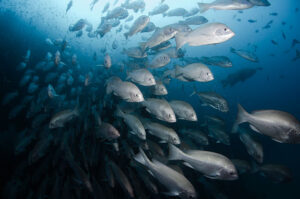
The fundamental error in treating marine development aid as peripheral charity lies in ignoring the physical reality of the global feed and food supply chain. Modern aquaculture depends heavily on fishmeal and fish oil derived from pelagic fisheries harvested globally. Marine resources extracted from the exclusive economic zones of developing coastal states frequently enter international markets as inputs for domestic aquaculture production in high-income nations, including Norway.
This creates a structural feedback loop with three distinct nodes: Investopedia has analyzed this fascinating topic in extensive detail.
- Resource Extraction: Small pelagic fish stocks harvested in developing regions are reduced into commodities rather than consumed locally, altering regional nutritional baselines.
- Commodity Processing: These marine inputs travel through multi-jurisdictional supply chains, introducing opacity regarding legal provenance, catch documentation, and labor standards.
- Domestic Consumption and Export: The processed derivatives feed farmed species in European fjords, which are subsequently exported to global markets under premium sustainability labels.
When regulatory enforcement fails at the point of origin, illegal, unreported, and unregulated fishing erodes the biological capital of the entire marine ecosystem. Because marine species and oceanic currents ignore national borders, overfishing in unprotected zones depletes shared stocks, injecting systemic supply volatility into commercial sectors thousands of kilometers away. Financing administrative capacity, monitoring systems, and naval enforcement in partner nations is therefore a defensive expenditure protecting domestic industry value.
Institutional Capacity As A Public Good
Capital injections into foreign maritime sectors yield near-zero returns if recipient states lack institutional depth. Equipment donations, such as patrol vessels or electronic monitoring hardware, degrade rapidly without corresponding administrative systems to process data, prosecute infractions, and maintain operational readiness.
Effective development architecture relies on institutional transfer mechanisms rather than cash disbursement. Long-term cooperation models must prioritize three operational layers:
- Legal Harmonization: Aligning national fisheries legislation with international conventions, ensuring that local courts have the mandate and procedural clarity to penalize commercial infractions.
- Data Interoperability: Implementing transparent vessel tracking and catch documentation schemes that allow developing nations to cross-reference catch data with regional neighbors, neutralizing transshipment loopholes.
- Financial Traceability: Deploying investigative frameworks that track illicit financial flows and beneficial ownership of commercial fishing fleets, preventing shell companies from masking illegal operations.
Without these foundational administrative frameworks, foreign aid functions as a temporary subsidy rather than a structural fix. The return on investment for the donor nation is measured in the reduction of systemic risk—specifically, the risk that global markets become flooded with illicitly sourced product that depresses prices and undermines certified sustainable producers.
The Opportunity Cost Of Retrenchment
As fiscal reallocation favors domestic priorities and immediate geopolitical conflict response, maritime development budgets face severe downward pressure. Treating this budget line as discretionary ignores the cost of withdrawal. When donor presence recedes from regional maritime governance, regulatory vacuums emerge. These vacuums are routinely filled by actors with divergent regulatory standards, accelerating stock depletion and environmental degradation.
The strategic imperative for Norway involves decoupling ocean investment from traditional development narratives. By framing maritime aid as infrastructure expenditure for global trade and food security, policy architects can defend resource allocation using balance-sheet logic. Healthy oceans are the operational infrastructure of the blue economy. Failing to invest in the governance of international marine commons ensures that the long-term operational costs will be absorbed directly by the commercial seafood and shipping sectors through diminished yields, stricter compliance penalties, and volatile input costs.
Integrate institutional capacity-building directly into bilateral trade agreements and industrial partnerships, tying technical assistance in marine resource management to verifiable improvements in regional enforcement transparency.