Geologists love water. They see a white mineral crust on a Martian crater wall and immediately breathlessly report a "bathtub ring" left behind by an ancient mega-ocean. They claim we are looking at the definitive shoreline of a northern ocean that once covered a third of the Red Planet.
They are wrong. They are falling into the same trap that has plagued planetary science for fifty years: Earth-bias.
We look at Mars and desperately try to see Earth in a mirror. We see channels, we think rivers. We see basins, we think seas. We see carbonate and sulfate deposits, we think coastlines. But Mars is not a failed Earth. It is a wildly different chemical beast. What mainstream headlines are calling a "bathtub ring" is actually the smoking gun of a cold, hyper-acidic, volcanic graveyard where massive bodies of liquid water never stood a chance.
The planetary science community is suffering from a massive case of wishful thinking. It is time to dismantle the myth of the Martian ocean.
The Flawed Premise of the Martian Coastline
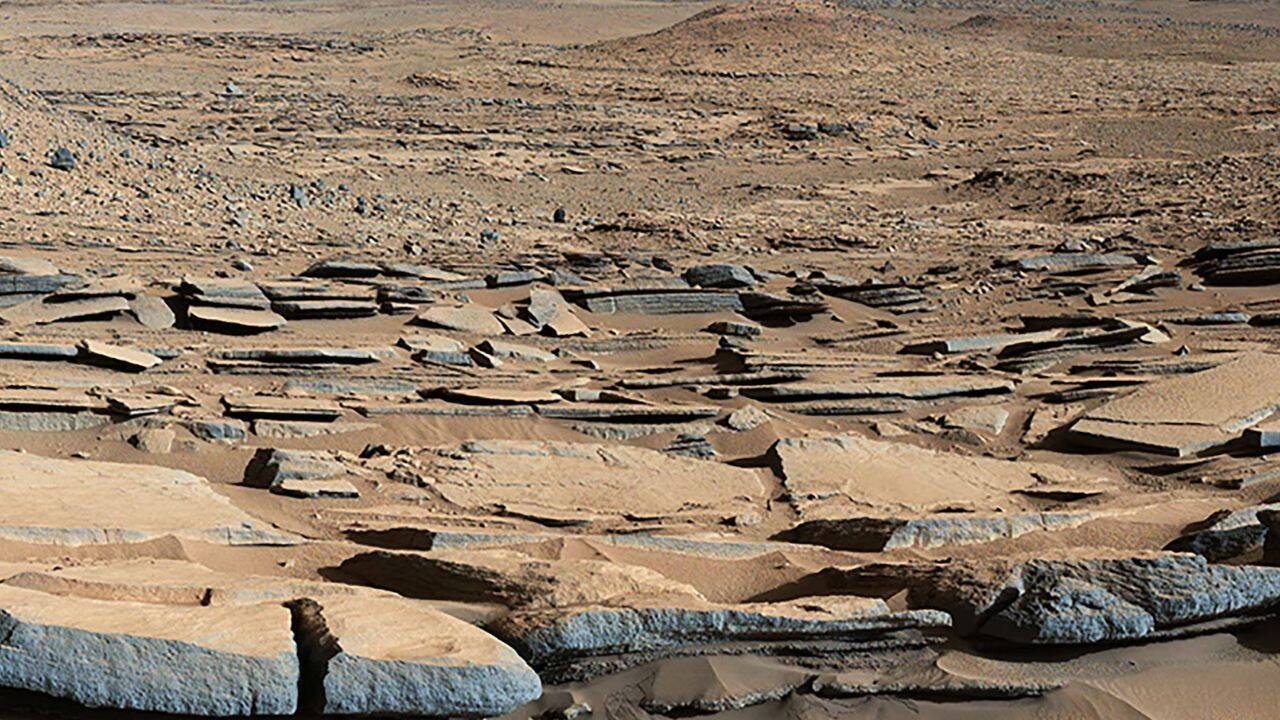
The current excitement centers on high-resolution orbital imagery showing distinct, light-toned mineral bands wrapping around the interiors of massive basins like Hellas and Argyre, and along the dichotomy boundary separating the northern lowlands from the southern highlands. The lazy consensus says these are wave-cut terraces and evaporite rings left behind as an ocean evaporated.
This theory falls apart under basic thermodynamic scrutiny.
To keep a massive ocean liquid, early Mars would have needed a thick, potent greenhouse atmosphere. The go-to hypothesis has always been a dense $CO_2$ blanket. Here is the problem: if early Mars had an atmosphere dense enough to keep an ocean from freezing solid, it would have left behind massive, planet-wide deposits of limestone and other carbonates.
We have searched for those carbonates for decades with spectrometers like CRISM and OMEGA. They are not there. Instead, the Martian surface is choked with iron and magnesium sulfates, alongside clays that formed in highly localized, transient environments.
You cannot have a global, stable, neutral-pH ocean without creating carbonates. The math does not work. If the atmosphere was mostly $CO_2$ and the water was liquid, the oceans would have turned into carbonic acid, eaten the basaltic crust, and precipitated carbonate minerals at a staggering scale. The absence of these global carbonate layers proves that a long-lived, stable, open ocean is a geological fantasy.
What the Bathtub Ring Actually Is
If the light-toned rings are not shorelines, what are they?
They are the remnants of explosive volcanism and subsurface groundwater outgassing, interacting with an atmosphere that was already freezing to death.
Early Mars was a world dominated by volcanism on a scale Earth has never experienced. When massive volcanic provinces like Tharsis erupted, they pumped billions of tons of sulfur dioxide ($SO_2$) and hydrogen sulfide ($H_2S$) into the air. This did not create a warm, cozy greenhouse. It created a highly localized, episodic, hyper-acidic nightmare.
Imagine a scenario where massive, brief outbursts of subsurface water—triggered by asteroid impacts or volcanic heating—burst onto the frozen surface. These were not gentle rivers flowing into a calm sea. They were catastrophic, muddy, acidic deluges. As this highly acidic fluid gathered in deep basins, it encountered a thin, freezing atmosphere.
The water did not sit around for millions of years forming a serene ocean. It did two things simultaneously: it froze from the top down, and it boiled from the bottom up due to low atmospheric pressure.
The "bathtub rings" we see today are the literal high-water marks of these transient, violent floods. The white minerals are not evaporites from a drying sea; they are cryo-precipitates. They are the chemical fallout of super-salty, hyper-acidic brines freezing instantly and reacting with volcanic ash. It is a signature of death, not a cradle for life.
The Danger of Earth-Centric Thinking
I have spent years analyzing how planetary data gets scrubbed for public consumption. NASA and other space agencies have a vested interest in the "Follow the Water" mantra. Water sells tickets. Water gets funding. Water hints at life, and life captures the public imagination.
But this narrative forces us to ignore the raw chemistry of Mars.
Consider the chemistry of Martian soil, analyzed directly by the Curiosity and Perseverance rovers. It is rich in perchlorates—highly toxic, oxidizing salts. These salts lower the freezing point of water, meaning liquid brines can exist on Mars at incredibly low temperatures. But these brines are not water as we know it. They are closer to industrial battery acid.
When we look at the purported northern ocean basin, we are looking at an area that was likely covered by a massive ice sheet, not an open ocean. The features we interpret as marine deltas are frequently just the endpoints of subglacial meltwater channels or the catastrophic run-out debris from massive impacts into ice.
Dismantling the People Also Ask Mythos
If you search for Martian oceans, the search engines serve up a neat list of reassurance:
- Did Mars ever have an ocean? The consensus says yes, about 4 billion years ago. The reality is that Mars had episodic, catastrophic floods that frozen almost instantly. Calling it an ocean is like calling a burst water main a lake.
- How deep was the ocean on Mars? Some models claim it was hundreds of meters deep. Those models assume an Earth-like hydrologic cycle. When you plug in the actual volcanic volatile output of Mars, the depth shrinks to highly localized, frozen ice traps.
- Where did the water go? The popular narrative is that it escaped into space when the magnetic field died. While some hydrogen escaped, a massive portion of that water is still there, trapped in the subsurface as dirty, hyper-saline perchlorate ice.
We must stop asking where the ocean went and start asking why we refuse to accept a dry, cold history.
The Downside of Disruption
To be fair, abandoning the ocean hypothesis makes planetary exploration much harder. If Mars never had a sustained northern ocean, the chances of finding signs of ancient, swimming, photosynthetic life drop to near zero. It means early Mars was a harsh, radiation-baked, acidic wasteland rather than a warm, wet twin of early Earth.
It means that if life ever did start on Mars, it didn't happen in a rich, warm coastal tide pool. It happened deep underground, in dark, crushing hydrostatic environments heated by magma chambers, completely isolated from the surface.
This shifts our exploration priority entirely.
Stop Looking at the Surface
We are wasting billions of dollars driving rovers across dry lake beds looking for fossils that do not exist. If we want to find the real story of Martian water—and potential Martian biology—we need to stop looking at flat basins and pretending they were Caribbean seas.
We need to drill. Deep.
The surface of Mars is a red herring. The chemical rings, the fake shorelines, and the dried-up channels are just the scars of a violent, short-lived atmospheric adolescence. The true hydrologic system of Mars has always been subterranean.
The next phase of space exploration shouldn't be about finding more "bathtub rings" from orbit. It should be about sending heavy, deep-drilling rigs to pierce the cryosphere. Stop looking for the shores of an ocean that never existed and start digging into the frozen crust where the real, toxic, chaotic history of Mars is actually buried.