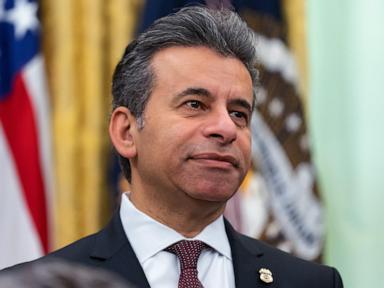
The mainstream media is treating Marty Makary’s resignation from the FDA like a standard political exit. They’re framing it as a "loss of talent" or a "shift in administration priorities." They are wrong. Makary didn’t leave because his job was done; he left because the FDA is a sprawling, bureaucratic fossil designed to stifle innovation while protecting the very incumbents it claims to regulate.
If you think a single crusader—even one as credentialed as a Johns Hopkins surgeon—can steer the Titanic away from the iceberg of regulatory capture, you haven't been paying attention to how Washington actually functions. Makary’s departure isn't a headline. It’s a diagnostic report on a terminal patient.
The Myth of the Regulatory Savior
The "lazy consensus" suggests that the right leader can fix the FDA. This assumes the problem is managerial. It isn't. The problem is structural. The FDA doesn't suffer from a lack of vision; it suffers from an incentive structure that rewards caution over cures and paperwork over patients.
When a bureaucrat approves a drug that later has a side effect, they get hauled before a Congressional committee. When that same bureaucrat delays a life-saving therapy for five years, causing thousands of "invisible" deaths, they get a promotion for being "thorough." Makary understood this math. He realized that you cannot fix a system where the "precautionary principle" has been weaponized into a suicide pact.
I have spent years watching biotech startups burn through $500 million before they even enter a Phase III trial. That money isn't going toward science. It’s going toward compliance theater. Makary’s resignation is the ultimate "I told you so" to anyone who thought the FDA could be modernized from within.
Regulatory Capture is the Feature Not the Bug
The FDA isn't just slow; it’s an unintentional moat for Big Pharma.
Small, agile firms with radical new gene therapies or mRNA platforms can't afford a decade of regulatory purgatory. The giants—the ones with thousand-person legal teams—thrive in this environment. They love the complexity. They love the delays. Every new "safety requirement" is just another brick in the wall that keeps competitors out.
The User Fee Trap
Look at the Prescription Drug User Fee Act (PDUFA). Roughly half of the FDA’s budget for drug evaluations comes from the industry it regulates.
- The Pro-Bureaucracy Argument: This speeds up the process.
- The Reality: It creates a customer-service relationship between the regulator and the regulated.
When the industry pays your salary, you aren't a referee; you're a consultant. Makary’s exit signals that even with a mandate for "transparency," the underlying financial plumbing of the agency makes true reform impossible.
The Data Gap They Won’t Talk About
The FDA still relies on clinical trial designs that would look familiar to a doctor from 1970. We are in the era of CRISPR, personalized medicine, and AI-driven protein folding, yet the agency demands 2,000-person, double-blind, placebo-controlled trials for conditions where a placebo is arguably unethical and scientifically redundant.
Imagine a scenario where we use "Real World Evidence" (RWE) to track how drugs perform in the wild in real-time. We have the sensors. We have the data infrastructure. But the FDA clings to its rigid, antiquated milestones because those milestones are the only things the bureaucracy knows how to measure.
Makary advocated for "common sense" and "data-driven" approaches. The fact that he’s out proves that "common sense" is a foreign language inside the White Oak headquarters.
The Invisible Cemetery
The biggest cost of the FDA’s current state isn't financial. It’s the "Invisible Cemetery." This term, popularized by economists like Alex Tabarrok, refers to the people who die because a drug was kept off the market longer than necessary.
The media focuses on the one person harmed by an approved drug. They never count the 10,000 who died waiting for a signature. Makary was one of the few voices willing to point at the empty chairs. Without him, the agency reverts to its default state: defensive crouch.
Stop Asking if the FDA is Safe
People ask: "Is the FDA keeping us safe?"
That is the wrong question. The right question is: "At what cost is this 'safety' being purchased?"
If you achieve 100% safety by approving zero new drugs, you have failed your mission. The FDA has become a department of "No," or at the very least, a department of "Not Yet." This stagnation kills more people than any "fast-tracked" drug ever could.
The Institutional Inertia
I’ve sat in rooms with these regulators. They are smart, well-meaning people. But they are trapped in a culture of fear.
The FDA’s internal culture views "speed" as a dirty word. They view "innovation" as a risk to be managed, rather than a goal to be achieved. Makary tried to inject a sense of urgency into a building that measures time in presidential terms.
He didn't quit because he was tired. He quit because the system's immune response to change is stronger than any single reformer’s will.
The Downside of This Perspective
To be fair, the contrarian view has risks. Radical decentralization or a "free-for-all" in drug approvals could lead to a rise in snake oil. We need a floor for safety. But we have built a ceiling so low that nobody can stand up. The trade-off we are currently making is weighted entirely toward avoiding bad headlines, at the expense of human life.
The New Reality for Healthcare Investors
If you are a CEO or an investor, Makary’s resignation is your signal to stop waiting for the FDA to "get better." It won't.
- Go Global Early: Start looking at regulatory jurisdictions in Singapore, the UAE, or even parts of Europe that are experimenting with conditional approvals.
- Focus on Diagnostics: It is often easier to prove a test works than a drug, though the FDA is trying to close that gap too.
- Direct-to-Consumer Science: Build the data sets the FDA refuses to acknowledge. Use wearables, use patient registries, and make the evidence so overwhelming that the bureaucracy looks ridiculous for ignoring it.
The Failure of "Public Health"
The term "public health" has been hollowed out. It now means "institutional preservation." When Makary spoke about natural immunity or the necessity of questioning the medical establishment, he wasn't being an iconoclast for the sake of it. He was doing his job as a scientist.
The fact that these views are considered "controversial" in a regulatory setting tells you everything you need to know. Science is a process of constant correction. The FDA is a monument to the last correction it made thirty years ago.
The Hard Truth
Marty Makary’s resignation is the death knell for internal FDA reform.
You cannot fix a machine that is designed to stay still. The agency is not a gatekeeper of health; it is a bottleneck of progress. It is a protection racket for the status quo, funded by the giants of the industry, and staffed by people whose primary goal is to avoid being the subject of a C-SPAN hearing.
The exit of a high-profile reformer doesn't mean the fight is over. It means the battlefield has moved. If you want to change the future of medicine, stop looking at Washington. The only way around the FDA is through it—by making it irrelevant through sheer technological force.
The FDA didn't lose Marty Makary. Marty Makary realized the FDA was already lost.
Stop waiting for a savior in a suit to fix a broken system. Build the future in the cracks where they can't reach you.