You don't expect to hear about a carnivorous, nocturnal marsupial roaming around suburban Queensland housing estates. Yet for two weeks, that's exactly what people on the Gold Coast were tracking. Mary, a two-year-old Tasmanian devil, pulled off a wild escape from the Paradise Country wildlife park on June 2, 2026.
She spent fourteen days hiding out in pockets of bushland, dodging thermal imaging drones, tracking dogs, and teams of zookeepers. When a team finally caught up with her in the thick scrub just off Kopps Road in Oxenford, she was less than two kilometres from her enclosure.
Finding her wasn't a clean success story. Mary was found in an unstable condition, severely weakened by her time on the run. She was rushed to a specialist veterinary hospital where keepers managed to stabilise her. While she's currently stable and undergoing diagnostic testing, the whole situation sheds light on a side of animal management and marsupial behavior that most people completely misunderstand.
The Myth of the 1.4 Metre Fence
When news broke that Mary cleared her quarantine enclosure, the initial explanation from the park was that she made an "abnormally large leap" over a 1.4-metre barrier. If you've ever watched a Tasmanian devil trundle around a zoo, they look clumsy. They're built low to the ground with a heavy head and an awkward, sideways gait. You wouldn't peg them as high jumpers.
Wildlife experts like Greg Irons, director of the Bonorong Wildlife Sanctuary in Hobart, were immediately skeptical about the jump. Devils are incredible climbers, not Olympic hurdlers. They use their powerful claws and strong forelimbs to scramble up logs, rocks, and rough surfaces. If there's a slight texture on a wall, a loose wire, or a corner brace, a young devil will treat it like a ladder.
Mary was two years old. In devil terms, that's early adulthood—the precise age where they become highly adventurous and prone to testing boundaries. Zookeepers often make the mistake of building enclosures based entirely on vertical height while overlooking small grip points. Mary didn't need to fly over the fence; she almost certainly scrambled up it in the dark.
Survival in Suburbia
The Gold Coast hinterland isn't exactly Tasmania. It's warmer, more humid, and heavily fractured by human development. Mary's escape route took her through the Saltwater Creek Reserve area, a patch of bush completely hemmed in by residential housing estates.
Many assumed a captive-born devil wouldn't know how to hunt, but Mary's instincts kicked right in. Search teams tracking her found fresh devil droppings alongside the chewed-up remains of kangaroo and wallaby carcasses. She wasn't starving; she was actively scavenging.
Devils are built to eat carrion. Their jaws exert enough pressure to crush thick bones, letting them access nutrients other predators leave behind. Pockets of urban bushland are full of roadkill and natural wildlife casualties, meaning Mary had a temporary buffet.
The real danger wasn't a lack of food. The biggest threats to a loose devil on the mainland are residential roads and domestic dogs. If she had ventured onto a driveway looking for a bowl of leftover kibble, a confrontation with a territorial staffy could have ended her life.
High Tech vs Simple Appetites
The search effort looked like a military operation. Up to twenty wildlife keepers worked in shifts around the clock. They deployed thermal imaging drones to spot her heat signature through the canopy, used specialized tracking dogs, and set up a network of trail cameras.
Mary's Escape Timeline:
- June 2: Escapes quarantine facility at Paradise Country around 4:00 AM.
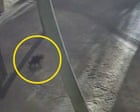
- June 7: Spotted on a home security camera near Saltwater Creek Reserve.
- June 16: Captured in bushland off Kopps Road in unstable health.
In the end, technology only did part of the work. Geographical projection modelling helped narrow down her territory, but recapturing a devil usually comes down to their stomach. They're intensely food-motivated creatures.
When a devil gets hungry enough, they'll bumble straight into a simple, humane box trap baited with fresh meat. That's exactly how wildlife teams closed the gap on Tuesday night.
The Toll of the Trail
While Mary managed to find food, the tropical Queensland environment took a massive toll on an animal built for chilly Tasmanian forests. When keepers finally secured her, her condition was highly unstable.
The heat and humidity of a northern winter can quickly dehydrate a thick-coated marsupial used to cooler climates. Furthermore, Mary had only just arrived at Paradise Country from a facility in New South Wales alongside her companion, Mavka. She was still in a mandatory quarantine phase. The stress of transitioning to a new home, combined with a sudden flight into unfamiliar territory, likely compromised her immune system.
Right now, she's staying in the veterinary hospital under close observation. Specialists are running diagnostic tests to check for hidden infections, tick-borne illnesses common to the Gold Coast scrub, or severe dehydration. The goal is to get her healthy enough to reunite with Mavka and settle back into the conservation program.
If you ever find yourself living near an urban bush fringe where an exotic or displaced animal has gone missing, don't try to be a hero. Report any tracks or droppings to local wildlife authorities immediately. Keep your pets indoors at night, and ensure your outdoor bins and pet food bowls are secured tightly so you don't accidentally lure a wild predator into a dangerous situation.