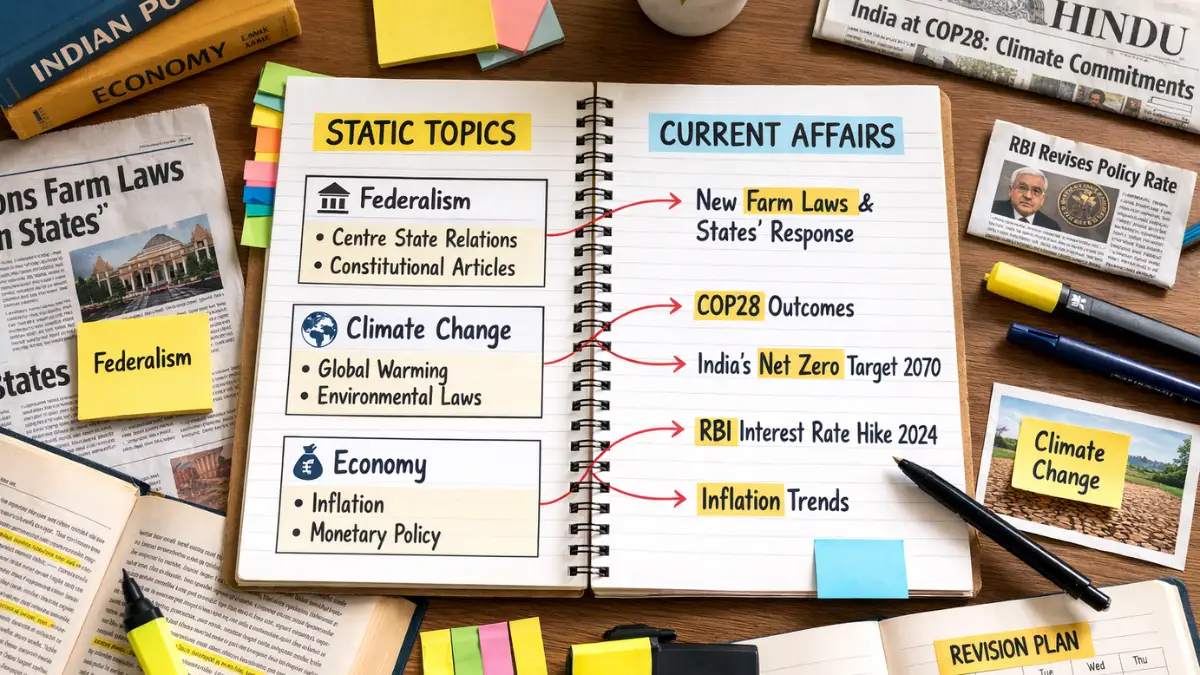
If you think clearing the civil services examination requires memorizing every single newspaper line from dawn to dusk, you're setting yourself up for burnout. Most aspirants drown in a sea of weekly compilations, forgetting that UPSC doesn't reward rote memory of trivial facts. It tests your ability to connect current dots with static core syllabi. Let's break down how to actually process weekly developments—like those dominating policy circles from September 7 to 13, 2026—without losing sight of the bigger picture.
Why Weekly Compilations Cheat Your Preparation
The problem with standard weekly current affairs summaries is simple: they treat every news item with equal weight. A minor bureaucratic reshuffle gets the same visual space as a landmark Supreme Court judgment on federal autonomy.
When you read through weekly pointers, your brain tends to treat everything as equally critical. That's a trap. UPSC examiners don't care about the who, what, and where nearly as much as they care about the why and the implications.
If a new semiconductor incentive policy drops, don't just memorize the subsidy amounts. Ask yourself how it impacts fiscal deficit targets, global supply chain relocations, and India's tech manufacturing ambitions under General Studies Paper Three. If you're missing that analytical layer, you're just collecting trivia.
Filtering Noise From Statutory Substance
Let's look at how to triage information effectively during a heavy news week.
- Constitutional and Legal Alterations: Always take priority. Any tweak to federal structures, judicial appointments, or fundamental rights forms the bedrock of General Studies Paper Two.
- Environmental Treaties and Species: If a new Ramsar site is notified or an amendment to wildlife protection laws passes, map it immediately. Prelims loves asking about geographical locations and ecological niches.
- Economic Indicators and Reports: Ignore daily stock market fluctuations. Pay attention to structural changes, inflation dynamics, monetary policy shifts, and committee recommendations on banking or taxation.
When analyzing governance issues, always trace the root cause. If a policy fails or succeeds, identify the institutional bottleneck. Was it executive apathy, legislative ambiguity, or grassroots implementation friction? That perspective transforms an average mains answer into a top-tier script.
The Art of Linking Current Events to Static Core
Every dynamic issue has an anchor in your standard textbooks. If international trade routes hit the headlines due to geopolitical friction in West Asia, open your atlas. Look at choke points like the Strait of Hormuz or the Bab-el-Mandeb. Review historical treaties.
Aspirants often separate static preparation from dynamic reading. That division is fatal. Your polity notes on the separation of powers should expand the moment a tussle between the judiciary and the executive hits the front page. Keep your static Laxmikanth and Ramesh Singh open right beside your digital news feeds. Jot down live examples directly into the margins of your core books. That's how toppers retain context under exam pressure.
Stop trying to consume everything. Pick three major themes from any given week, dissect their policy angles, connect them to constitutional articles or economic theories, and write a single comprehensive analytical page. Depth beats breadth every single time.
UPSC CSE 2028 (English) - Resolution
This video offers a helpful walkthrough of structured strategies and newspaper analysis tailored for civil services aspirants navigating daily and weekly current affairs.


