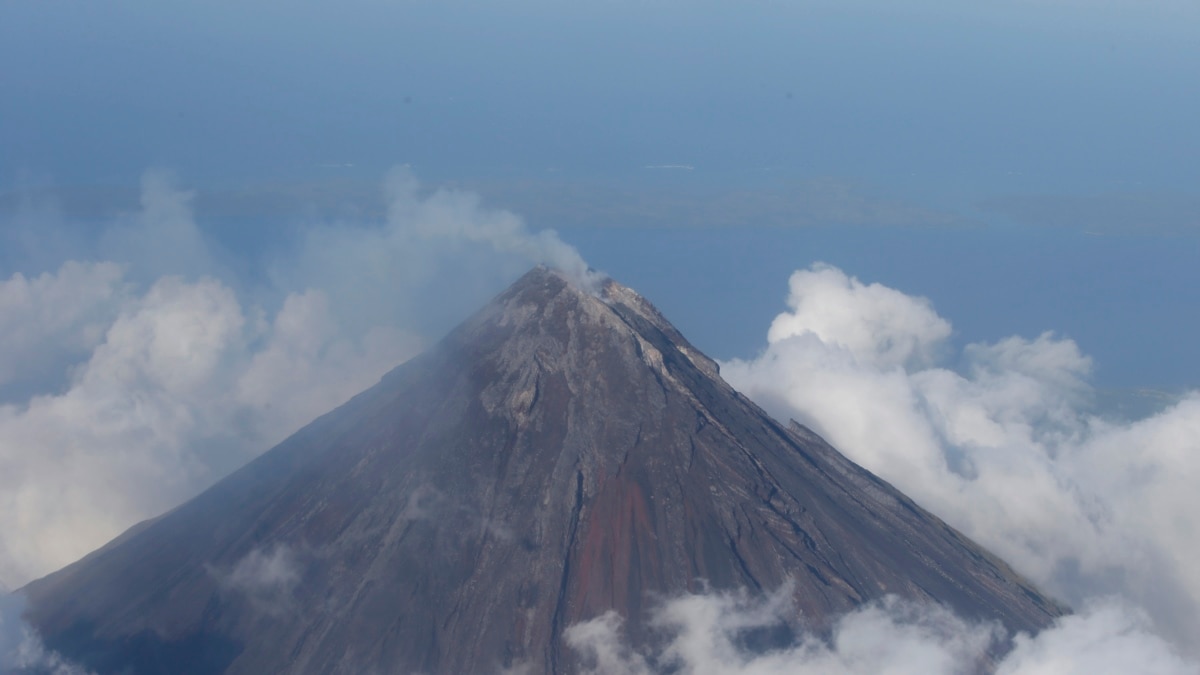
The media cycle follows a tired, predictable script every time Mayon decides to clear its throat. We see the same grainy footage of lava fountains, the same heartbreaking shots of families packed into school gymnasiums, and the same breathless reporting about "imminent catastrophe."
Mainstream coverage treats these eruptions as unexpected tragedies. They aren't. They are scheduled geological maintenance. By framing Mayon as a "disaster," we ignore the brutal reality: the disaster isn't the volcano. The disaster is our archaic, 20th-century approach to human settlement and risk management.
We are stuck in a cycle of reactive panic. It is time to stop viewing Mayon as a threat to be fled and start viewing it as a permanent, high-energy neighbor that requires a complete overhaul of how we build, move, and think about safety in the Ring of Fire.
The Six Kilometer Shackle
For decades, the Philippine Institute of Volcanology and Seismology (PHIVOLCS) has maintained the 6km Permanent Danger Zone (PDZ). It sounds scientific. It sounds safe. In reality, it is a legal fiction that creates a massive gray market of risk.
I have walked the perimeter of these "danger zones." What do you find? Thousands of people living, farming, and building permanent structures. The government draws a line on a map, but the volcanic soil—enriched with minerals like potassium and phosphorus—draws the farmers.
The current "evacuation" model assumes that humans are chess pieces you can simply move when the board gets hot. It ignores the economic suicide of leaving livestock and crops behind. When a "forced evacuation" occurs, we aren't saving lives so much as we are pausing livelihoods, often with no plan for the long-term displacement that follows a prolonged eruption.
If we were serious about safety, we would stop pretending the PDZ is empty and start engineering for a life lived within the heat.
The Logistics of Panic
The competitor narrative focuses on the "success" of evacuating 15,000 or 20,000 people. This is a metric of failure. Every time you have to move 20,000 people via flatbed trucks into crowded centers, you have failed to build a resilient city.
Mass evacuations are logistical nightmares that often cause more immediate health crises—respiratory infections, waterborne diseases, and mental health breakdowns—than the volcano itself. Ashfall kills crops and collapses weak roofs, but the act of cramming thousands of people into unventilated spaces kills the elderly and the vulnerable through sheer stress and poor sanitation.
We need to pivot from evacuation to fortification.
Imagine a scenario where the "Danger Zone" isn't a place you flee, but a place where the architecture is built to withstand 10cm of ash load and the air filtration systems are industrial-grade. Instead of spending millions on temporary shelters and relief goods that get diverted or rot, that capital should be injected into "volcano-proof" infrastructure.
The Ashfall Opportunity
Let’s talk about the ash. The news treats it as a pollutant. I see it as free, high-quality construction material delivered by gravity.
Volcanic ash is essentially raw pozzolan. When mixed with lime or cement, it creates a concrete that is historically more durable than standard Portland cement. The Romans knew this. Their harbors are still standing because of volcanic ash.
Instead of shoveling ash into bags and dumping it in rivers—where it causes secondary lahars—we should be mobile-manufacturing "Mayon Bricks" on-site. We are literally being handed the materials to build the very bunkers we need to survive the next blast.
The "contrarian" truth is that a Mayon eruption should be a stimulus package, not a charity case.
PHIVOLCS and the Problem with Precision
PHIVOLCS is world-class. Their monitoring of $SO_2$ flux and ground deformation is impeccable. But there is a massive disconnect between scientific data and public policy.
The Alert Level system (1 through 5) is a blunt instrument. Alert Level 3 tells a farmer their life is in danger, but it doesn't tell them if their specific ridge will be hit by a pyroclastic density current (PDC).
We rely on 19th-century evacuation tactics while using 21st-century sensors. If we can track the movement of magma with millimeter precision, we should be able to provide micro-targeted risk assessments.
The "lazy consensus" says everyone within 6km or 7km must go. The nuanced reality is that topography dictates survival. Some areas 4km away are safer than areas 8km away due to the "shadowing" effect of ridges. By forcing a blanket evacuation, the state wastes resources on people who aren't actually in the path of the PDC, while potentially missing those in "safe" zones that are actually in a natural funnel for lahars.
The Tourism Hypocrisy
We tell the locals to run for their lives while we sell "lava front" tours to foreigners.
The provincial government of Albay has long promoted Mayon as a centerpiece of Philippine tourism. You cannot have it both ways. You cannot market a volcano as a "majestic" wonder of the world and then act surprised when people want to live near it.
The economic pull of Mayon is too strong to be defeated by a police-enforced cordon. If we want to solve the Mayon "crisis," we have to stop treating the volcano as an external enemy. It is the primary economic driver of the region.
Build for the Blast
The "disaster" of Mayon is a choice.
We choose to build schools with flimsy tin roofs that collapse under ash. We choose to build roads that wash away during the first post-eruption rainstorm. We choose to fund temporary tents instead of permanent, reinforced vertical shelters that could serve as community hubs during the 90% of the time the volcano is quiet.
Stop looking at the smoke and start looking at the blueprints.
The next time Mayon erupts, the goal shouldn't be to see how many people we can fit in a gymnasium. The goal should be to see how few people actually need to leave because their homes were built to handle the heat.
If you live next to a giant, fire-breathing mountain, stop acting like a victim every time it breathes. Build a better shield or get out of the way permanently. Anything in between is just theater.