The recent quantification of lithium reserves within the McDermitt Caldera—specifically the Thacker Pass and Humboldt County deposits—represents a shift in global battery-grade mineral sovereignty, yet the "500 billion phone" metric frequently cited in media is a fundamentally flawed proxy for industrial utility. Assessing the viability of this 20 to 40 million metric ton resource requires moving beyond consumer electronics analogies toward a rigorous analysis of geological concentration, chemical processing constraints, and the geopolitical cost-benefit of domestic supply chains.
The Geological Framework of the McDermitt Caldera
The McDermitt Caldera is an extinct 28-mile-long supervolcano located on the Nevada-Oregon border. Its significance lies not merely in the volume of lithium, but in the unique illite-clay enrichment process that occurred approximately 16 million years ago. To understand the extraction challenge, one must distinguish between the two primary lithium hosting mediums found in the basin: smectite and illite.
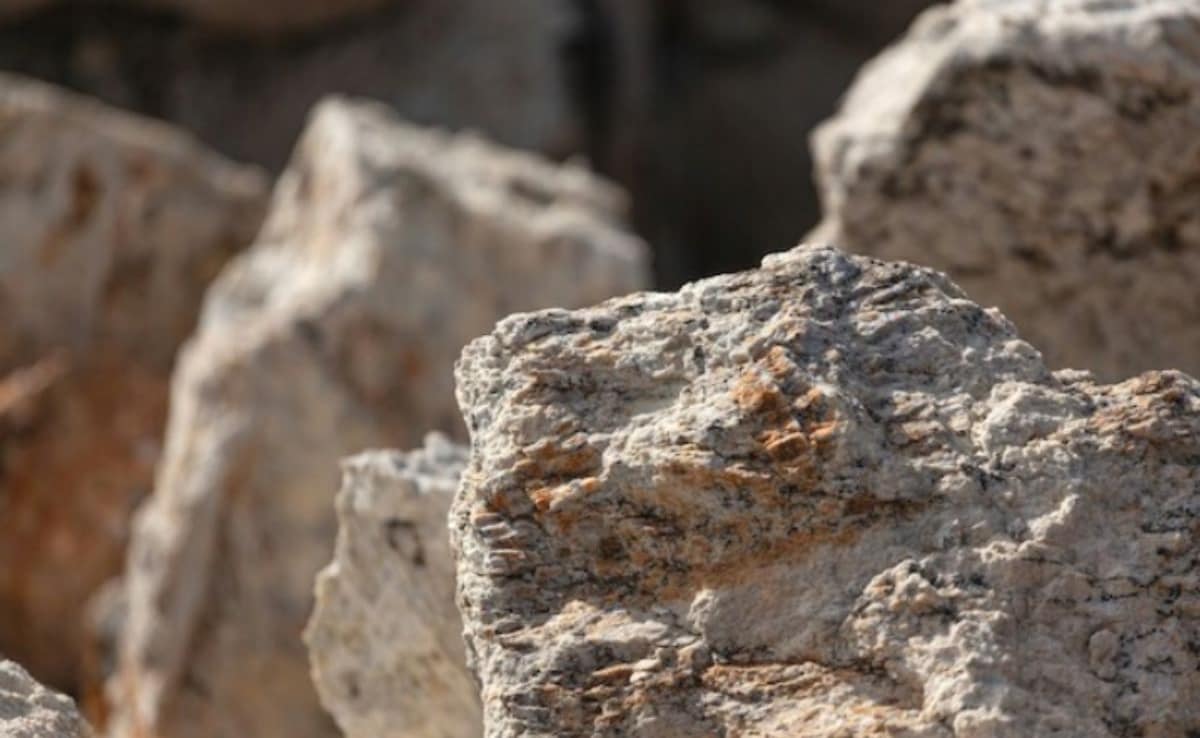
Most global clay-based lithium is found in smectite, which typically yields lower concentrations. However, the southern rim of the McDermitt Caldera underwent a secondary hydrothermal event. High-temperature fluids transformed smectite into illite, a lithium-rich clay. This specific mineralogical signature allows for concentrations exceeding 4,000 parts per million (ppm), nearly double the concentration of standard clay deposits.
The stratification of the caldera floor dictates the initial capital expenditure. Lithium is not a monolithic block; it is dispersed within volcanic tuffs and lakebed sediments. The depth of the overburden—the waste rock sitting atop the lithium-bearing clay—determines the "strip ratio." A low strip ratio at Thacker Pass means less earth must be moved per ton of lithium recovered, directly lowering the operational expense (OPEX) relative to deep-mine alternatives.
The Volumetric Fallacy of Consumer Electronics Metrics
Comparing lithium reserves to smartphone batteries is a category error that obscures the reality of the energy transition. A standard smartphone requires approximately 2 to 3 grams of Lithium Carbonate Equivalent (LCE). In contrast, a single Long Range Electric Vehicle (EV) battery requires roughly 60 kilograms of LCE.
The strategic value of the McDermitt Caldera must be weighed against EV penetration rates:
- The EV Displacement Factor: One EV battery consumes the same lithium volume as 20,000 to 30,000 smartphones.
- Industrial Scalability: If the 40 million ton estimate holds, it could theoretically support the production of 600 million EVs. This is the figure that dictates national security policy, as it covers the total current vehicle fleet of the United States twice over.
- Purity Requirements: Smartphone batteries are less sensitive to minor impurities than high-nickel EV cathodes. The caldera's value depends on the ability to refine clay-hosted lithium to "battery grade" (99.5% purity) at scale.
The Chemical Processing Bottleneck
Traditional lithium extraction relies on two primary methods: brine evaporation (common in the "Lithium Triangle" of South America) and hard-rock spodumene mining (dominant in Australia). The McDermitt Caldera introduces a third, more complex pathway: Acid Leaching of Sedimentary Clays.
The processing logic follows a rigorous thermodynamic sequence:
- Mechanical Concentration: The ore is crushed and scrubbed to separate the lithium-rich clay fines from inert volcanic sands.
- Acid Digestion: The clay is mixed with sulfuric acid. This creates a chemical reaction that "liberates" lithium ions into a pregnant leach solution (PLS).
- Impurity Removal: The PLS contains not just lithium, but magnesium, calcium, and iron. These must be precipitated out through pH adjustment. This is the most volatile stage of the cost function, as chemical reagent prices (specifically sulfur) fluctuate with global commodity cycles.
- Crystallization: The purified solution is treated with soda ash to produce lithium carbonate.
The limitation of this method is the sheer volume of sulfuric acid required. To mitigate this, developers propose on-site sulfuric acid plants that capture heat from the acid-making process to generate carbon-free electricity. This creates a closed-loop energy system, but it significantly inflates the initial internal rate of return (IRR) requirements due to the high complexity of the plant.
Assessing the Triple Constraint of US Domestic Extraction
The development of the McDermitt Caldera is governed by a triple constraint: Environmental Impact, Water Rights, and Permitting Velocity.
The Water Scarcity Matrix
Lithium extraction in the Great Basin is inherently a water-intensive operation in an arid environment. The Thacker Pass project, for instance, requires significant acre-feet of water annually. While the project utilizes recycled process water, the drawdown on local aquifers creates a zero-sum competition with agricultural interests. The technical solution involves high-efficiency mechanical vapor recompression (MVR) evaporators, which reclaim water from the tailings but increase the energy intensity of the operation.
Tailings Management and Stability
Unlike brine ponds which evaporate into the atmosphere, clay mining produces "filter press" tailings. This dry-stacking method is more stable than traditional slurry dams, reducing the risk of catastrophic failure. However, the chemical composition of the waste—containing residual acids and salts—necessitates advanced lining systems to prevent groundwater leaching.
Geopolitical Sovereignty vs. Market Pricing
The United States currently processes less than 1% of the global lithium supply. The McDermitt Caldera is the centerpiece of a "Mine-to-Battery" domestic strategy. This creates a pricing paradox. Domestic lithium will likely be more expensive to produce than Chilean brine-based lithium due to higher labor costs and stricter environmental regulations. The viability of the caldera relies on the Inflation Reduction Act (IRA) and Section 45X production tax credits, which subsidize the delta between domestic OPEX and global spot prices.
The Logistics of Integrated Supply Chains
A deposit of this magnitude necessitates a localized industrial cluster to be economically defensible. Transporting raw lithium clay is non-viable; the energy density of the ore is too low. Refining must happen at the pit-to-gate level.
The strategic blueprint involves the following infrastructure nodes:
- On-site Acid Plant: To eliminate the risk and cost of transporting thousands of tons of sulfuric acid by rail.
- Regional Cathode Production: Connecting the Nevada lithium output to battery "gigafactories" in the American Midwest and South via the rail corridor.
- Circular Economy Integration: Future-proofing the site by co-locating lithium-ion recycling facilities that can utilize the same refining infrastructure as the primary ore.
The risk profile for investors remains the "First-of-a-Kind" (FOAK) technology hurdle. While acid leaching is a known process in copper and nickel mining, its application at this scale for lithium clay is unproven in a commercial setting. Any deviation in the clay's mineralogy as the mine expands could lead to "process drift," where the chemical reagents no longer effectively extract the lithium, leading to a collapse in recovery rates.
Strategic Forecast and Implementation
The McDermitt Caldera will not "save" the EV market in the next 24 months. The lead time for full-scale commercial production—accounting for ramp-up phases and purity validation by automakers—places the first significant volume of supply in the 2027–2030 window.
For institutional stakeholders, the play is not a speculative bet on "500 billion phones," but a long-term hedge against the volatility of the lithium spodumene market. The Caldera offers a stable, multi-decade supply of LCE that is immune to maritime trade disruptions and foreign export quotas.
The definitive strategic move for the US energy sector is the aggressive vertical integration of these reserves. This requires decoupling the lithium price from the global spot market and moving toward "cost-plus" long-term supply agreements between miners and OEMs (Original Equipment Manufacturers). By fixing the price of the raw material at the source, the US can insulate its EV manufacturing base from the boom-and-bust cycles that have historically characterized the lithium market. The Caldera’s true value is as a price stabilizer and a foundational asset for a closed-loop domestic energy economy.