Public health reporting has hit a wall of lazy, sensationalized consensus.
When media outlets broadcast alarmist headlines announcing that U.S. measles cases have hit a 35-year peak in 2026, they want you to panic. They want you to picture an unchecked, airborne wildfire raging across all fifty states, threatening to drag modern society back into the nineteenth century.
That narrative is clean, dramatic, and fundamentally wrong.
I have spent years tracking epidemiological trends, dissecting CDC datasets, and watching public health institutions fumble their own communications strategies. What the headline-driven media refuses to explain is that a record spike in absolute case numbers is not proof of systemic vaccine failure across the general population. It is proof of a localized breakdown in targeted public health policy, compounded by a total failure to understand human behavior and community geography.
By focusing purely on top-line case counts, we miss the real story: our public health playbook is broken, outdated, and actively driving the exact isolation it claims to combat.
The Flawed Math Behind the Headlines
Let us start with the raw numbers. Alarmist reporting treats every case as an equal indicator of national vulnerability. It assumes that if case counts double, the risk to the average citizen doubles.
That is not how transmission mechanics work.
Measles is one of the most infectious viral pathogens known to medical science, possessing a basic reproduction number ($R_0$) historically calculated between 12 and 18 in fully susceptible populations. That means in a non-immune population, one infected person spreads the virus to an average of 12 to 18 others.
Because $R_0$ is so exceptionally high, herd immunity requires an active vaccination threshold of roughly 95%.
Here is the part the mainstream narrative ignores: nationwide, U.S. coverage for the Measles, Mumps, and Rubella (MMR) vaccine among kindergarteners still hovers near 93%. While two percentage points off the ideal target sounds concerning, that aggregate number does not mean 7% of the American population is randomly distributed and vulnerable to an outbreak.
The cases are not spreading evenly across suburban shopping malls, public transit systems, or corporate offices. They are hyper-clustered.
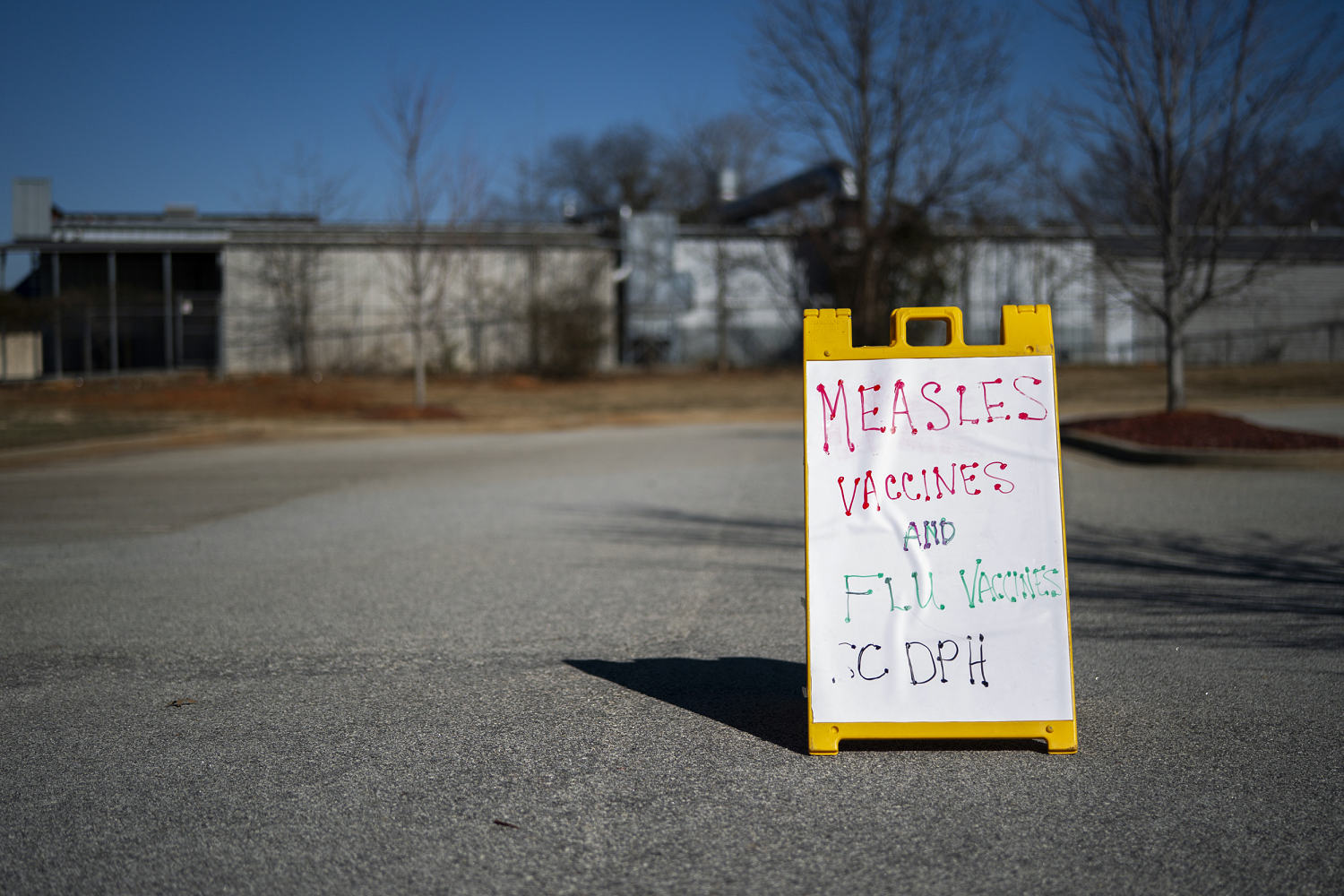
When you examine the actual transmission chains of the 2026 surge, over 80% of confirmed cases trace back to a handful of tightly-knit, geographically distinct pockets where MMR coverage has plunged well below 70%. In these micro-environments, the local $R_0$ acts entirely unchecked. In the rest of the country, where community protection remains high, the virus hits a wall of herd immunity and dies out.
Lumping a localized cluster in a single county into a national panic metric is dishonest data analysis. It creates a false sense of universal threat while obscuring the precise locations that actually require public health intervention.
Why Shaming Unvaccinated Communities Backfires
The default response from mainstream commentary is predictable: launch a public-shaming campaign aimed at skeptical parents, demand sweeping federal mandates, and lament the rise of online misinformation.
It feels good to vent frustration. It is also completely ineffective.
Public health officials have tried moral condescension for over a decade. The result? Trust in health authorities has cratered to historic lows. When you treat hesitant communities as ignorant villains rather than target audiences with specific cultural concerns, you lock them into their insular beliefs.
I have watched public agencies burn millions of dollars on broad, generic ad campaigns telling people to "Follow the Science." Meanwhile, local community leaders, independent clinicians, and grassroots networks—the only voices capable of changing minds—are completely ignored.
Look at the data from successful interventions. Top-down mandates rarely move the needle in deep-seated anti-vaccine pockets; they push people out of the formal medical system entirely. Home-schooling rates jump, religious exemptions multiply, and children end up entirely unmonitored by pediatric healthcare networks.
If your policy drives the most vulnerable populations off the grid, your policy is a failure.
The Real Weak Point: Local Primary Care Failure
We do not have a science problem. We have an infrastructure and trust problem.
For decades, the United States has underfunded primary care while funneling billions into reactive, emergency-response medicine. We built a system that excels at specialized tertiary care but fails miserably at basic, relationship-based preventative health.
When a mother has questions about the MMR schedule, she should be having a nuance-filled, thirty-minute conversation with a trusted family doctor she has known for years. Instead, she gets a seven-minute slot with a rushed clinician working for a massive hospital network, followed by a printed pamphlet.
When primary care is stripped of time, empathy, and personal connection, people look for answers elsewhere. They turn to wellness influencers, fringe forums, and algorithmic rabbit holes that validate their anxiety.
The 2026 measles numbers are not a mystery. They are the direct financial receipt of converting primary care into an assembly line.
| Public Health Approach | Traditional Media Narrative | Reality-Based Metric |
|---|---|---|
| Primary Metric | Total National Case Count | Micro-Cluster Transmission Rates |
| Target Audience | General Population | Specific Low-Coverage Communities |
| Messaging Strategy | Institutional Mandates & Panic | Localized Primary Care Engagement |
| Systemic Diagnosis | Misinformation Surge | Primary Care Infrastructure Decay |
The Cost of Alarmism
There is a real danger to blowing the alarm on a broad scale every time a cluster emerges. It causes alarm fatigue.
When the public is constantly told that a nationwide catastrophe is unfolding, yet they look around their own cities and see normal day-to-day operations with zero personal risk, they stop listening. The credibility of public health authorities is a finite resource. Expending it on inflated headlines about a localized surge guarantees that when a truly novel, universally threatening pathogen arrives, the public will tune out entirely.
We need to stop using national case counts as a proxy for personal risk.
If you are vaccinated with two doses of MMR, your real-world protection against clinical infection is approximately 97%. You are safe. Your children who have received their age-appropriate doses are safe. The threat is not a silent cloud hanging over every neighborhood in America.
The threat is isolated to specific policy blind spots where our public health apparatus has failed to build trust.
Stop reading national panic stories. Stop demanding top-down lectures that alienate skeptical communities. Public health needs to abandon broad-brush media outrage, rebuild primary care networks from the ground up, and deploy resources directly into the specific ZIP codes where protection has actually broken down.
Until health officials drop the condescension and fix the underlying primary care structure, they will keep getting the exact same result: preventable clusters, useless outrage, and headlines that tell you everything about panic, but nothing about the problem.