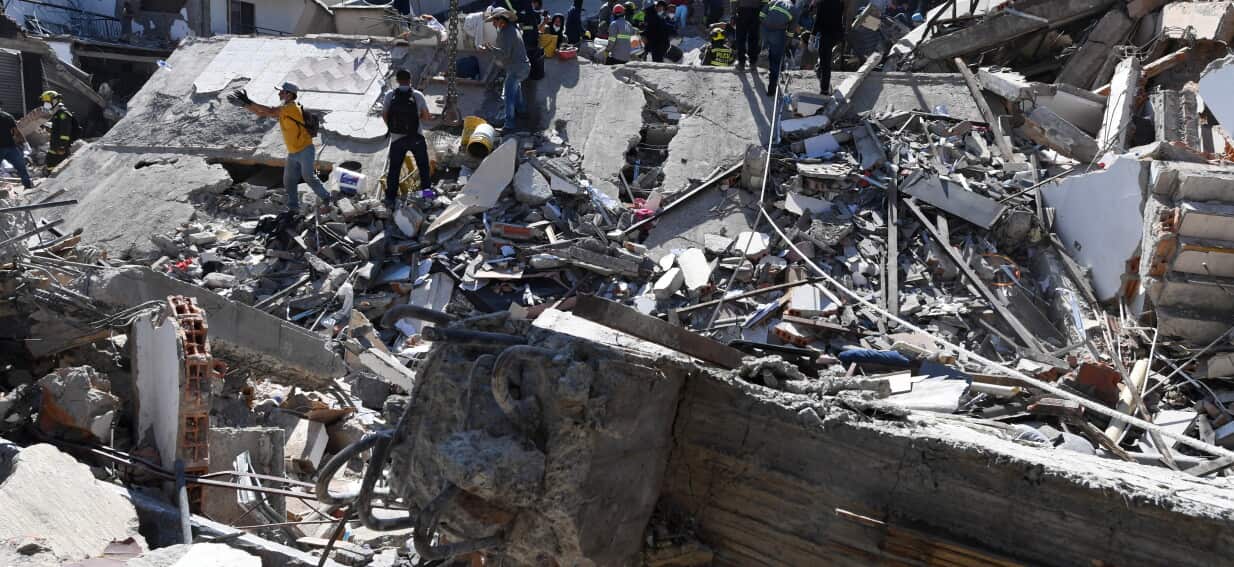
A 7.4 magnitude tectonic event centered near San José del Palmar in Chocó disrupted Western Colombia, resulting in over 250 confirmed fatalities, thousands of missing persons, and severe infrastructure fragmentation across urban centers like Cali and Pereira. Beyond the immediate humanitarian toll, this catastrophe serves as a stress test for state capacity, fiscal allocation efficiency, and supply chain continuity in Andean markets. Analyzing the structural mechanics of the response reveals the critical factors governing survival rates and economic recovery in post-disaster zones.
The Temporal Decay Function of Urban Search and Rescue
The primary constraint in any high-magnitude seismic event is the survival curve of trapped individuals. Search and rescue operations follow a strict logarithmic decay curve where the probability of finding viable survivors drops precipitously after the first 72 hours. In urban hubs such as Pereira and Cali, where multi-story residential and commercial structures pancaked into concrete slabs, logistics dictate operational velocity.
Three variables govern this temporal window:
- Access Infrastructure: Road closures, landslides across the Cordillera Occidental, and the closure of regional airports (including Pereira and Quibdó) immediately isolate epicentral zones. Heavy machinery deployment is bottlenecked when arterial transit routes are severed.
- Sensor and Asset Allocation: The initial deployment of military engineers, search dogs, and thermal imaging equipment determines whether pockets of air within collapsed structures are identified before structural degradation or secondary aftershocks cause total collapse.
- Medical Triage Integration: Field hospitals and trauma stabilization units must be established concurrently with extraction. When upper floors of municipal medical facilities collapse—as observed in Cali—patient overflow creates a secondary systemic failure.
Fiscal Shocks and Executive Emergency Powers
The disaster materialized during a politically delicate transition, forcing the newly inaugurated administration under President Abelardo de la Espriella to invoke an economic state of emergency. This instrument bypasses conventional legislative hurdles to authorize immediate capital reallocations, but it introduces distinct fiscal trade-offs.
Disaster management funding relies on three layers of liquidity:
- Immediate Sovereign Reserves: Discretionary funds utilized for emergency relief, military mobilization, and temporary rental subsidies for displaced households.
- Multilateral Credit Facilities: Contingency credit lines extended by entities such as the Inter-American Development Bank and emergency grants from foreign partners like the United States allocation of $15.5 million.
- Structural Budget Reallocation: The necessity to alter capital expenditure plans to fund long-term reconstruction, which directly challenges the administration's concurrent mandate to curb fiscal deficits and implement austerity measures.
When a state injects emergency capital into a damaged economy, inflationary pressures on construction materials and basic goods spikes locally. Macroeconomic stability depends on whether the central government can ring-fence reconstruction funds from ordinary administrative bloat.
Supply Chain Interruption in the Coffee Heartland
The geographic footprint of the tremor directly targeted Colombia's agricultural core, specifically the coffee-producing regions of Risaralda and Caldas. The economic cost function extends far beyond direct property damage, encompassing structural losses in primary production and export logistics.
- Transport Nodes: Blockades along transit corridors connecting agricultural collection points to major export terminals halt the movement of arabica coffee beans.
- Storage and Processing Facilities: Rural cooperatives face compromised warehousing infrastructure, threatening stored yields and input inventories for the upcoming harvest cycles.
- Utility Failures: The loss of grid power and potable water in rural Chocó and surrounding municipalities paralyzes local commerce, turning temporary distribution bottlenecks into extended supply chain contractions.
Information Asymmetry and Digital Coordination
In the immediate aftermath of systemic telemetry failure, official communication channels are frequently saturated or delayed. Civilian populations relied heavily on crowdsourced digital architectures—such as the digital missing persons registry Colombia Te Busca—to bridge the intelligence gap left by downed telecommunications towers.
This decentralized data collection acts as an auxiliary reconnaissance layer for state authorities. However, it also introduces noise and unverified reports that can misallocate scarce rescue assets. The efficiency of a modern disaster response is directly proportional to how rapidly state agencies can ingest, verify, and act upon crowdsourced telemetry from the ground.
Deploy specialized logistics task forces with pre-positioned regional stockpiles outside fault-line perimeters to bypass initial transit bottlenecks, ensuring that heavy extraction equipment reaches isolated provincial hubs within the critical 24-hour window.