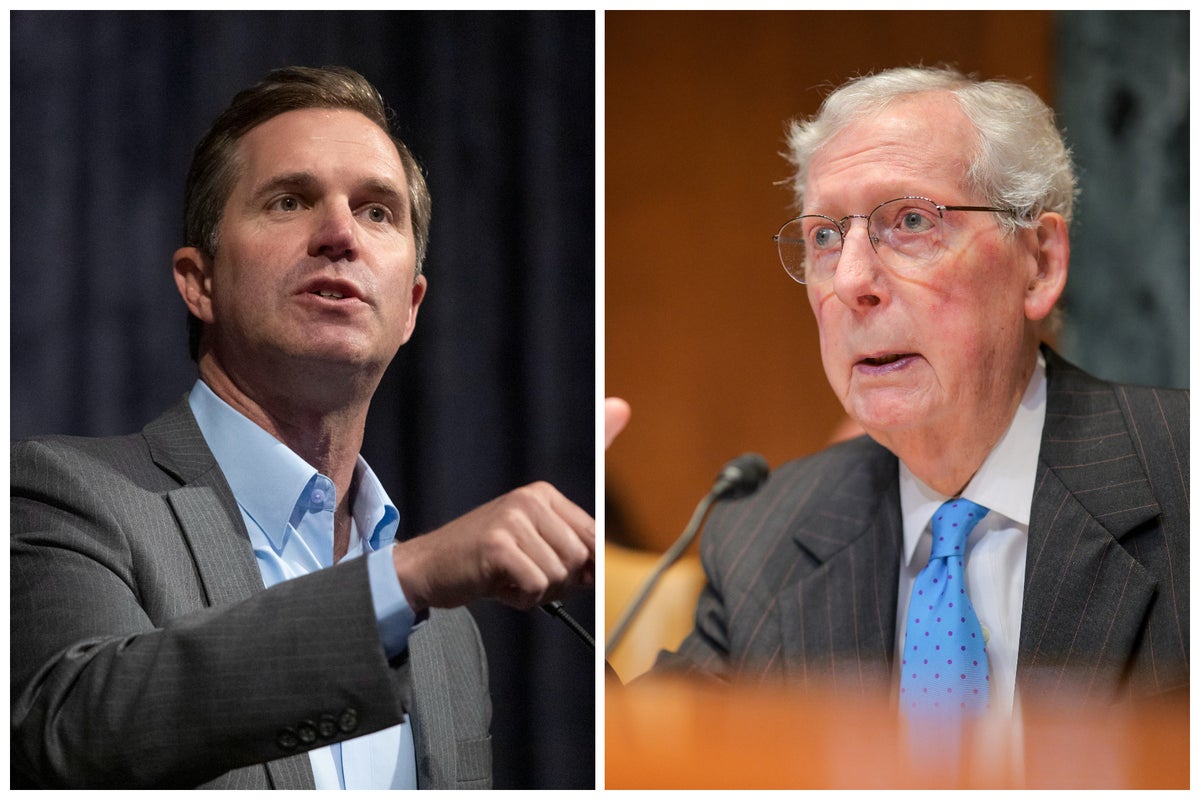
When executive authorities publicly demand transparency from legislative counterparts regarding severe medical absences, the friction exposes structural vulnerabilities within constitutional governance. The formal request issued by Kentucky Governor Andy Beshear regarding United States Senator Mitch McConnell transcends standard political posturing. It highlights a fundamental operational risk in modern representative bodies: the absence of standardized reporting metrics for elected officials' physical capacity to execute their mandates.
The Cost Function of Information Asymmetry
In corporate governance, an executive medical emergency triggers immediate disclosures governed by fiduciary duties and regulatory oversight. Public markets penalize informational vacuums because uncertainty degrades institutional valuation. Legislative bodies operate under a structurally inferior model. When an official handling national policy decisions experiences prolonged hospitalization without direct clinical disclosures, an information asymmetry develops between the representative and the constituency.
This information vacuum imposes quantifiable costs on the political ecosystem:
- Speculative Volatility: Media and public commentary fill the void left by official silence, introducing emotional variance into policy discussions.
- Representative Friction: Constituents lose the functional ability to petition a fully engaged officeholder, reducing legislative throughput.
- Succession Ambiguity: Legal frameworks governing mid-term vacancies face untested stress tests, particularly when state statutes and executive powers conflict.
The Mechanics of Kentucky Succession Law
The structural tension between the Kentucky executive branch and the federal legislative delegation illustrates how institutional self-preservation alters constitutional mechanics. During Governor Beshear’s tenure, the state's Republican-controlled General Legislature altered the statutory framework governing Senate vacancies twice.
Historically, Kentucky law permitted gubernatorial interim appointments to fill vacant Senate seats directly. To eliminate potential partisan realignment should a vacancy occur, the legislature overrode a gubernatorial veto to mandate a special election structure instead. Under this revised statute:
- The governor is stripped of direct discretionary appointment authority.
- A compressed timeline forces an expedited special election protocol upon vacancy.
- Structural lag times create potential multi-month windows where a congressional seat remains functionally unrepresented while legal and administrative mechanisms sort the procedural mechanics.
This statutory redesign changes the incentive matrix for an incumbent's office. By minimizing the governor's influence over the transition window, the legislative framework decouples continuity of representation from executive oversight. Consequently, managing health disclosures becomes an internal office strategy rather than a public accountability metric.
The Limits of Proxy Representation and Legislative Bottlenecks
The United States Senate operates on strict procedural rules that disallow proxy voting. When a sitting member is physically absent for weeks or months due to medical intervention, the numerical balance of the chamber shifts dynamically. In a tightly divided legislative body where a simple majority dictates operational control, the subtraction of a single vote alters the passage probability of every measure.
Peer assurances from legislative leadership—such as statements from congressional colleagues asserting that an absent member is alert and engaged via staff updates—fail to satisfy institutional transparency metrics. Informal attestations cannot substitute for direct, verifiable communication from the elected official. Without a structured baseline for measuring legislative capacity, the system relies entirely on closed-loop confirmations from political allies, creating a principal-agent problem where the agent's proxies have structural incentives to obscure performance deficits.
Systemic Reform and Structural Safeguards
To eliminate the governance risks associated with opaque medical absences, legislative bodies must transition from discretionary disclosures to codified performance standards.
- Establish Objective Capacity Thresholds: Mandate independent neurological and physical evaluations by non-partisan medical boards at fixed age milestones or following specified durations of hospitalization.
- Standardize Disclosure Timelines: Implement statutory requirements forcing congressional offices to release standardized clinical status updates within a defined window following any emergency medical intervention.
- Align Succession Triggers: Harmonize state-level vacancy statutes with federal operational calendars to prevent prolonged congressional representation gaps caused by special election logistical lag.
A functional republic cannot scale on operational secrecy. When the mechanisms of accountability fail, executive intervention becomes the sole remaining friction point to force systemic transparency.
Kentucky Gov. Beshear presses Mitch McConnell for more transparency on health
This video provides primary broadcast coverage detailing Governor Beshear's formal demands for transparency regarding the senator's medical status and the resulting public policy debates.


