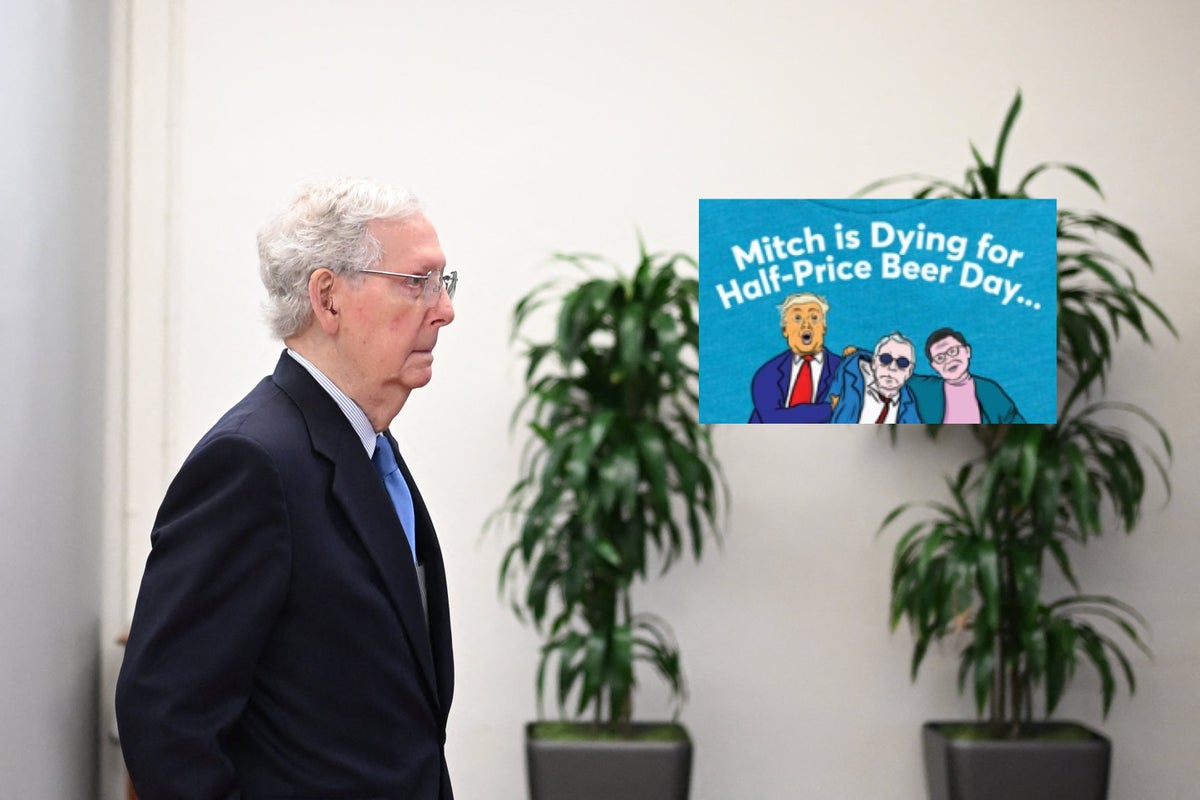
Commercial enterprises operating in hyper-polarized markets face a constant strategic choice between risk mitigation and aggressive brand differentiation. When a regional beverage producer publicizes promotional campaigns tied to the mortality or medical incapacitation of prominent political figures, the resulting friction exposes the fault lines between protected commercial speech and regulatory compliance. Analyzing this dynamic requires stripping away media sensationalism to evaluate the underlying mechanics of political positioning, regulatory enforcement vectors, and the quantitative impact of polarization on consumer goods distribution.
The Dual Architecture of Outrage Positioning
Small-scale manufacturing entities competing against consolidated multi-national conglomerates frequently lack the capital expenditure required for traditional market acquisition. Consequently, management teams adopt high-variance positioning strategies to capture asymmetric attention. This approach relies on two primary mechanisms: zero-cost earned media acquisition and ideological market capture.
By issuing inflammatory promotional concepts—such as discounted inventory contingent upon the death or decline of polarizing public officials—a brand converts standard product marketing into cultural combat. The economic rationale depends on high-margin conversion from a localized geographic footprint to a distributed ideological cohort. Consumers who would never purchase a standard regional pilsner suddenly engage as ideological participants, purchasing merchandise or ordering products online to signal alignment with the brand's public stance.
However, this architecture contains a structural flaw. Traditional brand loyalty models rely on product quality, consistency, and distribution convenience. Outrage positioning substitutes these variables with transient emotional reactivity. As the emotional stimulus fades, customer retention rates drop precipitously, forcing the enterprise to escalate the rhetoric to maintain baseline sales velocity.
Regulatory Vulnerability and Enforcement Vectors
The intersection of contentious public commentary and tightly regulated commercial sectors creates immediate exposure to administrative penalties. The commercial distribution of alcohol operates under strict state-level licensing regimes overseen by departments of revenue or specialized alcohol beverage control boards. While business owners frequently attribute regulatory scrutiny to political retaliation, a rigorous operational analysis reveals distinct administrative triggers.
The primary compliance vectors managed by state regulators involve distinct categories:
- Permitting and structural licensing accuracy across multiple taproom and production sites.
- Compliance with interstate and intrastate shipping statutes governing direct-to-consumer delivery.
- Inventory tracking, tax assessment, and the precise legal status of stored warehouse assets.
When an enterprise attracts intense national scrutiny through provocative public declarations, regulatory agencies often accelerate audits or prioritize pending compliance infractions. The mechanism is straightforward. High public visibility draws scrutiny from opposing political stakeholders, who file formal complaints regarding minor statutory infractions. Regulatory bodies are legally obligated to investigate these grievances.
The resulting enforcement actions—such as notices of permit revocation—represent a predictable response to operational non-compliance rather than an abstract suppression of speech. The strategic miscalculation lies in assuming that ideological alignment shields an entity from administrative oversight. Operating a heavily regulated manufacturing and hospitality business requires flawless adherence to statutory minutiae. Every deviation in inventory logs or shipping permits acts as a legal vulnerability that state authorities can exploit when political pressure mounts.
The Cost Function of Performative Antagonism
Quantifying the viability of political branding requires evaluating the net present value of short-term revenue spikes against long-term operational liabilities. When a regional brewery initiates a high-profile controversy, the immediate financial outcome is a temporary surge in web traffic, e-commerce orders, and national press coverage.
Yet, this influx incurs hidden operational costs that degrade enterprise value:
- Legal Defense Capital: Defending against state-level permit revocations requires substantial legal retainers, diverting cash flow away from core production and raw material acquisition.
- Distribution Channel Friction: Wholesalers and independent retail accounts frequently drop controversial brands to insulate themselves from consumer boycotts and local backlash, shrinking the addressable market.
- Employee and Operational Disruption: Management hours shift entirely from supply chain optimization and quality control to crisis public relations and political defense.
This creates a severe bottleneck. The gross margin generated from a temporary spike in ideological purchases rarely offsets the permanent loss of shelf space in mainstream retail outlets. Furthermore, legal defense funds rely heavily on crowdfunding or voluntary donations from supporters, introducing unpredictable cash flow volatility into an asset-heavy manufacturing business.
Strategic Execution and Market Realities
Navigating highly charged socio-political environments demands a disciplined approach to risk assessment. Enterprises that choose to embed partisan politics into their corporate identity must accept the structural consequences of regulatory friction and market fragmentation.
Management teams must audit every operational tier for compliance before engaging in public controversy. If a business maintains minor infractions in its shipping logs, tax filings, or warehouse permits, any provocative public stance functions as an invitation for state-level enforcement. The final strategic play requires decoupling commercial survival from political theater, recognizing that administrative compliance remains the absolute baseline for maintaining market access.