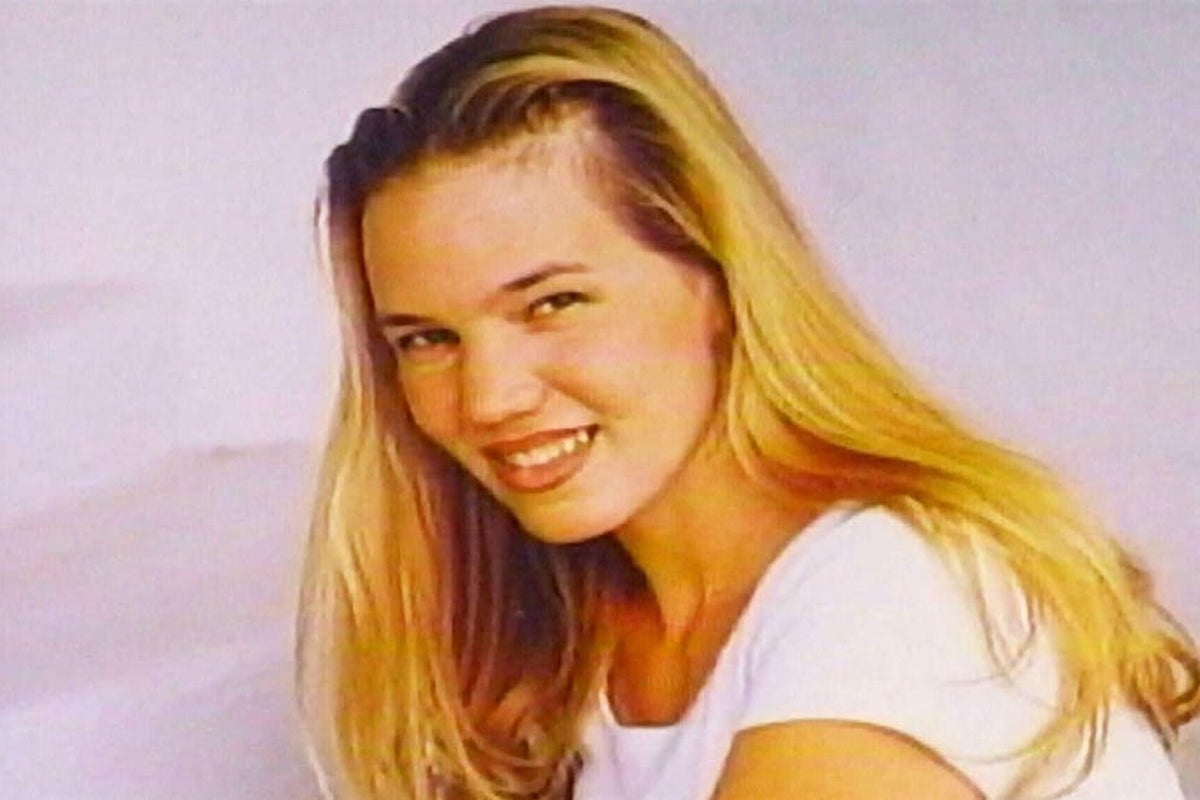
The execution of a search warrant at the San Pedro residence of Paul Flores’ mother, three decades after the disappearance of Kristin Smart, represents a critical shift from passive monitoring to aggressive forensic recovery. This development illustrates the Forensic Half-Life of criminal investigations: the phenomenon where the decay of physical evidence is eventually offset by the evolution of detection technology and the breakdown of social insulation. In high-profile cold cases, law enforcement agencies do not operate on hope; they operate on a calculated intersection of new witness testimony, geospatial data analysis, and advanced ground-penetrating radar.
The Structural Architecture of Cold Case Re-entry
Solving a thirty-year-old disappearance requires a departure from traditional investigative cycles. The primary bottleneck in the Smart case has never been a lack of suspects, but a lack of Biological Continuity. For a conviction or a recovery to occur, the prosecution must bridge the gap between a "disappearance" and a "homicide" through verifiable physical remains or high-density circumstantial evidence that excludes all other variables.
The San Pedro search is the result of three specific pressure points:
- The Degradation of the Alibi Network: Over thirty years, the social and legal risks for co-conspirators or witnesses change. Individuals who were once incentivized to remain silent due to familial loyalty or fear often reach a point of "moral or legal insolvency" where the cost of silence exceeds the cost of disclosure.
- Technological Displacement: Ground-penetrating radar (GPR) and soil-disturbance analysis available in 2024–2026 possess a resolution frequency significantly higher than the equipment used in the 1990s. Law enforcement can now identify anomalies in concrete density and soil stratigraphy that were previously invisible.
- The Burden of Judicial Probable Cause: To obtain a warrant for a residence thirty years post-facto, the Los Angeles County Sheriff’s Department and the San Luis Obispo authorities had to present a "nexus of probability." This indicates the acquisition of a new data point—likely a digital footprint, a tip with high internal consistency, or a forensic lead from the 2021/2022 trial proceedings—that specifically ties the San Pedro property to the concealment phase of the crime.
The Forensic Calculus of Concealment
The search of the Susan Flores property is not a random "fishing expedition." It is a targeted application of The concealment Cost-Benefit Analysis. When a suspect hides a body, they face a binary choice: high-risk transport to a remote location or low-risk immediate proximity.
- Remote Disposal: High initial risk (transportation, visibility) but low long-term risk (unlikely to be found).
- Proximity Disposal: Low initial risk (immediate concealment) but high long-term risk (ownership of the site links the suspect directly to the evidence).
The persistent focus on the Flores family properties suggests an investigative working theory that the suspect chose proximity. In the context of the Kristin Smart case, the theory posits that the remains were moved or managed within a controlled environment—properties owned or managed by the Flores family. This creates a "Forensic Anchor." As long as the family retains the property, they retain control over the evidence, but they also remain the primary targets of every technological advancement in forensic searching.
The Three Pillars of Cold Case Forensics
To understand why a search is happening now, one must evaluate the three pillars that support modern cold case workflows.
1. Geospatial Stratigraphy
Investigators are no longer looking for a "body" in the colloquial sense. They are looking for Anomalous Voids. When soil is moved or concrete is poured over disturbed earth, the compaction levels never return to their natural state. Even after 30 years, the thermal and density signature of the ground remains distinct. The San Pedro search likely involves "Segmented Grid Sampling," where the yard is divided into quadrants and analyzed for historical disturbances using satellite imagery comparisons and on-site sensors.
2. The Chain of Custody for Information
Information in a cold case behaves like an asset class. Its value fluctuates based on its "Verifiability Index." A tip in 1997 might have been discarded as hearsay. That same tip, when cross-referenced with modern GPS pings or cellular tower data (if available) or even historical weather patterns (determining soil moisture at the time of a suspected burial), becomes a "High-Value Asset." The warrant in San Pedro suggests a "revaluation" of existing information or the introduction of a "Bridge Fact"—a piece of evidence that connects two previously unrelated clues.
3. Psychological Attrition
The "Flores Strategy" has historically been one of total silence and litigation. However, the legal system applies a form of Incremental Pressure. Each search warrant, each interview, and each forensic excavation serves to increase the "Anxiety Coefficient" of those involved. From a strategic consulting perspective, the authorities are looking for a "Structural Failure" in the suspect’s defense—not necessarily a confession, but a mistake in movement or communication triggered by the renewed activity.
The Bottleneck of Evidence Recovery
Despite the high-authority nature of this search, several technical limitations persist. The "Signal-to-Noise Ratio" in forensic archaeology is notoriously low.
- Bio-Degradation: In certain soil types, human remains can degrade significantly over 30 years, leaving only teeth or heavy bone fragments. If the site was subject to chemical interference (e.g., lime or acidic compounds), the recovery window shrinks.
- Contamination: Any search conducted on a lived-in property faces the "Background Noise" of three decades of utility repairs, gardening, and renovation. Distinguishing a 1996 burial trench from a 2005 sewer line repair requires a high degree of "Discriminatory Analysis."
- Legal Scrutiny: Any evidence found must survive the "Fruit of the Poisonous Tree" doctrine. If the warrant was based on flawed logic or inaccurate "Bridge Facts," the evidence—no matter how damning—could be suppressed.
Strategic Trajectory of the San Luis Obispo Investigation
The move on the San Pedro home indicates that the investigative team has moved past the "Identification Phase" and is firmly in the "Recovery and Corroboration Phase." The conviction of Paul Flores was a milestone, but the Smart case remains an open wound for the California justice system because the "Corpus Delicti" (the body of the crime) is incomplete.
The recovery of Kristin Smart’s remains would transition the legal status of the case from a "circumstantial conviction" to a "forensically sealed case." It would also likely trigger a new series of indictments for Accessory After the Fact. If remains are found on a property owned by a family member, the "Plausible Deniability" of that family member evaporates. The search is, therefore, a dual-purpose operation: it is a search for Kristin, and it is a search for the evidence of a conspiracy to conceal.
The investigative team is likely utilizing Quantitative Forensic Analysis to determine the exact volume of earth that needs to be displaced. This is a surgical operation, not a demolition. Every cubic centimeter of soil from identified "anomalous zones" will be sifted.
The Forensic Pivot
The San Pedro search is the definitive signal that the "Silence Strategy" employed by the Flores family for thirty years is facing its terminal challenge. Law enforcement is no longer reacting to the case; they are dictating the tempo through the application of forensic science and judicial pressure.
The strategic recommendation for the investigation moving forward is the integration of Isotopic Analysis should any biological material be found. This would allow investigators to confirm not only the identity of the remains but also their "Environmental History"—whether the remains were consistently at the San Pedro site or if they were moved there at a later date. This distinction is the difference between a simple recovery and a comprehensive mapping of a 30-year cover-up.
The authorities must now maintain a "Saturation Presence" at the site to prevent any tampering and to ensure that the "Chain of Evidence" is unbreakable. The San Pedro operation is the final forensic siege in a three-decade war of attrition. Success here does not just bring a victim home; it dismantles the infrastructure of silence that has protected a killer since 1996.
The immediate tactical requirement is the deployment of a multidisciplinary team:
- Forensic Anthropologists to identify degraded biological markers.
- Structural Engineers to assess the impact of excavations near building foundations.
- Digital Forensic Experts to cross-reference any found physical evidence with the timeline of the Flores family’s movements over the last 30 years.
This is the final phase of the Smart investigation. The variables have been isolated, the search vector has been narrowed, and the forensic tools are now sufficient to overcome the decay of time.