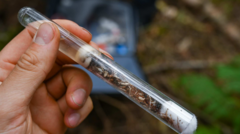
The reintroduction of the narrow-headed ant (Formica exsecta) to specific woodland habitats represents a high-stakes case study in conservation logistics rather than a simple feel-good environmental milestone. When a species goes functionally extinct in a localized habitat, restoring it requires managing a complex matrix of microclimatic variables, genetic bottlenecks, and multi-trophic ecological relationships. Most public reporting frames these events as triumphs of sentiment. In reality, successful ecological reintroduction is an exercise in risk mitigation and population dynamics.
To evaluate the viability of restoring Formica exsecta to its historical woodland ranges, conservationists must move past qualitative optimism and analyze the distinct structural pillars that dictate colony survival: microhabitat selection metrics, founder population mechanics, and post-release carrying capacity constraints.
The Microhabitat Selection Matrix
The success of an ant reintroduction hinges entirely on the thermal and structural architecture of the release site. Formica exsecta is a thermal specialist. Unlike generalist woodland ants, this species requires high levels of insolation (sunlight exposure) to maintain the internal temperature of its thatch mounds.
The selection framework for release sites must prioritize three distinct variables:
- Canopy Openness: A critical threshold of solar radiation must reach the forest floor. Dense, unmanaged closed-canopy woodlands present a fatal thermodynamic barrier. Without adequate sunlight, colonies cannot incubate eggs or maintain the metabolic rates necessary for foraging.
- Nest Material Availability: The chosen woodland must feature an abundance of specific nest-building components, primarily dried grass, heather twigs, and pine needles. The structural integrity of the mound regulates humidity and protects the colony from catastrophic weather events.
- Foraging Substrate Proximity: The presence of aphid-bearing vegetation within a tight radius of the nest site is mandatory. Formica exsecta relies heavily on honeydew as a primary carbohydrate source. If the energetic cost of foraging exceeds the caloric return of the aphid colonies, the reintroduction fails.
This creates a structural bottleneck. Land management practices must actively maintain open glades and heathland transitions through rotational grazing or targeted clearing. If the habitat is left to undergo natural succession toward a closed canopy, the reintroduced population faces a predictable extinction trajectory within a few solar cycles.
Founder Population Mechanics and Genetic Risk
Extracting individuals from donor populations to seed a new habitat introduces immediate genetic and demographic vulnerabilities. A haphazardly gathered group of ants does not constitute a viable colony foundation.
The primary risk factor is the Allee effect, where low population densities limit a species' ability to survive and reproduce. For Formica exsecta, this manifests in two distinct operational challenges:
Queen Survival and Social Structure
The reintroduction strategy must account for the social structure of the donor population. Formica exsecta can exhibit both monogyne (single-queen) and polygyne (multiple-queen) colony structures. Utilizing polygyne source material offers distinct advantages for reintroduction logistics. Multiple-queen colonies provide demographic redundancy; if one queen perishes during the translocation or acclimatization phase, the colony remains functionally viable.
The Effective Population Size Bottleneck
A small founder pool inherently limits genetic diversity, rendering the new population highly susceptible to inbreeding depression and environmental stochasticity. Over time, reduced genetic variation compromises the immune response of the colony, making the entire population vulnerable to localized pathogens. The acquisition strategy must pull from distinct, robust donor pools to maximize genetic heterogeneity without disrupting the donor sites' ecological stability.
Post-Release Trophic Disruption
Introducing a apex invertebrate predator and competitor into a stabilized woodland ecosystem alters the existing trophic web. Conservation planners must model these interactions prior to release rather than reacting to ecosystem shifts post-facto.
The first operational friction point occurs with dominant, co-occurring ant species such as Formica rufa (the southern wood ant). Formica rufa possesses superior biomass and aggressive territorial behaviors. If the reintroduction site overlaps significantly with the foraging territories of established wood ant colonies, the Formica exsecta founder nests face severe pressure from resource competition and direct predation.
The second friction point involves the sudden pressure placed on localized prey populations. While honeydew supplies carbohydrates, Formica exsecta requires massive amounts of invertebrate protein to sustain larval development. The surrounding ecosystem must have a resilient baseline population of small insects and spiders to absorb this sudden surge in predation without causing a collapse in the local food web.
Strategic Deployment Protocols
Moving forward, conservation frameworks tracking the reintroduction of Formica exsecta must abandon ad-hoc release methods in favor of standardized, data-driven deployment protocols.
The initial phase requires the utilization of artificial, pre-formed starter mounds. Depositing a translocated colony directly onto bare ground introduces an unacceptable risk of immediate dispersal and predation. Artificial structures, protected by temporary physical exclusions, allow the colony to stabilize its social hierarchy and initiate foraging trails under controlled conditions.
The second phase demands a multi-year, non-invasive monitoring program using standardized baiting grids and thermal imaging. Traditional physical disruption of the mounds to verify queen presence or brood status is counterproductive, as it destroys the precise microclimatic regulation the ants work to establish. Instead, acoustic monitoring and infrared tracking must be deployed to assess colony metabolism and foraging efficiency from a distance.
The long-term viability of these reintroduced populations ultimately depends on establishing a contiguous network of suitable habitat patches. Isolated, islanded colonies will inevitably succumb to localized genetic drift or environmental anomalies. True success is achieved only when the target woodland is managed to allow natural budding and migration, linking separate populations into a resilient metapopulation framework.