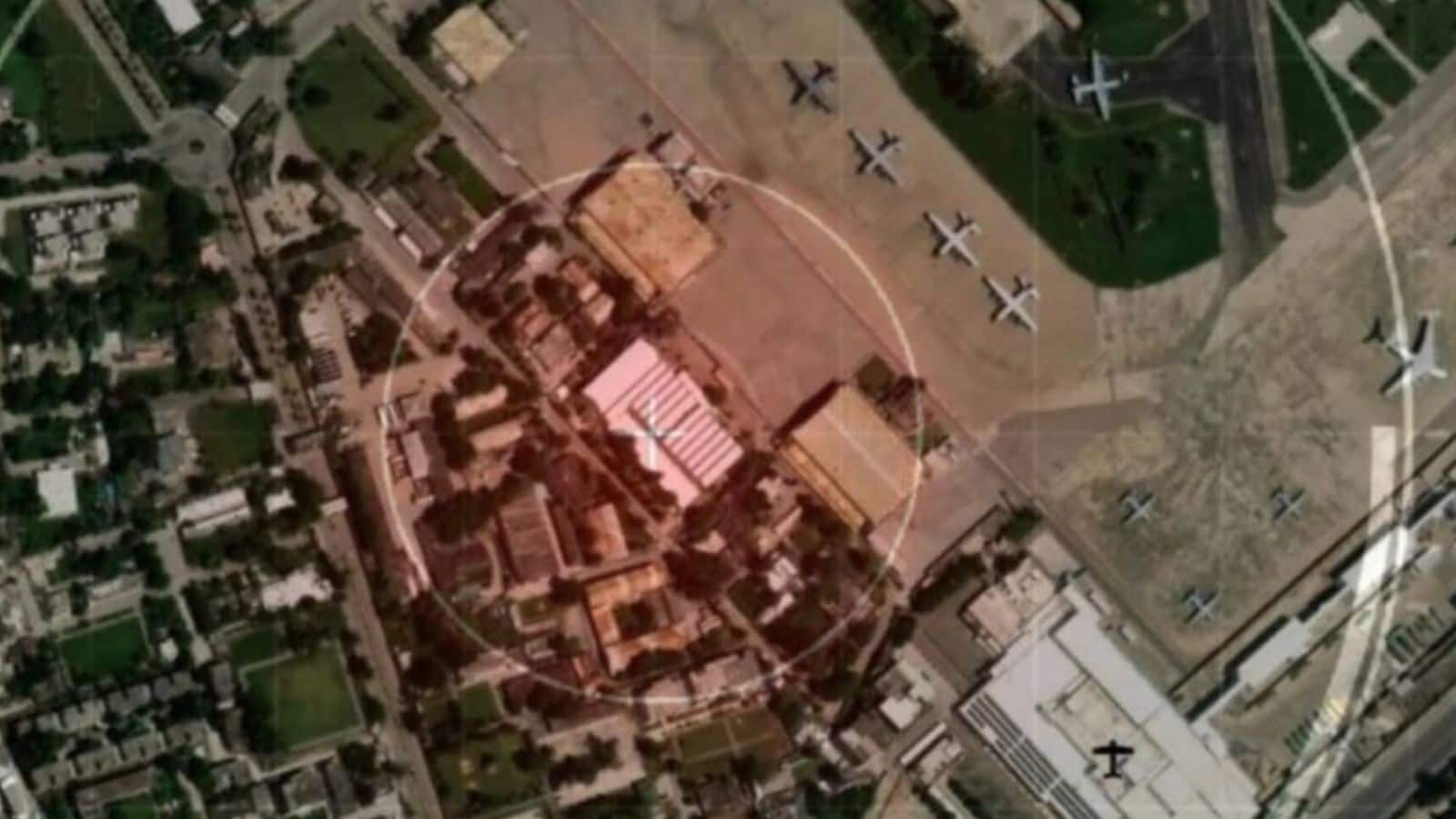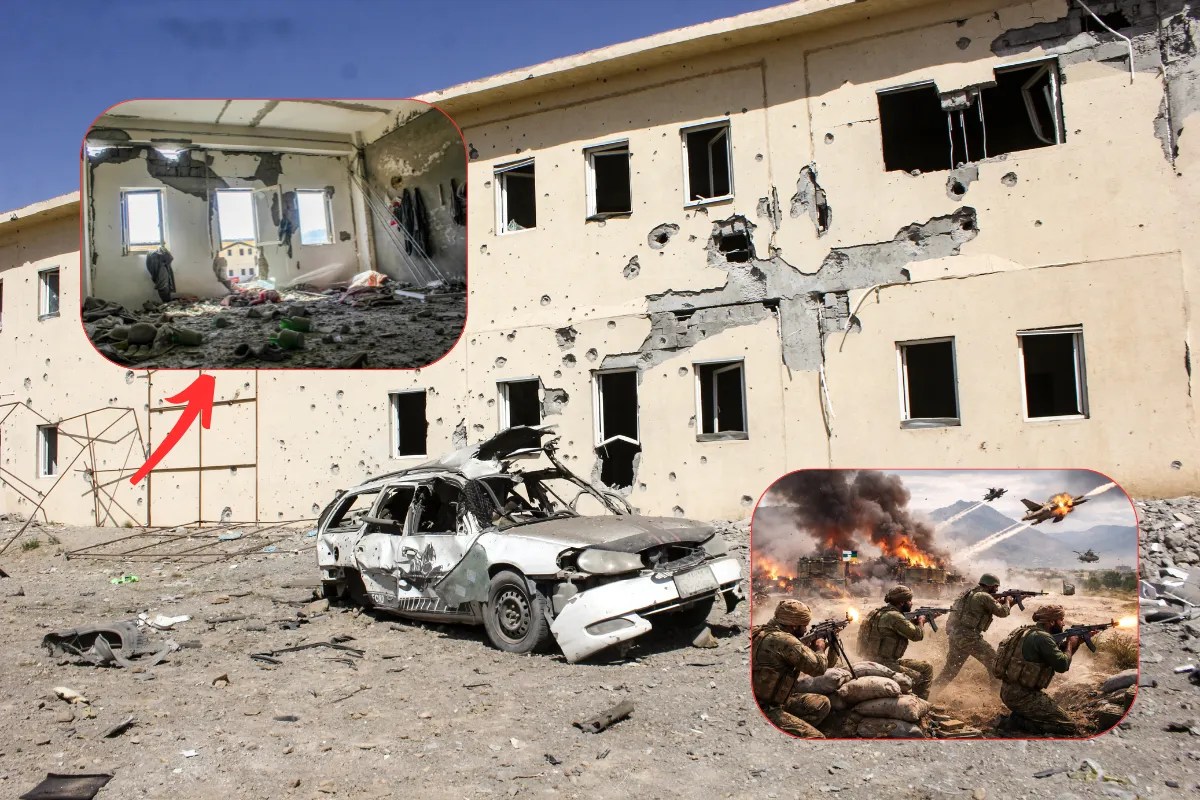
The cross-border engagement between Pakistan and Afghanistan has transitioned from a localized border dispute into a formalized theater of conventional air-and-ground combat. This shift represents a failure of the "strategic depth" doctrine and highlights a critical miscalculation in how non-state actor management influences state-on-state friction. When the Afghan Ministry of Defense confirmed the targeting of Pakistani military outposts in response to airstrikes in Khost and Paktika, it signaled that the Taliban-led administration has adopted a policy of symmetric retaliation, effectively neutralizing Pakistan’s historical aerial advantage in the frontier regions.
The current instability is governed by three primary structural drivers: the breakdown of the Doha Agreement’s counter-terrorism mandates, the resurgence of the Tehrik-i-Taliban Pakistan (TTP) as a protected proxy, and the erosion of the Durand Line’s legitimacy as a functional sovereign boundary.
The Calculus of Kinetic Retaliation
Pakistan’s decision to launch airstrikes inside Afghan territory targets specific TTP leadership nodes, yet the operational outcome frequently yields high political costs for marginal tactical gains. The Afghan response—deploying heavy weaponry against Pakistani border positions—demonstrates a calibrated willingness to risk regional escalation to preserve domestic credibility.
The effectiveness of these exchanges is measured not just in casualties, such as the reported 32 Pakistani personnel, but in the degradation of border infrastructure. This creates a specific feedback loop:
- Intelligence Lag: Pakistan identifies a TTP hideout.
- Kinetic Action: Airstrikes are deployed, often resulting in collateral damage or the relocation of the target before impact.
- Symmetric Response: Afghan forces utilize repurposed conventional hardware (remnants of the ANDSF inventory) to strike fixed Pakistani border forts.
- Logistical Strain: Pakistan is forced to divert resources from internal counter-insurgency to static border defense, thinning their operational density elsewhere.
This cycle proves that the "porous border" problem is no longer a matter of transit control but one of conventional defense.
The TTP as a Strategic Friction Point
The core of the dispute lies in the divergent definitions of "terrorist infrastructure." Islamabad views the TTP as an existential threat operating with the tacit approval of Kabul. Conversely, the Afghan administration views the TTP as a domestic Pakistani issue that should be resolved through negotiation rather than external kinetic intervention.
This creates a Resource Allocation Dilemma. Pakistan has invested billions into fencing the 2,640km Durand Line, yet the TTP continues to execute high-profile attacks within the Pakistani heartland. The failure of the fence suggests that physical barriers are insufficient against a group that enjoys "social depth" on both sides of the line. The TTP’s ability to leverage Afghan territory for recuperation creates a sanctuary model that mirrors the very strategy Pakistan was accused of using during the previous two decades of the Afghan war.
The Economic Cost of Militarized Borders
The escalation has immediate implications for the Afghanistan-Pakistan Transit Trade Agreement (APTTA). The frequent closure of the Torkham and Chaman border crossings serves as Pakistan’s primary non-kinetic lever. However, this lever is losing its potency for two reasons:
- Trade Diversion: Afghanistan is increasingly pivoting toward the Chabahar Port in Iran and Central Asian trade corridors to reduce dependency on Karachi.
- Informal Economy Resilience: The border’s black market is largely immune to formal closures, meaning the state loses tax revenue while the insurgent groups continue to fund themselves through smuggling.
The "Cost Function" of the border conflict is asymmetric. Afghanistan, already under heavy international sanctions, has a higher threshold for economic pain. Pakistan, facing a volatile IMF-monitored recovery, cannot afford the long-term mobilization of additional divisions to the Western front while maintaining a high-alert posture on the Eastern border with India.
The Collapse of the Strategic Depth Doctrine
For decades, Pakistani military planners sought a friendly government in Kabul to ensure "strategic depth"—a secure rear to provide maneuverability in a potential conflict with India. The current reality is the inverse: a hostile Western frontier that pins down nearly 200,000 troops and requires constant aerial surveillance.
The transition from "strategic depth" to "strategic encirclement" is now a viable threat. If Afghan forces continue to engage in direct artillery duels, Pakistan must choose between a full-scale conventional campaign—which would be diplomatically disastrous and economically ruinous—or a policy of containment that allows the TTP to grow unchecked.
Mapping the Tactical Limitations
The use of airpower by Pakistan in Afghan provinces like Khost and Paktika reveals a specific technical limitation in their counter-terror strategy. Fixed-wing aircraft and armed drones are effective for "search and destroy" missions in open terrain, but they are remarkably poor at holding territory or preventing the infiltration of small, highly mobile units.
The Afghan response relies on:
- Topographical Advantage: Using the mountainous terrain to mask artillery positions.
- Asymmetric Hardware: Utilizing D-30 howitzers and mortar teams that can be quickly repositioned, making them difficult targets for high-altitude strikes.
- Information Warfare: Dominating the narrative within the Pashtun belt by framing Pakistani strikes as an assault on Afghan sovereignty rather than a counter-terror operation.
The Risk of Miscalculation in the Durand Line Status
The Taliban’s refusal to recognize the Durand Line is not merely a nationalist sentiment; it is a functional requirement for their survival. To accept the border would be to alienate the tribes that provide their base of support. As Pakistan attempts to formalize the border through visa requirements and biometric scanning, the friction points will only multiply.
Each clash at the border serves as a stress test for the Pakistani state’s internal cohesion. The rise of the Pashtun Tahafuz Movement (PTM) and the increasing frequency of TTP attacks in Khyber Pakhtunkhwa create a two-front challenge: a physical battle at the border and a political battle for the loyalty of the border populations.
Strategic Pivot: The Intelligence-Led Containment Model
The current trajectory points toward a permanent state of low-intensity conflict. To break this cycle, a shift from kinetic dominance to intelligence-led containment is required. This involves:
- Decoupling Trade from Security: Maintaining open trade corridors regardless of border skirmishes to prevent the total alienation of the Afghan civilian population.
- Targeted Financial Interdiction: Shifting the focus from hitting TTP training camps to dismantling the urban support networks and funding streams within Pakistan’s own cities.
- Regional Multilateralism: Engaging China and Iran to pressure the Afghan administration. Kabul is more likely to respond to a unified regional demand for counter-terrorism cooperation than to bilateral threats from Islamabad.
The 32 personnel lost and the retaliatory strikes are symptoms of a larger geopolitical misalignment. Until the underlying issue of the TTP’s sanctuary and the legitimacy of the Durand Line is addressed through a combination of regional diplomacy and internal security reform, the border will remain a drain on Pakistan’s national power. The strategic imperative is to move away from reactive airstrikes—which provide the Afghan side with "just cause" for retaliation—and toward a long-term, quiet degradation of insurgent capabilities through localized intelligence operations and economic integration.
The final strategic move for Pakistan is the "Internal Hardening" phase. This requires shifting resources away from the physical border fence—which has proven bypassable—and toward the modernization of the Frontier Corps and local police in the merged districts. Denying the TTP "space" within Pakistan is more effective than attempting to destroy their "base" in Afghanistan. If the TTP cannot find operational success inside Pakistan, their value to the Afghan administration as a leverage point evaporates. This is the only path to de-escalation that preserves the integrity of the state without triggering a broader regional war.