The survival of the Islamic Republic of Iran is no longer a question of ideological fervor but a calculation of stress-to-strength ratios across three critical vectors: internal economic solvency, the integrity of the security apparatus, and the technical viability of its proxy architecture. While political rhetoric often frames "the will of the people" as an abstract moral force, in a data-driven strategic context, this "will" manifests as a series of measurable friction points that degrade the state’s ability to project power. Transitioning from a revolutionary theocracy to a collapsed or reformed state requires the simultaneous failure of these structural pillars.
The Economic Asymptote: Resource Depletion as a Hard Constraint
A regime’s ability to suppress domestic dissent is directly proportional to its ability to fund its coercive instruments. Iran’s economy currently functions on a model of "resistance economics," which attempts to decouple domestic stability from global financial markets. However, this model faces an inescapable mathematical ceiling.
The Iranian Rial's depreciation is not merely a currency issue; it is a systemic failure of the central bank to manage the velocity of money against a backdrop of shrinking foreign exchange reserves. When the cost of basic goods exceeds the "acquiescence threshold"—the point at which the risk of starvation outweighs the risk of state-sponsored violence—the internal security dynamic shifts from management to desperation.
- The Subsidy Trap: The Iranian state relies on heavy subsidies for fuel and food to prevent mass unrest. As global energy markets fluctuate and sanctions restrict oil exports, the fiscal space to maintain these subsidies vanishes.
- The IRGC Shadow Economy: The Islamic Revolutionary Guard Corps (IRGC) controls an estimated 30% to 50% of the Iranian economy. This creates a circular dependency where the state must prioritize IRGC profits to ensure the loyalty of the generals, further starving the civilian sector and accelerating the erosion of public trust.
Security Apparatus Cohesion: The Point of Fracturing
Authoritarian stability depends on the "unitary actor" assumption within the security forces. In Iran, this involves a tiered system: the regular army (Artesh), the IRGC, and the Basij paramilitary.
The logic of regime change suggests that the transition occurs not when the people rise up, but when the men with guns refuse to shoot. This refusal is usually driven by a cost-benefit analysis at the mid-level officer rank. If an officer perceives that the regime can no longer provide for their family or that the regime's fall is inevitable, their incentive to defect or remain neutral increases exponentially.
The Basij represents the most volatile element of this equation. As a volunteer-based militia, their loyalty is often tied to local social standing and minor economic perks. In a hyper-inflationary environment, these perks lose their value. When the Basij is deployed against their own socioeconomic peers in urban centers, the psychological tax of enforcement leads to a high rate of attrition.
The Proxy Overhead: The Diminishing Returns of the Shia Crescent
Iran's regional strategy—the "Forward Defense" doctrine—seeks to fight its battles in Lebanon, Syria, Iraq, and Yemen to avoid fighting them in Tehran. This strategy is technically sophisticated, utilizing low-cost, high-impact technology like the Shahed-series loitering munitions and short-range ballistic missiles (SRBMs).
However, the "Proxy Overhead" has reached a point of diminishing returns. Each dollar spent on Hezbollah or the Houthis is a dollar removed from the domestic social contract. Furthermore, the technical gap between Iranian-supplied systems and Western-integrated defense platforms (such as the Aegis Combat System or Iron Dome) is widening. As the effectiveness of these proxies is neutralized by superior electronic warfare and kinetic interception, the "deterrence value" of the proxy network evaporates, leaving the regime exposed.
Technical Vulnerabilities: Cyber Silos and Information Control
The Iranian regime’s attempt to create a "National Information Network" (NIN)—a domestic intranet designed to disconnect the country from the global internet during times of unrest—is a primary strategic objective. The success or failure of this project determines the "OODA loop" (Observe, Orient, Decide, Act) of the protest movement.
If the regime successfully implements a total "internet blackout" without crashing its own banking and logistical systems, it can isolate pockets of resistance and neutralize them individually. If, however, the digital infrastructure remains porous—via satellite internet or mesh networks—the protestors maintain a decentralized command and control (C2) structure that outpaces the centralized, bureaucratic response of the IRGC.
- Latency in Decision Making: Centralized regimes suffer from "information bottlenecks" where field commanders fear taking initiative without explicit orders from the top.
- Signal vs. Noise: In a decentralized uprising, the sheer volume of "flash-points" can overwhelm the IRGC’s rapid-response units, which are finite in number and geographic distribution.
Strategic Pivot: Moving From Rhetoric to Structural Pressure
To catalyze a shift in Iran’s domestic trajectory, the focus must move beyond the "will of the people" toward the systematic degradation of the regime's "functional capacity."
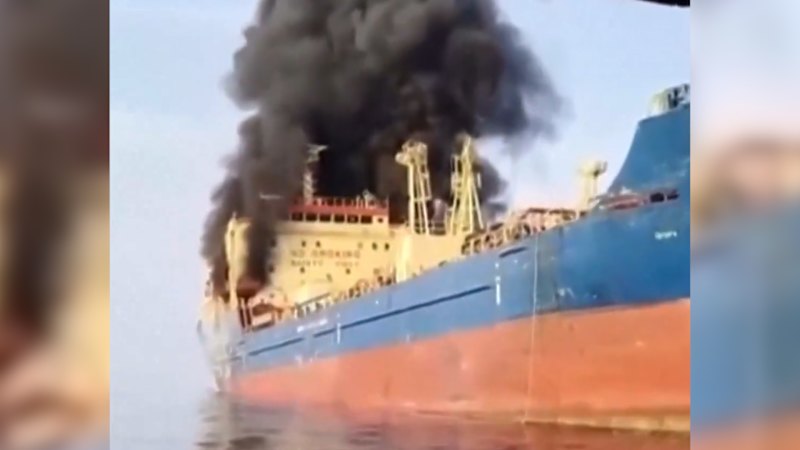
The primary target is the IRGC's financial backbone. Rather than broad-based sanctions that impact the civilian population, precision strikes against the front companies and maritime logistics used by the IRGC to bypass oil quotas create internal friction between the military elite and the political leadership.
The secondary target is the information landscape. Providing hardened, satellite-based communication tools to labor unions and student groups within Iran breaks the regime's monopoly on the narrative. This is not about spreading "propaganda," but about enabling the coordination of domestic economic strikes. A coordinated national strike in the energy and trucking sectors would provide a more significant threat to the regime’s survival than any kinetic intervention, as it attacks the state's internal liquidity.
The final stage of this transition is the "Recognition Pivot." If the international community identifies and engages with specific, organized elements of the domestic opposition—not as exiled politicians, but as internal functional groups—it signals to the mid-level Iranian bureaucracy that a viable post-regime framework exists. This reduces the "fear of the unknown" that currently keeps many civil servants tethered to the status quo.
The collapse of the current Iranian power structure will be a function of logistics and incentive shifts. When the IRGC's internal "cost of enforcement" exceeds its "reward for loyalty," the structural integrity of the state will fail, regardless of the ideological convictions of its senior-most leaders.
Strategically, the move is to accelerate the divergence between the IRGC's operational costs and the state's actual revenue, while simultaneously lowering the technical barriers for domestic coordination. This creates a pincer effect: a state that cannot pay its enforcers and a population that can no longer be silenced.