Evaluating the exact scale of human loss during acute societal crises—whether driven by pandemic outbreaks, systemic infrastructure collapse, or armed conflict—presents an operational paradox: the moments requiring the most precise demographic metrics are precisely those that destroy the mechanisms required to gather them. When sovereign systems fail to provide reliable death tolls, observers frequently blame political obfuscation or deliberate censorship. The foundational breakdown, however, is structural. Understanding why mortality tracking fails during high-stress events requires dissecting the logistical bottlenecks, mathematical assumptions, and administrative friction inherent to modern demographic surveillance.
The Tripartite Failure of Registration Systems
Civil Registration and Vital Statistics (CRVS) systems rely on an unbroken administrative pipeline to transition an event from a physical reality to a verified data point. Under normal conditions, this pipeline functions through a highly decentralized network of medical professionals, local registries, and central statistical bureaus. In a crisis, this pipeline breaks down across three distinct operational layers.
Institutional Displacement
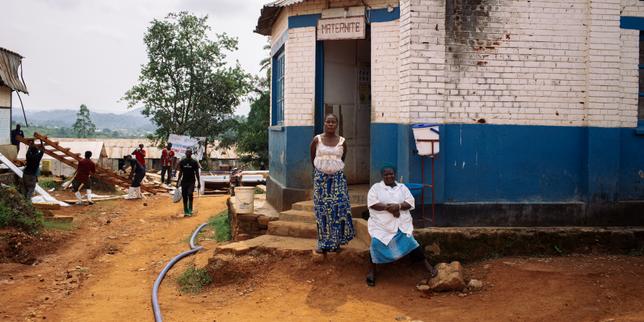
The physical infrastructure of documentation is vulnerable to direct disruption. When hospitals overflow, clinics close, or municipal offices face abandonment, the staff responsible for recording vital events are reassigned to immediate survival tasks or displaced entirely. Without professional validation, the administrative chain of custody is severed at the source.
Reporting Latency and Backlogs
The lag between the occurrence of a death and its official registration increases exponentially during emergencies. Coroners, medical examiners, and registry clerks face processing capacities designed for baseline conditions. When demand outstrips this capacity, processing queues form. This results in data deficits that look like artificial plateaus or downward trends in real-time reporting, creating a skewed perception of the crisis trajectory.
Diagnostic Breakdown and Verbal Autopsies
Accurate mortality tracking requires not just counting a body, but identifying the cause of death to differentiate baseline mortality from crisis-attributable events. When diagnostic resources or testing kits are depleted, specific attributions disappear. In resource-poor or highly unstable environments, epidemiologists must substitute clinical diagnostics with verbal autopsies—structured interviews conducted with the family of the deceased weeks after the event. While valuable, verbal autopsies introduce substantial recall bias and lack the specificity needed for real-time epidemiological deployment.
The Limitations of Alternative Estimation Models
To compensate for the collapse of direct registration systems, researchers and global health bodies deploy mathematical and statistical models. These alternatives are designed to approximate reality, but each possesses systemic constraints that limit their operational utility.
The Problem of Excess Mortality Baselines
Excess mortality—defined as the difference between total registered deaths during a specific period and the expected historical baseline—serves as the primary tool to capture both direct and indirect casualties. Calculating the baseline requires stable historical trends, typically drawn from the preceding five years.
This model encounters two critical failure points:
- Dynamic Demographics: Rapid changes in population size, migration patterns, and age distributions render historical baselines obsolete. In conflict zones or regions experiencing mass displacement, the denominator (the population at risk) fluctuates unpredictably, distorting the final calculated rate.
- Historical Shocks: If the preceding five years included severe heatwaves, influenza seasons, or minor civil unrest, the baseline becomes artificially inflated, hiding the true impact of the current emergency.
Retrospective Household Surveys
When real-time prospective surveillance fails, organizations resort to retrospective cluster surveys, interviewing representative samples of the population about recent household deaths. The accuracy of this data is degraded by specific sociological and statistical forces:
- The Survivor Bias: If an entire household perishes, no member remains to report the deaths to survey teams, structurally undercounting the highest-intensity pockets of mortality.
- Recall and Temporal Displacement: Respondents frequently struggle to pinpoint exact dates of death over extended periods, leading to the artificial clustering of events or their misallocation outside the defined survey window.
Network Survival Dynamics
Emerging Methodologies seek to bypass household limitations by using the network survival method, where respondents report on deaths within their broader social networks or immediate neighborhoods. While this increases the effective sample size, it introduces structural overlap. Estimating how many unique networks an individual belongs to requires complex calibration, and mistakes in this step can cause large overcounts or undercounts.
The Political Economy of Missing Data
Beyond the logistical and statistical limits, tracking mortality happens inside a complex web of competing incentives. Data is rarely neutral; its production carries immediate political, economic, and security implications for sovereign actors.
Strategic Resource Optimization
For local administrators, the accurate reporting of deaths can be disincentivized by budgetary structures. In some jurisdictions, funding allocations or international aid disbursements are pegged directly to active population metrics. Admitting a sharp decline in population through a high mortality rate can risk immediate reductions in external support, creating an institutional bias toward underreporting.
Narrative Control and Legal Accountability
In situations of armed conflict or state-sponsored violence, mortality data changes from a public health metric into legal evidence. Sovereign states and armed factions recognize that high casualty figures alter public perception and can spark international investigations or war crimes documentation. The response is often a mix of restricting geographic access for independent data collectors, cutting communication networks, and centralizing all data distribution through state-controlled media outlets.
Re-Engineering Demographic Resilience
Fixing the structural failures in mortality tracking requires moving away from reactive modeling and toward building more resilient tracking systems beforehand. Relying on complex math to fix broken source data after a crisis is inherently limited. Strategic investments must prioritize maintaining the data pipeline right when an emergency begins.
The first step requires decentralizing the registration infrastructure. Integrating simplified, mobile-first notification tools into community health networks allows non-medical personnel to register deaths securely, even when local municipal offices are closed. These systems must be decoupled from complex cause-of-death diagnostics, focusing instead on capturing the simple reality of the event: time, location, age, and sex.
The second step involves standardizing international data sharing and observation systems. Creating independent, multi-agency data repositories helps insulate demographic collection from local political interference. By combining satellite imagery of cemetery expansions with anonymized cellular movement patterns and community-led burial registries, analysts can cross-verify trends without relying on a single, vulnerable government pipeline. Improving the accuracy of these numbers is not just a statistical goal; it is foundational to ensuring rapid, well-targeted humanitarian aid and establishing long-term historical accountability.