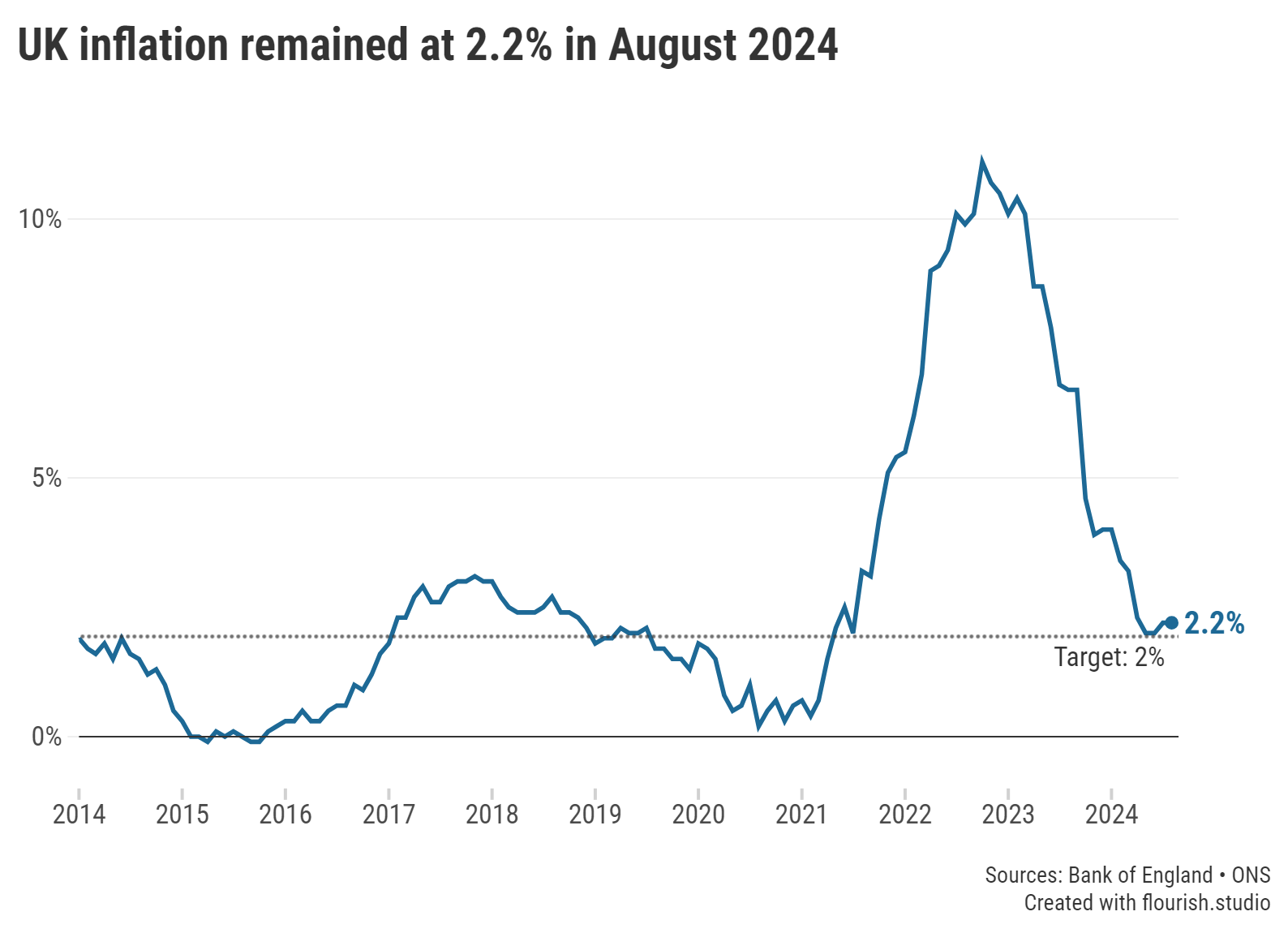
The narrative that UK inflation is merely "cooling" ignores the structural shift in the Consumer Prices Index (CPI) basket and the diverging velocities of its underlying components. While headline inflation figures in January suggest a return to normalcy, the actual path to the Bank of England's (BoE) 2% target is governed by a precarious tension between falling global commodity prices and a stubborn domestic service-sector wage-price spiral. Understanding the probability of a rate cut requires a deconstruction of the UK economy into three distinct inflationary pillars: Tradable Goods, Regulated Energy, and Non-Tradable Services.
The Tri-Pillar Inflation Framework
The headline CPI figure is a weighted average that often masks the volatility of its constituents. To evaluate the BoE's next move, one must isolate these three pillars, as each responds to different monetary and fiscal levers.
1. The Tradable Goods Deflation
The primary driver of the recent slowdown is the normalization of global supply chains and the subsequent decline in core goods inflation. As shipping costs revert to mean and inventory gluts replace the shortages of the previous two years, the UK is effectively "importing" disinflation. This component is highly sensitive to the Sterling’s exchange rate. A stronger Pound reduces the cost of imports, accelerating the decline in headline figures, but this is a double-edged sword for the BoE: it cools inflation today while potentially signaling a restrictive monetary stance that could over-tighten the economy tomorrow.
2. The Energy Price Cap Lag
Energy inflation in the UK is unique due to the Office of Gas and Electricity Markets (Ofgem) price cap. Unlike other economies where energy prices pass through to consumers almost instantly, the UK experiences a stepped adjustment. The January data reflects the integration of lower wholesale gas prices into the cap. However, this is a mechanical reduction rather than a behavioral one. The BoE Monetary Policy Committee (MPC) views this as "transitory" in the literal sense—it is a one-off level shift that does not necessarily indicate a change in the long-term inflationary trend.
3. The Non-Tradable Services Fortress
This is the most critical metric for the MPC. Services inflation—covering everything from hospitality to haircuts—is almost entirely driven by domestic labor costs. With UK wage growth still hovering at levels inconsistent with a 2% inflation target, the "stickiness" of services inflation remains the primary barrier to a rate cut.
The Wage-Price Feedback Loop and Labor Market Tightness
The UK labor market currently operates under a paradox of high vacancies and low participation rates. This mismatch creates a floor for wage demands, regardless of what happens to energy prices. The "Cost-Push" model of inflation suggests that as long as workers demand higher wages to recoup lost purchasing power, firms will attempt to protect margins by raising service prices.
The BoE monitors the Nominal Wage Growth vs. Productivity Gap. If wages grow at 6% while productivity remains stagnant, the unit labor cost increases by 6%. To hit a 2% inflation target, the BoE essentially needs the sum of wage growth and productivity growth to align with that 2% figure. Currently, the math does not add up. A premature rate cut would risk de-anchoring inflation expectations, leading to a secondary spike reminiscent of the 1970s "double-top" inflation cycles.
Quantitative Tightening and the Liquidity Drain
Parallel to interest rate decisions is the BoE’s program of Quantitative Tightening (QT). By actively selling government bonds (Gilts) and allowing others to mature, the Bank is sucking liquidity out of the financial system. This exerts upward pressure on long-term yields, effectively doing some of the "tightening" work for the MPC without needing to raise the base rate further.
The friction here lies in the UK Treasury’s fiscal position. High interest rates increase the cost of servicing national debt. This creates a silent tug-of-war between Threadneedle Street and Westminster. The BoE must maintain its independence by ignoring political pressure for a cut, focusing instead on the Real Interest Rate (the nominal rate minus inflation). As inflation falls, if the BoE keeps the base rate steady, the "real" rate actually rises, making the monetary policy stance more restrictive by default.
Analyzing the Transmission Mechanism Lag
Monetary policy is often described as having "long and variable lags," typically estimated at 18 to 24 months. The hikes initiated in early 2023 are only now reaching their peak impact on the real economy.
Mortgage Refinancing as a Deflationary Catalyst
A significant portion of the UK housing market operates on fixed-rate deals. Thousands of households migrate from 2% deals to 5%+ deals every month. This acts as a massive "consumption tax," stripping discretionary income from the economy. The BoE tracks this Mortgage Transmission Channel closely. The cooling of inflation in January is partly a result of reduced aggregate demand as households prioritize interest payments over consumer goods.
The Risk of Technical Deflation vs. Structural Stability
There is a non-trivial risk that the BoE overstays its restrictive welcome. If the MPC waits for services inflation to hit 2% before cutting, they may have already pushed the economy into a deeper recession than necessary.
The Fisher Equation ($i = r + \pi^e$) defines the relationship between nominal interest rates ($i$), real interest rates ($r$), and expected inflation ($\pi^e$). If the BoE maintains $i$ at 5.25% while $\pi^e$ collapses toward 2%, the real rate ($r$) climbs to 3.25%. For a low-growth economy like the UK, a 3.25% real rate is highly contractionary.
The Strategic Path to the First Cut
The market is currently pricing in the first cut for late Q2 or early Q3. For this to materialize, three data-dependent triggers must be pulled:
- A sustained dip in 'Core' Services CPI: Looking past the headline to ensure the "internal" heat of the economy is dissipating.
- A loosening of the Labor Market: Specifically, an increase in the unemployment rate toward 4.5% or 5%, which would signal a reduction in worker bargaining power.
- Fiscal Neutrality in the Spring Budget: If the government introduces significant tax cuts, the BoE will be forced to keep rates higher for longer to offset the resulting inflationary stimulus.
The January inflation print is a tactical victory, but the strategic war against embedded expectations is ongoing. The MPC will likely adopt a "High for Longer" stance until the risk of a secondary inflation surge is statistically negligible.
Investors and corporate strategists should prepare for a period of Volatile Stability. Headline inflation may touch 2% briefly due to energy base effects, but the underlying "signal" will remain higher. The most effective strategy in this environment is to de-risk balance sheets from short-term debt while maintaining enough liquidity to capitalize on the eventual, albeit slow, pivot to a neutral rate—which likely sits far higher than the pre-2020 "zero-bound" era, probably in the 3% to 3.5% range.
Monitor the spread between the UK 10-year Gilt and the US 10-year Treasury. If the UK begins to decouple and show faster disinflation, the Sterling will face downward pressure, which would perversely re-import inflation via the Tradable Goods pillar, potentially forcing the BoE to halt its cutting cycle before it even begins.