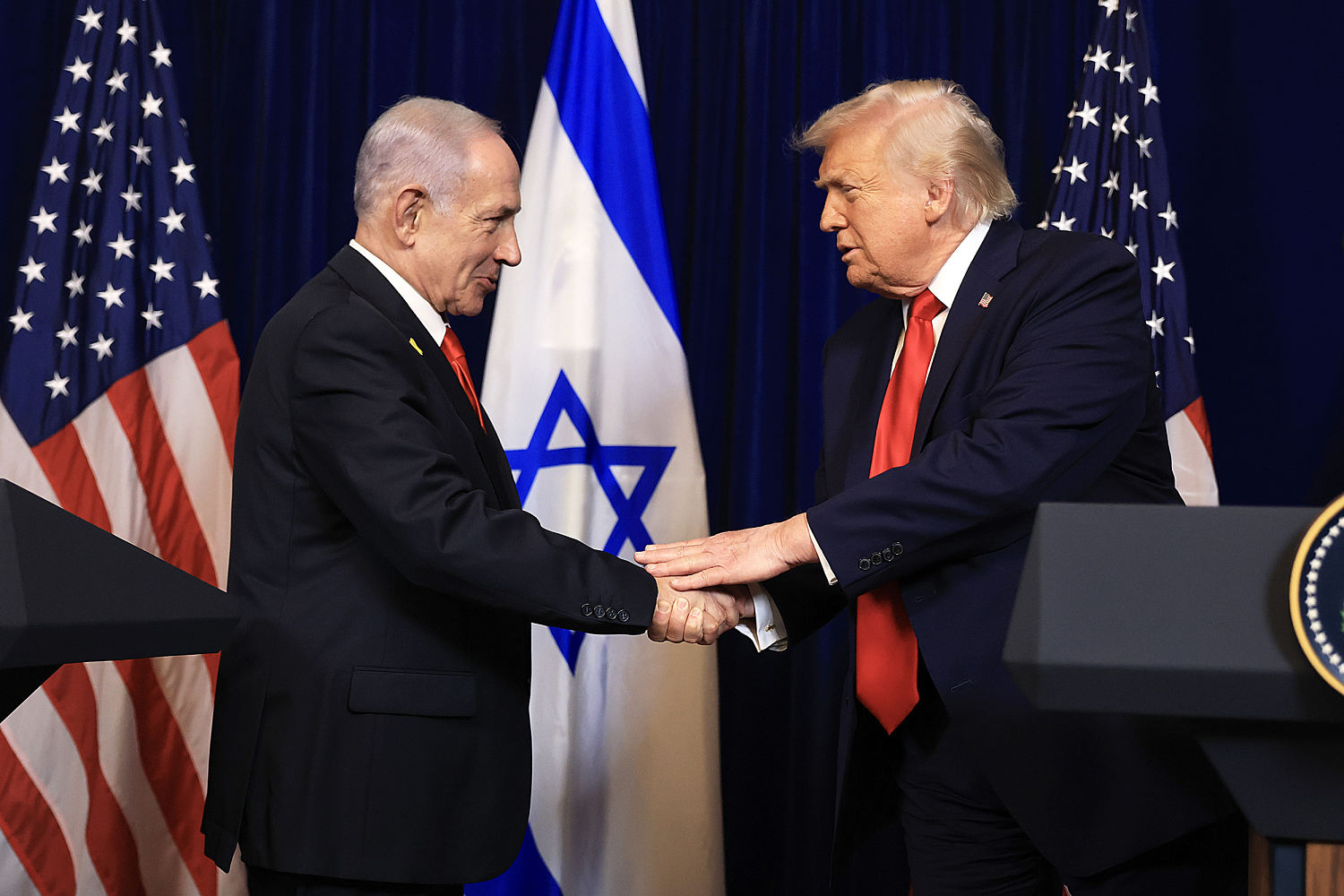
Every time a headline flashes that Donald Trump and Benjamin Netanyahu spoke on the phone while the Pentagon weighs military strikes on Iran, cable news panels immediately start drawing arrows on maps of the Persian Gulf. They treat a diplomatic phone call as a countdown clock to World War III.
That reading misses how high-stakes coercive diplomacy actually works.
According to standard wire reporting—such as coverage by The Times of India—a phone call between U.S. leadership and the Israeli Prime Minister during heightened tensions with Tehran is framed primarily as an operational war council: two leaders synchronizing targets before bombers leave the tarmac. While military coordination between Washington and Jerusalem is real, treating these conversations solely as a prelude to kinetic warfare ignores the strategic utility of ambiguity, domestic political signaling, and deterrence theory.
The Illusion of the War Room Call
In foreign policy analysis, there is a persistent tendency to confuse military signaling with military execution. When Washington leaks that strike options on Iranian nuclear or missile infrastructure are being reviewed—and pairs that leak with a high-profile call between Trump and Netanyahu—the audience isn't just the American public. The primary audience sits in Tehran, Riyadh, and Brussels.
Consider the mechanics of Thomas Schelling’s classic deterrence framework, Arms and Influence. Coercive diplomacy relies on making the threat of force credible enough that the adversary alters its behavior without requiring the actual expenditure of munitions. If the United States and Israel wanted to launch a surprise decapitation strike on Iranian facilities, the last thing either administration would do is brief reporters on the phone call beforehand.
Publicized consultations serve three distinct, non-kinetic functions:
- Raising the Cost of Iranian Escalation: By visibly aligning Washington and Jerusalem, the call signals to Iran's Islamic Revolutionary Guard Corps (IRGC) that any regional proxy attack will not be met with a compartmentalized response, but with a unified front.
- Managing Coalition Leverage: Netanyahu’s government has historically pushed for harder, earlier red lines on Iran's nuclear enrichment program. A public conversation allows the U.S. president to demonstrate solidarity while privately negotiating restraint—buying diplomatic time in exchange for visible political backing.
- Market and Diplomatic Conditioning: Energy markets and Gulf allies react sharply to perceived instability in the Strait of Hormuz. Telegraphing that options are "on the table" forces regional actors like Saudi Arabia and the UAE to quietly pressure Tehran toward de-escalation to protect their own oil infrastructure.
What Analysts Get Wrong About US-Israel Coordination
To understand why mainstream coverage flattens this dynamic, look at the competing pressures inside both capitals. Neither Washington nor Jerusalem operates as a monolith, and their strategic timelines rarely align cleanly.
| Strategic Dimension | The U.S. Calculus | The Israeli Calculus |
|---|---|---|
| Primary Objective | Prevent a regional war that spikes global oil prices and entangles U.S. troops. | Eliminate existential nuclear and ballistic missile threats on its borders. |
| Time Horizon | Tied to election cycles, global economic stability, and multi-theater commitments (Indo-Pacific, Europe). | Immediate and generational; existential threats cannot be deferred indefinitely. |
| Preferred Mechanism | Maximum economic pressure, naval deterrence, and targeted covert disruption. | Direct military degradation of proxy networks and nuclear infrastructure. |
| Risk Tolerance | Low tolerance for sustained ground or air campaigns in the Middle East. | High tolerance for unilateral strikes when core security red lines are crossed. |
When a reporter writes that the U.S. is "weighing fresh strikes" after a Trump-Netanyahu call, the phrasing implies both leaders want the exact same outcome on the exact same Tuesday. In practice, Washington often uses the threat of joint action to keep Israel from acting unilaterally. If Jerusalem believes Washington is actively preparing credible military contingencies, Israeli defense planners are far more likely to hold their fire and let American diplomatic or economic pressure play out.
Dismantling the "Imminent Strike" Question
Readers searching for news on U.S.-Iran tensions usually ask one question: Are the U.S. and Israel about to bomb Iran?
That is the wrong question. A direct military strike on hardened underground facilities like Fordow or Natanz carries massive operational and geopolitical costs—costs that defense planners at CENTCOM understand intimately. Instead of asking whether bombs will drop tomorrow, observers should ask how both sides are using the specter of strikes to extract concessions.
1. Does a phone call mean military assets are moving?
Not necessarily. U.S. force posture in the Middle East—carrier strike groups, B-52 deployments, and THAAD missile defense batteries—operates on rotational schedules and intelligence triggers independent of diplomatic phone calls. A call between leaders is a political overlay, not a tactical launch order.
2. Why leak that "fresh strikes" are being weighed?
Strategic ambiguity only works if the adversary believes you might actually pull the trigger. During periods when Tehran advances centrifuge cascades or transfers ballistic missiles to proxies, silence from Washington is read as acquiescence. Controlled leaks restore deterrence without firing a shot.
3. What happens if deterrence fails?
There is a real downside to relying heavily on brinkmanship: miscalculation. When both Washington and Tehran engage in escalatory messaging to satisfy domestic hardliners, an unintended clash at sea or a stray rocket hitting a U.S. base can force leaders into kinetic retaliation they originally sought to avoid. Deterrence is a tightrope, not a safety net.
Reading Foreign Policy Beyond the Headline
The next time a breaking news alert announces a high-level call between Washington and Jerusalem alongside rumors of Pentagon strike plans, strip away the sensationalism and look at the indicators that actually matter:
- Watch diplomatic travel, not phone readouts. When senior national security advisors or CIA directors quietly land in Doha, Muscat, or Cairo immediately following a Trump-Netanyahu call, backchannel negotiations are active.
- Track force protection, not strike rhetoric. Defensive deployments—such as moving Patriot or THAAD batteries into regional bases or evacuating non-essential embassy personnel—indicate genuine preparation for kinetic exchange. Offensive rumors without defensive posture shifts are almost always psychological operations.
- Monitor Gulf state responses. When Riyadh or Abu Dhabi suddenly issues statements calling for regional restraint or dispatches envoys to Tehran, they are acting as intermediaries carrying Washington's private ultimatum.
Journalism thrives on the binary of war or peace, strike or retreat. Statecraft lives in the gray zone between the two—where a publicized phone call is designed to make the bombers unnecessary.