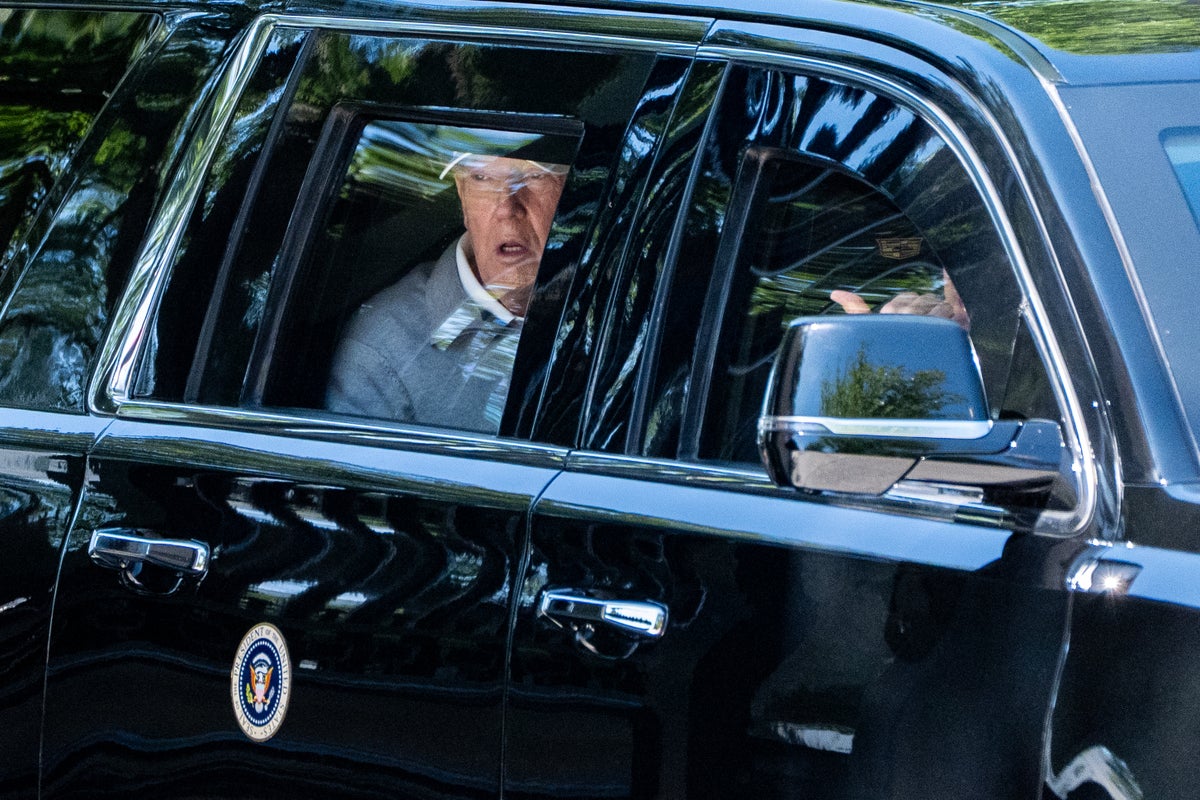
The media is panicking because Donald Trump spent seven days out of the camera's glare.
Pundits are desperately spinning yarns about failing health and crumbling poll numbers. They look at an empty podium and see a campaign in free fall.
They are entirely wrong.
In modern political communications, a sudden lack of visibility isn't a symptom of a crisis. It is a deliberate strategy to starve the media machine, reset the narrative, and force opponents to overplay their hand. The lazy consensus among political reporters dictates that if you aren't shouting on a stage, you are losing. I spent fifteen years advising corporate executives on crisis management and media positioning, and I can tell you the absolute hardest thing to teach an ambitious leader is when to shut up.
Silence is leverage. When the mainstream press expects a daily circus, denying them the performance creates an information vacuum. Because nature—and cable news—abhors a vacuum, the opposition rushes in to fill the void with unhinged speculation.
By refusing to give them new footage to dissect, you turn their own obsession against them.
The Flawed Premise of the "Tumbling Polls" Narrative
Every mainstream outlet is running the same copy-pasted narrative: Trump is hiding because the latest data looks grim. This view misunderstands how modern political polling works.
News organizations use daily tracking polls as content engines. They treat statistical noise—a 1.5% fluctuation within the margin of error—as a seismic shift. If a candidate drops two points on a Tuesday, journalists write a post-mortem. If they gain two points on a Thursday, they write a comeback story. It is a manufactured drama designed to sell ads.
The real players do not chase the daily tracker. They look at structural data:
- Over-sampling trends in critical swing counties.
- Voter registration shifts among non-college-educated demographics.
- Independent voter fatigue regarding specific media talking points.
When a campaign internalizes that structural data, they do not react to a bad news cycle by throwing a press conference. They step back. They let the media burn through its own hype.
Imagine a scenario where a company's stock drops 3% based on a rumor. A weak CEO sprints to CNBC to defend the firm, accidentally validating the panic. A seasoned executive stays in the boardroom, executes the strategy, and lets the market correct itself. The political arena operates on the exact same mechanics.
Deconstructing the "People Also Ask" Obsession with Visibility
If you look at search engines right now, the public is frantically asking variations of the same flawed questions. Let us dismantle them one by one.
Is a lack of public appearances a sign of campaign exhaustion?
No. It is a sign of asset preservation. In a prolonged political cycle, a candidate's voice and energy are finite resources. Pacing is everything. The campaign knows that a rally held four months before an election has a fraction of the impact of a rally held four weeks before. Flooding the market early leads to voter fatigue. Stepping away preserves the novelty and ensures that when the candidate finally speaks, the audience actually listens.
Do falling poll numbers force a candidate to retreat?
The premise is backward. A retreat—or a strategic pause—often causes a temporary dip in superficial polling because you are not actively feeding the news cycle. The drop is expected. The goal is to build a base of attention so that the subsequent re-emergence generates a massive, disproportionate spike in coverage. It is a tactical contraction before an expansion.
The Hidden Danger of the Counter-Intuitive Pause
This strategy is not without its risks. The downside of intentional silence is that you lose control of the narrative in the short term. While you are executing a sophisticated media blackout, your opponents are free to paint whatever caricature they want on your empty canvas.
If the pause lasts too long, the speculation hardens into accepted fact. The transition from "Where is he?" to "He is unfit" happens incredibly fast.
To pull this off, a campaign needs disciplined surrogates who can dominate local radio and digital media without overshadowing the principal. If the surrogates fail to hold the line, the vacuum consumes the campaign.
Stop Hunting for News Where There is Only Noise
The next time a headline screams about a politician disappearing or a campaign collapsing during a quiet week, ignore the commentary. Look at the timing. Look at the structural incentives.
The media needs a daily conflict to survive. When a candidate denies them that conflict, the media panics, not the campaign.
Stop reading the frantic daily assessments. The silence isn't a surrender; it's the setup.